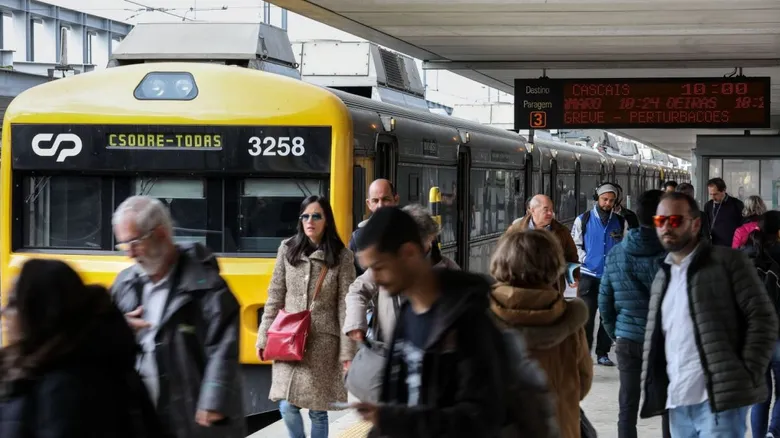
A new law prohibiting train drivers in Portugal from operating trains under the influence of alcohol, narcotics or psychotropic substances will come into force in one month, marking a significant tightening of railway safety rules and penalties.
The legislation establishes a clear zero tolerance framework for train drivers and other safety critical railway staff. It not only formalises the ban on substance use while on duty, but also strengthens sanctions for non compliance, reflecting growing concern about public safety across the transport sector.
Under the new rules, train drivers found to be under the influence of alcohol or drugs will face heavier fines, longer suspensions and, in serious cases, criminal liability. The law also expands the scope for mandatory testing, allowing authorities and operators to conduct checks more systematically, including random and post incident testing.
Officials say the measure is designed to close gaps in existing regulation and align rail safety standards with those already applied in other transport sectors, such as aviation and road transport. While alcohol and drug use has long been restricted in practice, the new law introduces clearer legal thresholds and enforcement mechanisms.
The government argues that rail transport carries inherent risks due to the scale, speed and passenger capacity of trains. Even minor impairment, authorities say, can have serious consequences in emergency situations that require fast reaction times and precise decision making.
Railway unions have broadly supported the objective of improving safety, though some have raised concerns about implementation. Worker representatives stress the importance of clear testing procedures, respect for privacy and safeguards against arbitrary enforcement. They also emphasise the need for support programmes for workers who may struggle with substance related health issues.
Transport safety experts say the law reflects international trends. Across Europe, regulators have moved toward stricter oversight of safety sensitive roles as part of wider efforts to prevent accidents before they occur. Rail systems, which often rely on a high degree of automation combined with human supervision, are seen as particularly sensitive to human error.
The reinforced penalties are intended to act as a deterrent. In addition to fines and suspensions, repeated or serious violations could lead to permanent loss of certification to operate trains. Employers will also have clearer obligations to report violations and ensure compliance within their organisations.
Passengers’ associations have welcomed the change, arguing that public confidence in rail travel depends on strong safety guarantees. They note that while serious incidents involving impaired train drivers are rare, even isolated cases can undermine trust in the system.
The law also places new responsibilities on rail operators. Companies will be required to update internal regulations, train staff on the new legal framework and ensure that testing equipment and procedures are in place before the law takes effect. Failure operators to comply could result in administrative penalties.
Authorities have indicated that the one month transition period is intended to give operators and staff time to adapt. Information campaigns and internal briefings are expected to take place across the rail sector in the coming weeks.
The move comes amid broader efforts to modernise Portugal’s transport safety legislation, as rail travel continues to play a central role in mobility, commuting and climate goals. Ensuring high safety standards is seen as essential to supporting growth in passenger numbers and public investment.
Once the law enters into force, enforcement is expected to be firm. Officials have made clear that the objective is prevention rather than punishment, but that tolerance for violations in safety critical roles will be minimal.
For passengers, the change may go largely unnoticed in daily travel. For the rail sector, however, it represents a clear signal that safety standards are being tightened and that operating a train carries responsibilities comparable to those in any other high risk transport role.