When US President Donald Trump talks about acquiring Greenland, it is tempting to dismiss the idea as another provocation, half joke and half boast, designed to dominate headlines before fading away. That temptation should be resisted. The proposal makes no legal, political or strategic sense, and it cannot happen. Yet it is revealing, not because it is plausible, but because it exposes a deeper shift in how power and sovereignty are being discussed in global politics.
Trump first floated the idea of “buying” Greenland in 2019, and he has recently revived it again, this time attaching a deadline and framing it as a strategic necessity. Greenland, however, is not a commodity. It is an autonomous territory with its own elected government, operating within the Kingdom of Denmark. Any transfer of sovereignty would require the consent of Greenland’s population, Denmark’s government and constitutional processes that make the idea effectively impossible.
From a legal standpoint, the notion collapses immediately. Modern international law does not allow the sale of populated territories against the will of their inhabitants. The era in which empires traded land through cheques and treaties has long passed. Greenlanders are citizens with political rights, not assets on a balance sheet.
Politically, the proposal is equally unworkable. Greenland’s leadership has repeatedly stated that the island is not for sale. While many Greenlanders support greater autonomy or eventual independence, that aspiration is rooted in self determination, not transfer to another power. Trump’s framing ignores this entirely, treating sovereignty as something that can be negotiated between capitals without reference to the people who live there.
Strategically, the argument is muddled. Greenland already hosts US military facilities under existing agreements, and Washington’s access to the Arctic is not constrained Danish sovereignty. If the goal is security, climate research or Arctic navigation, cooperation already exists. Ownership adds little beyond symbolism.
That symbolism is the point. Trump’s language reflects a transactional worldview in which power is exercised through acquisition, leverage and spectacle. It draws from an older imperial imagination where territory equates directly to strength. In a world of alliances, institutions and interdependence, that logic no longer holds, but it still resonates politically with audiences who see global competition as a zero sum game.
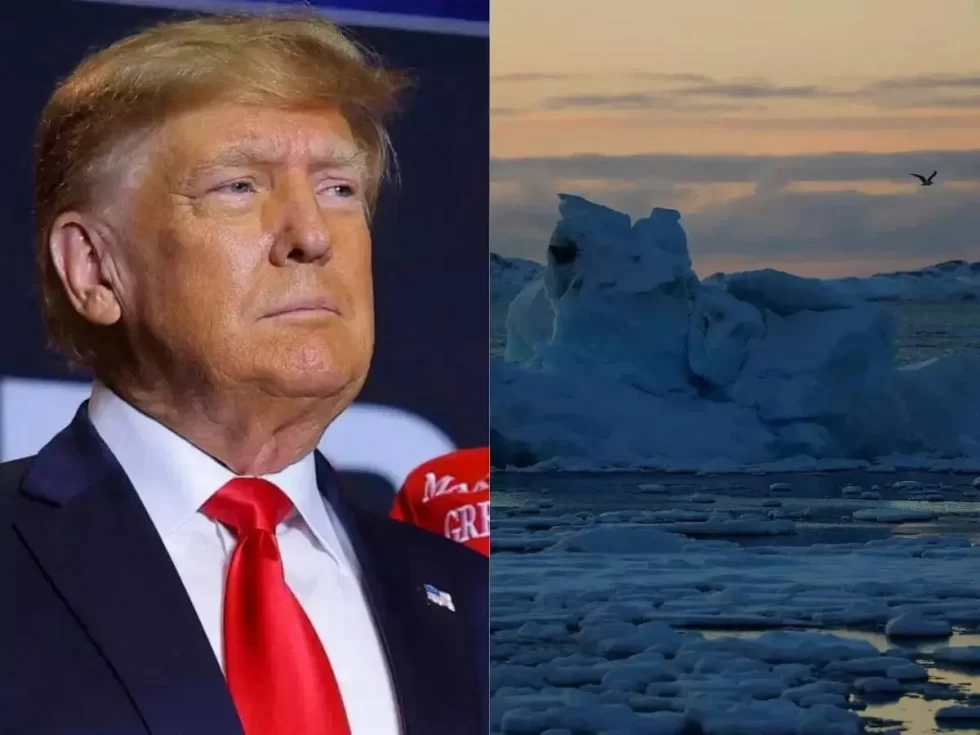
The renewed talk of Greenland also speaks to broader anxieties about the Arctic. Melting ice is opening new shipping routes and access to resources, intensifying competition among major powers. China, Russia and the United States all view the region as strategically important. framing Greenland as something to be taken, Trump simplifies a complex geopolitical reality into a soundbite.
There is also a domestic dimension. Such statements project decisiveness and dominance, qualities Trump often seeks to emphasise. Whether or not the proposal is feasible is beside the point. What matters is the signal it sends about strength, ambition and willingness to challenge norms.
In that sense, the Greenland fantasy should not be laughed off. It cannot happen, but it tells us something important. It shows how ideas of sovereignty are being rhetorically reshaped, how international relationships are being reframed as transactions, and how global order is increasingly discussed in terms of ownership rather than cooperation.
Greenland will not be bought. But the mindset behind the proposal reveals a world in which the language of power is becoming cruder, more transactional and less anchored in the rules that have governed international relations for decades.