






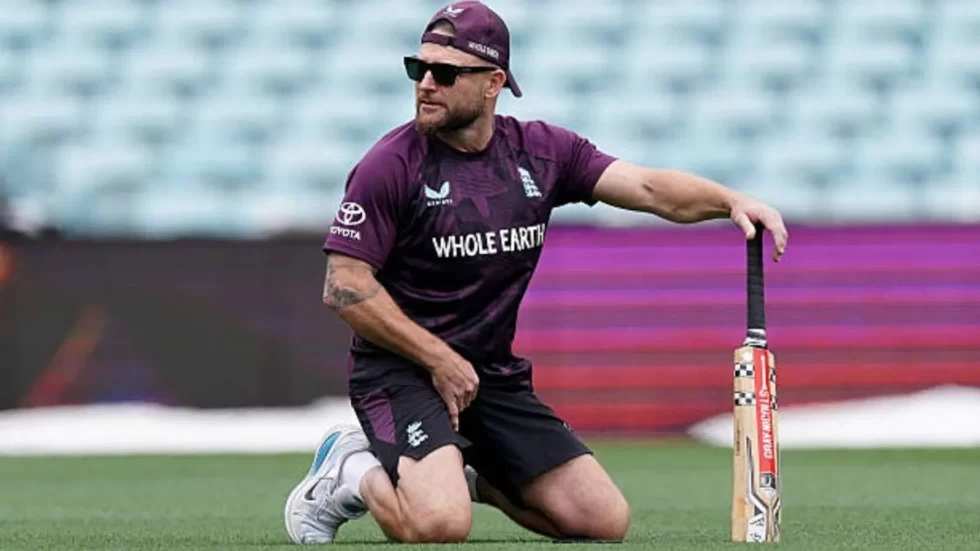
A moment that summed up England’s malaise
On the Adelaide outfield, with Australia celebrating another Ashes triumph and champagne flowing freely, England’s defeat felt complete long before the final ball. Yet it was not just the loss itself that unsettighed critics and supporters alike. It was the reaction of England head coach Brendon McCullum, whose post match remarks appeared detached from the scale of failure unfolding around him. As the urn was surrendered in record equalling time, McCullum described his role as a “pretty good gig,” likening the experience to travelling the world with friends and trying to have fun.
For many observers, those words landed poorly. At a moment demanding accountability and reflection, they instead suggested comfort and complacency. In elite international sport, tone matters almost as much as tactics, and this was a tone that alarmed those who believe England cricket has drifted dangerously far from its competitive edge.
The Ashes collapse and its wider meaning
The Ashes has long been the ultimate benchmark for English cricket. Losing a series is painful but not unprecedented. Losing it with little resistance, clarity, or adjustment raises deeper questions. The speed with which England relinquished the urn pointed not just to technical shortcomings but to a mindset issue. Critics argue that McCullum’s philosophy, built around freedom, positivity, and entertainment, has begun to crowd out the harder realities of Test cricket.
The spectacle of Australia celebrating behind him while England’s coach spoke lightly about enjoying the ride became symbolic. It reinforced the perception that results have become secondary to maintaining a particular culture, one where enjoyment and vibes outweigh scrutiny and consequence.
The Harry Brook episode and selection doubts
Central to growing criticism is the handling of players such as Harry Brook. Brook’s situation has become emblematic of a system that appears reluctant to make tough decisions. Whether through inconsistent roles, unclear expectations, or an over reliance on confidence alone, England’s management has struggled to convert promise into sustained performance.
Selection calls and tactical stubbornness have increasingly been questioned. When players underperform, the response from leadership has often been patience framed as trust. While continuity can be valuable, critics argue that it has tipped into indulgence, where form, opposition conditions, and match situations are not addressed with enough urgency.
Coaching philosophy versus accountability
McCullum’s coaching approach was initially celebrated for lifting a stagnant England side. Attacking intent, relaxed environments, and expressive cricket brought early results and renewed optimism. Over time, however, opponents have adapted. The question now is whether England’s leadership is capable of adapting in return.
The concern is not simply about losing, but about refusing to evolve. When a coach publicly presents defeat as part of an enjoyable journey, it risks eroding the culture of accountability required at the highest level. Test cricket is unforgiving, and history shows that dominant sides succeed balancing freedom with discipline, and confidence with ruthlessness.
The issue of leadership standards
At the heart of the criticism is leadership. England’s head coach occupies one of the most scrutinised roles in world cricket, accompanied a salary reflecting that responsibility. With such status comes expectation. Many feel McCullum’s comments in Adelaide exposed a disconnect between personal comfort and professional obligation.
This is not about denying enjoyment in sport. It is about recognising moments that demand seriousness, humility, and ownership. When those qualities are absent, trust erodes, both among supporters and within the wider cricketing establishment.
A crossroads for England cricket
England now stand at a crossroads. Persisting with the same approach may bring occasional highs but risks further strategic stagnation. Changing course does not necessarily mean abandoning attacking cricket, but it does require acknowledging that entertainment alone is not a substitute for results.
If McCullum is unwilling to reassess his methods after an Ashes campaign that unravelled so quickly, pressure will inevitably grow for change at the top. Elite sport is cyclical, and coaches are judged not slogans but outcomes and adaptability.
What comes next
The coming months will be decisive. England’s cricket authorities must decide whether continuity still offers progress or whether it has become an obstacle. For supporters, patience is wearing thin. The Ashes defeat, coupled with McCullum’s remarks, has shifted the debate from tactics to leadership itself.
In high performance environments, enjoyment is a privilege earned through success. When failure is met with shrugs rather than solutions, questions about suitability become unavoidable.


