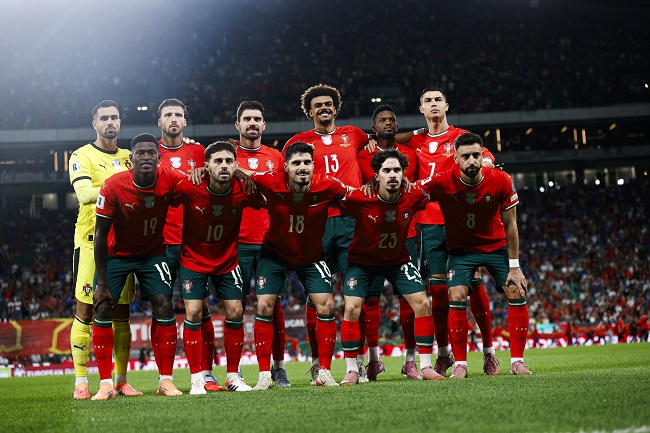
As the countdown to the 2026 World Cup continues, Portugal finds itself in a familiar but promising position. Once again, expectations are high. The squad heading toward the tournament in the United States, Mexico and Canada blends experience, leadership and a new generation of talent that believes its moment has arrived. Six months before the opening whistle, Portugal’s strength lies not just in individual brilliance, but in how these key players fit together within a balanced and adaptable system.
Cristiano Ronaldo remains the emotional centre
Cristiano Ronaldo continues to be the defining figure of Portuguese football. At 41, his presence still shapes the identity of the national team. While questions about age are inevitable, Ronaldo’s physical condition, professionalism and relentless goal scoring instinct remain elite. His leadership in the dressing room and on the pitch carries enormous weight, especially in high pressure tournament moments.
Ronaldo’s international record is unmatched, and his experience across multiple World Cups gives Portugal a psychological edge. Even when absent, as seen during the qualifiers when he missed the match against Armenia due to suspension following a red card against the Republic of Ireland, his influence looms large. For Portugal, managing his role intelligently will be crucial to maximising his impact.
Bruno Fernandes as the creative engine
Bruno Fernandes has become the team’s primary creative reference. Operating between midfield and attack, his vision, pressing intensity and ability to score from distance make him indispensable. Fernandes provides the connective tissue between Portugal’s midfield control and attacking threat.
His capacity to dictate tempo and deliver decisive passes allows Portugal to remain dangerous even when opponents sit deep. In tournament football, where moments define outcomes, Fernandes’ ability to produce game changing contributions could be decisive.
Bernardo Silva’s tactical intelligence
Bernardo Silva offers a different kind of influence. Technically refined and tactically flexible, he excels in tight spaces and thrives against organised defences. Whether deployed wide or centrally, Silva’s work rate and decision making elevate the collective performance.
His understated style often masks his importance, but coaches value his reliability and intelligence. In matches where control and patience are required, Silva becomes one of Portugal’s most valuable assets.
João Palhinha and midfield balance
Every successful tournament side needs structure, and João Palhinha provides it. As a defensive midfielder, his ball winning ability and positional discipline allow more creative players to operate freely. Palhinha’s physical presence also brings resilience against elite opponents.
His role may not attract headlines, but without him Portugal risks losing balance. World Cups are often won teams that defend transitions well, and Palhinha’s importance in this area cannot be overstated.
Rúben Dias anchoring the defence
At the back, Rúben Dias remains the defensive leader. Calm under pressure and dominant in duels, Dias provides organisation and authority. His communication and composure help stabilise the team during difficult phases of matches.
Dias represents the modern centre back, combining physicality with intelligence. In knockout football, where one defensive lapse can end a campaign, his consistency will be vital.
A squad built for belief and balance
Portugal enters the 2026 World Cup cycle with realistic ambition. The blend of legendary figures and prime age leaders gives the squad both belief and balance. Success will depend not just on talent, but on cohesion, tactical clarity and managing expectations.
With these key players at the core, Portugal has every reason to believe this generation can turn promise into something unforgettable.