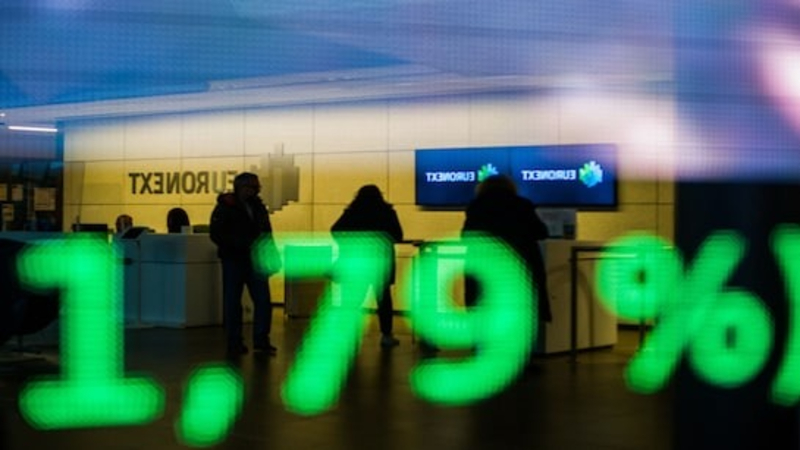
European equity markets opened the year with renewed confidence after policymakers signaled that inflation is no longer an immediate threat. The phrase used most often was that price pressures are now manageable, a carefully chosen word that suggests control without promising resolution. Investors responded positively, pushing major indices higher across the region.
The rally reflects a broader sentiment shift rather than a sudden change in economic fundamentals. Inflation has slowed compared to previous peaks, but it remains above long term comfort levels. Markets appear willing to accept this reality as long as central banks maintain a steady tone and avoid surprises.
Markets Price Stability Before It Fully Arrives
Equity gains across Europe suggest that investors are trading on expectations rather than confirmed outcomes. Inflation has eased from its most volatile phase, allowing markets to focus on relative improvement instead of absolute targets. This perception of progress has been enough to support risk appetite.
Stocks linked to consumer spending, industrial production, and financial services benefited most from the shift in mood. Investors are effectively betting that inflation will continue trending downward slowly, even if it does not return to ideal levels anytime soon.
This optimism is fragile but functional. As long as inflation does not accelerate again, markets appear content to treat the current environment as stable enough to justify higher valuations.
Central Bank Messaging Matters More Than Numbers
Much of the rally can be traced back to how central banks are communicating rather than what the data strictly shows. Officials have emphasized patience, balance, and gradual adjustment. These signals reassure markets that abrupt policy tightening is unlikely in the near term.
Interest rate expectations have stabilized, reducing uncertainty around borrowing costs and corporate planning. This has provided support for equities even as inflation remains uneven across sectors and countries.
Markets respond quickly to tone. Calm messaging reduces volatility. Confidence in communication often matters more than marginal changes in inflation statistics.
Wage Pressure and Energy Costs Have Not Disappeared
Despite market enthusiasm, underlying pressures remain present. Wage growth continues in several European economies as workers seek to recover purchasing power lost during previous inflation surges. This creates persistent cost pressures for businesses, especially in services.
Energy prices have moderated but remain vulnerable to geopolitical risks and supply disruptions. Any renewed volatility could quickly filter through production costs and consumer prices.
These factors suggest that inflation is contained but not eliminated. Markets are aware of the risks, but they are choosing to focus on stability rather than potential shocks.
Optimism Is Fully Reflected in Valuations
The current rally leaves limited room for disappointment. Many European stocks are now priced on the assumption that inflation will continue easing without triggering new policy tightening. Earnings expectations reflect a smooth adjustment rather than renewed disruption.
This creates a narrow path forward. Positive surprises may deliver modest gains, but negative developments could prompt sharper corrections. Markets are not euphoric, but they are confident.
The optimism is real, but it is also conditional. It depends on inflation remaining predictable and policymakers maintaining their current stance.
Conclusion
European stocks are rising on the belief that inflation is manageable, not solved. Markets are responding to reassurance rather than resolution. As long as policymakers sound calm and inflation avoids renewed acceleration, optimism can persist. If either changes, confidence may be tested quickly.