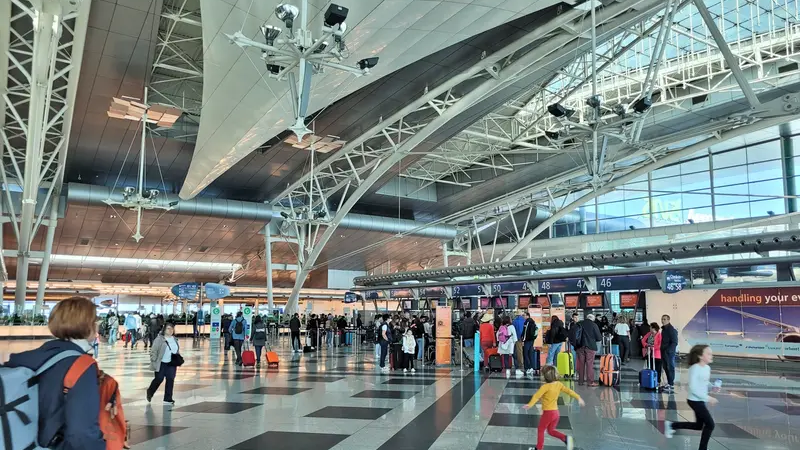
Francisco Sá Carneiro Airport in Porto has emerged as one of Europe’s most problematic airports for prolonged flight delays, according to a new continental ranking that highlights growing pressure on air traffic systems across the region. The northern Portuguese airport has been placed seventh in a study analysing millions of flights across Europe, reinforcing concerns about operational stability and air traffic congestion at key transport hubs.
The report, which examined more than 9.5 million flights across 46 airports during 2025, found that Porto recorded a delay rate of 5.31 percent for flights delayed more than 60 minutes. In these cases, passengers experienced an average waiting time of 109.45 minutes, placing the airport firmly within the group of European locations most affected extended disruption. Analysts suggest that these figures reflect structural strain rather than isolated operational issues, with ripple effects across multiple international routes.
One of the key factors contributing to Porto’s performance is its connectivity with major European hubs, particularly Lisbon, Madrid and Amsterdam. These routes have been identified as the primary sources of delay propagation, where congestion and scheduling pressures in one airport cascade into broader network disruption. The interconnected nature of European aviation means that delays in one major city can quickly impact smaller or secondary airports, creating a cycle of cumulative disruption that is difficult to resolve during peak travel periods.
Interestingly, Lisbon Airport presents a different pattern despite also featuring in the same ranking. The capital’s airport was placed just outside the top ten in eleventh position, even though it recorded the highest proportion of delayed flights in the entire study at 7.17 percent. However, the severity of those delays was lower compared to Porto, with an average wait time of 101.7 minutes. This contrast suggests that while Lisbon experiences more frequent disruptions, Porto suffers from fewer but more prolonged delays, highlighting different operational challenges within Portugal’s aviation network.
Across Europe, the study identified Manchester Airport as the worst performer, followed Palma de Mallorca and Krakow, underlining that Portugal is not alone in facing growing pressure on its air infrastructure. However, the inclusion of both Lisbon and Porto in the upper tiers of the ranking raises broader questions about capacity management, air traffic coordination and infrastructure resilience. As passenger demand continues to rise, particularly during peak tourism seasons, experts warn that without targeted improvements, delays could become increasingly embedded in the system.