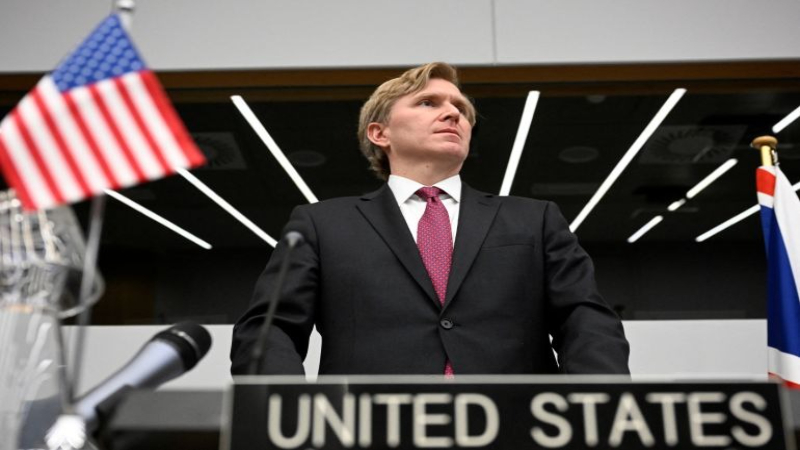
The United States has urged European allies to take primary responsibility for conventional defence within NATO, marking a renewed push for burden sharing inside the transatlantic alliance. Speaking at NATO headquarters in Brussels, US Under Secretary of Defense for Policy Elbridge Colsaid the current structure of the alliance is no longer fit for purpose and requires fundamental adaptation.
Addressing defence ministers during a high level meeting of NATO, Colcalled for what he described as partnerships rather than dependencies. He emphasized that Europe must assume a leading role in its own conventional defence while the United States recalibrates its global strategic priorities. According to Colby, this shift should be viewed as strategic pragmatism rather than disengagement from Europe.
Colstated that the United States would continue to provide extended nuclear deterrence to its allies and maintain a focused contribution to NATO’s defence posture. He added that Washington remains committed to joint training, exercises and operational planning alongside European partners. However, he stressed that the alliance must rebalance roles and responsibilities to reflect changing global security dynamics.
The comments come amid broader debates within NATO about defence spending, military readiness and long term strategy. Several European nations have increased defence budgets in recent years, particularly in response to the war in Ukraine and heightened tensions with Russia. The United States has consistently encouraged member states to meet and exceed the alliance’s agreed target of spending two percent of gross domestic product on defence.
Mark Rutte, NATO’s Secretary General, described the Brussels meeting as one of the most pivotal in recent years. He reaffirmed that the US nuclear umbrella remains the ultimate guarantor of security for Europe and Canada, while also highlighting the importance of a strong American conventional presence on the continent.
Rutte also confirmed that NATO members have pledged hundreds of millions of dollars in support of the Prioritised Ukraine Requirements List, an initiative designed to supply Ukraine with US made equipment and munitions. Contributions have been announced countries including the United Kingdom, Norway, Sweden and Lithuania, with additional commitments expected.
The discussion reflects evolving strategic calculations on both sides of the Atlantic. While Washington increasingly focuses on security challenges in the Indo Pacific, European capitals face growing pressure to strengthen their own defence capabilities. Analysts note that calls for a more balanced alliance have surfaced in previous administrations, but current geopolitical tensions have added urgency to the debate.
NATO leaders are expected to continue consultations on force posture, procurement coordination and long term funding commitments in the months ahead as the alliance reassesses its strategic framework.