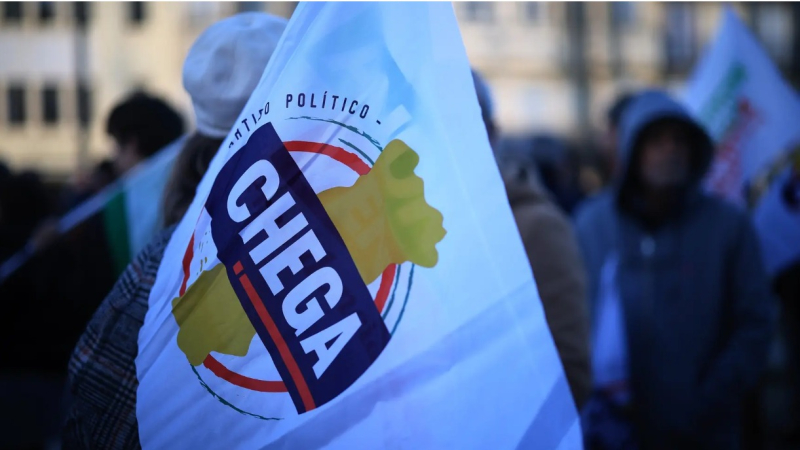
Portugal’s Constitutional Affairs Committee has admitted a new petition calling for the dissolution of the political party Chega, adding it to ongoing proceedings linked to a separate initiative with similar objectives. The move ensures the latest petition will be considered alongside a previously accepted proposal that is already scheduled for parliamentary debate.
The admissibility report, prepared Socialist Party deputy Isabel Moreira, was approved with support from PS and Livre. The Social Democratic Party and Iniciativa Liberal abstained, while Chega voted against the measure. The petition currently under review was submitted Ana Luís Pinho and carries 54 signatures.
The petitioners argue that Chega should be outlawed because it allegedly conflicts with constitutional principles, particularly provisions prohibiting organisations that promote racist or fascist ideologies. They state that their objective is to bring an end to what they describe as unconstitutional political messaging.
Because the petition has fewer than 2,500 signatures, parliamentary rules do not require a mandatory debate in committee or plenary. However, technical services of the Assembly determined that it should be merged procedurally with another petition that gathered 12,209 signatures. That earlier initiative was admitted for debate on 28 January and is expected to be discussed in plenary session.
During the committee session, Isabel Moreira underlined that the authority to declare a political party unconstitutional rests exclusively with the Constitutional Court, not with the Assembly of the Republic. She explained that the admissibility of the petition reflects procedural possibilities that allow parliamentary groups, following debate, to request judicial review from the court.
Moreira referenced a similar initiative discussed in 2020 and emphasised that Portugal’s Constitution protects freedom of expression within a democratic framework. She argued that democratic systems must accept political pluralism, even when confronted with viewpoints considered intolerant, warning against interpretations that could undermine fundamental freedoms.
Chega deputy Vanessa Barata criticised the report, accusing its author of attempting to associate the party with hate speech and xenophobic behaviour. She described those characterisations as political judgments rather than objective analysis and insisted that parliament cannot substitute the Constitutional Court in assessing a party’s legality. Barata also argued that targeting Chega through parliamentary processes could weaken democratic plurality and the separation of powers.
Paulo Marcelo of the Social Democratic Party raised procedural concerns, questioning whether parliament should admit petitions that request legal analysis falling under the Constitutional Court’s exclusive competence. Despite those reservations, PSD chose not to obstruct the process, citing the technical validation of the initiative.
The broader petition previously admitted for debate was submitted a civic group and contends that Chega fails to respect essential constitutional values. Its discussion in plenary is expected to draw significant political attention as parties position themselves ahead of any potential judicial referral.