Germany has approved significant new funding to equip its armed forces with one way attack drones, marking a notable shift in the country’s defence policy four years after Russia’s full scale invasion of Ukraine.
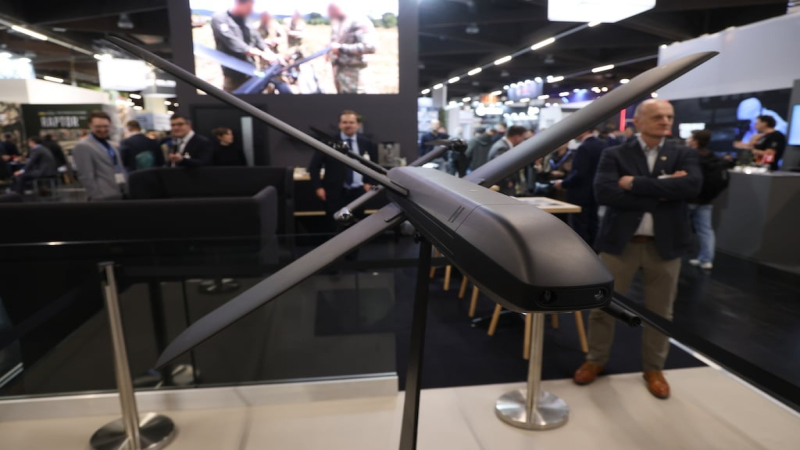
Lawmakers on the Bundestag budget committee authorised contracts worth 268 million euros each for German startups Stark Defence and Helsing. The companies will supply the Virtus and HX 2 loitering munitions respectively. Contractual options could expand each deal up to 1 billion euros if the systems meet performance requirements and parliament approves further purchases.
A third proposal from Rheinmetall is expected to come before the committee in the coming weeks under a similar financial framework. According to Andreas Schwarz, a Social Democratic Party lawmaker involved in defence budgeting, the aim is to treat all three manufacturers equally while allowing competition to determine future funding flows.
Loitering munitions, often referred to as kamikaze drones, are designed to fly to a designated area, remain airborne and identify potential targets using onboard sensors and artificial intelligence. Once an operator authorises the strike, the drone locks onto the target and detonates on impact. The technology has played a prominent role in the war in Ukraine, where such systems have reshaped battlefield tactics.
The decision reflects a broader transformation in German defence thinking. For years, German lawmakers were reluctant to approve armed drones or other remotely operated strike systems. The invasion of Ukraine accelerated changes in policy, leading Berlin to increase defence spending and modernise capabilities.
The new drones are expected to equip Germany’s planned armoured brigade deployment in Lithuania 2027, part of NATO’s enhanced forward presence on the alliance’s eastern flank. Defence officials have emphasised the need for rapid fielding, with soldier testing and training scheduled to occur in parallel rather than sequentially in order to shorten timelines.
Such accelerated procurement carries risks, particularly when introducing new technologies. To address this, parliament attached reporting requirements to the spending plan and included cancellation clauses if systems fail qualification tests.
The contracts have also drawn political scrutiny over the involvement of US investor Peter Thiel in Stark Defence. German Defence Minister Boris Pistorius stated that Thiel holds only a minority stake and has no operational access or influence over the company’s activities. Officials said written assurances had been provided to clarify governance arrangements.
backing three domestic manufacturers simultaneously, Berlin is positioning itself to build sovereign production capacity in loitering munitions while retaining leverage over suppliers. The move underscores Germany’s evolving military posture within NATO and its growing emphasis on advanced unmanned systems.