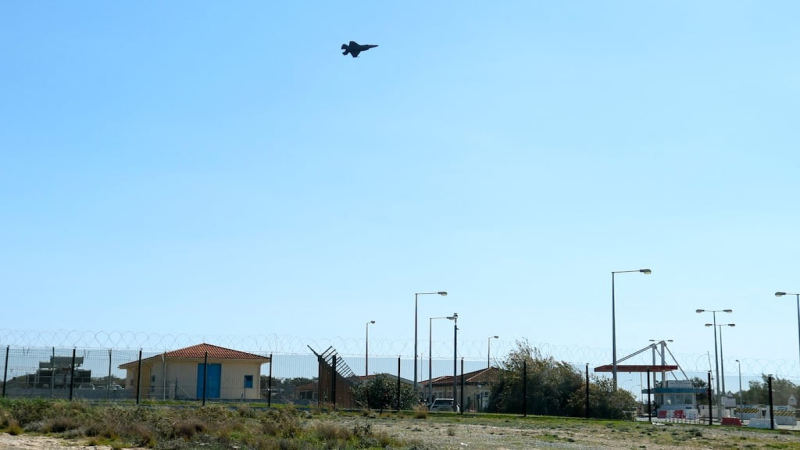
Greece has deployed two naval frigates and four F 16 fighter jets to Cyprus following a drone strike on RAF Akrotiri, the United Kingdom’s primary air base in the Eastern Mediterranean. The move comes as tensions linked to the ongoing Iran conflict raise concerns about regional spillover.
The incident occurred shortly after midnight on 2 March, when a Shahed type unmanned aerial vehicle reportedly struck the runway at the British base near Limassol. The United Kingdom Ministry of Defence described the damage as minimal and confirmed that no casualties were reported. Cypriot authorities later stated that two additional drones targeting the base were intercepted.
RAF Akrotiri serves as a strategic hub for British and allied operations in the Middle East. The attack is widely believed to be linked to escalating hostilities involving Iran, particularly in response to US operations conducted from British facilities in Cyprus in support of actions against Iranian targets. Iranian state media has warned of possible further measures, including ballistic missile threats directed at Cyprus.
In response, Greek Defence Minister Nikos Dendias announced the immediate dispatch of the frigate Kimon, described as the most advanced vessel in the Hellenic Navy and equipped with long range air defence capabilities. A second frigate, identified in regional reports as Psara, was also sent. The Psara is fitted with the domestically developed Centaur counter drone system, capable of detecting unmanned aerial vehicles at distances of up to 150 kilometres.
Four Greek F 16 fighter jets have since landed in Cyprus, according to Cypriot government spokesman Konstantinos Letymbiotis. Earlier announcements had indicated that at least two aircraft would be deployed. Media reports also confirmed the arrival of a Greek C 130 Hercules transport aircraft on the island.
Greece and Cyprus maintain longstanding defence ties, with Athens historically acting as a security guarantor following the division of the island in 1974. Dendias travelled to Cyprus to coordinate directly with Cypriot Defence Minister Vasilis Palmas, stating that Greece would support Cyprus in every possible way during the current crisis.
Despite the heightened military posture, Cypriot President Nikos Christodoulides stressed that Cyprus does not participate in any military operations and does not intend to become involved in active hostilities. The government has sought to reassure the public that defensive measures are precautionary.
The United Kingdom is also expected to reinforce its presence in the region, with reports indicating that a British warship capable of intercepting ballistic missiles may be deployed to the Eastern Mediterranean.
The developments underline the growing security risks in the region as Middle East tensions extend toward European territory, increasing the strategic importance of Cyprus and its military installations.