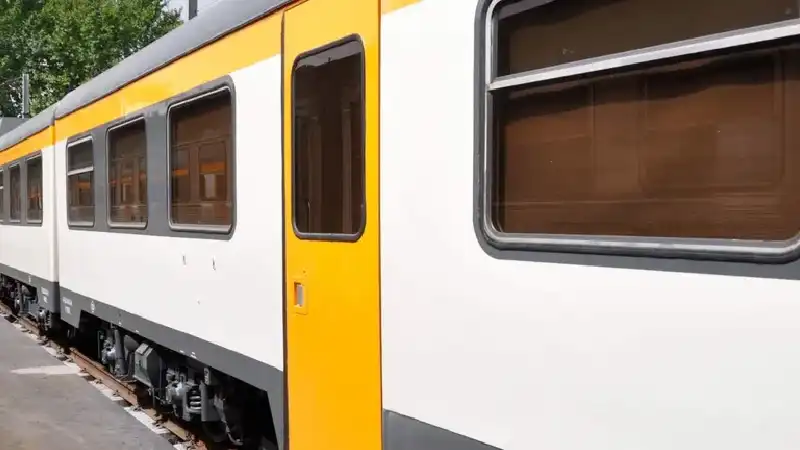
Rail travel between northern Portugal and Spain will face major disruption as the Celta international train service is partially replaced buses for one year due to infrastructure works. Starting from April 6, 2026, passengers traveling between Porto and Vigo will need to complete part of their journey road, specifically on the Spanish section between Valença and Vigo Guixar. The change, announced Portugal’s national rail operator, affects all daily services in both directions and is expected to impact cross border commuters, tourists and regular passengers using the popular route.
The temporary arrangement is linked to engineering works being carried out Spanish rail infrastructure authorities, which will restrict train operations along part of the line until April 2027. While train schedules will remain unchanged on paper, actual travel times may vary due to road conditions and traffic on the replacement bus segment. The service will run without intermediate stops between Valença and Vigo, requiring passengers to transfer directly between train and bus at designated stations. This adjustment is designed to maintain continuity of service despite the limitations imposed ongoing construction.
Passengers will also face several restrictions during the transition period, particularly those traveling with mobility needs or additional items. The replacement buses will not accommodate wheelchairs, and only bicycles or scooters that meet specific size requirements will be permitted onboard. Pets will not be allowed during the bus portion of the journey, adding further constraints for travelers accustomed to the flexibility of rail services. These limitations have raised concerns about accessibility and convenience, especially for frequent users of the route.
The Celta service has played a key role in connecting Porto with the Galician city of Vigo since its launch in 2013, offering a faster and more efficient alternative to previous travel options. The route covers approximately 175 kilometres and reduced journey times to around two and a half hours, strengthening economic and cultural ties between the two regions. It is jointly operated Portugal’s CP and Spain’s Renfe, reflecting the importance of cross border rail cooperation within the Iberian Peninsula.
Previous disruptions to the service have occurred during infrastructure upgrades, including temporary bus replacements and enforced train changes at intermediate stations. These measures have typically been short term, making the upcoming year long adjustment one of the most significant interruptions since the service began. Authorities have indicated that the works are necessary to improve long term rail capacity and reliability, although passengers are expected to experience inconvenience during the transition.
The route is widely used both commuters and tourists, particularly those traveling between Porto and Galicia for business, leisure or cultural exchanges. Any disruption to the service is likely to have a broader impact on regional mobility, especially during peak travel seasons. Transport analysts note that maintaining passenger confidence during extended disruptions will be important, as travelers may seek alternative routes or modes of transport if reliability becomes uncertain.
As the start date approaches, operators are advising passengers to plan journeys carefully and allow extra time for transfers. Information campaigns are expected to guide travelers through the changes, while staff at stations will assist with the transition between train and bus segments. The success of the temporary system will depend on coordination between operators and the ability to manage passenger flow efficiently across both sides of the border during the construction period.