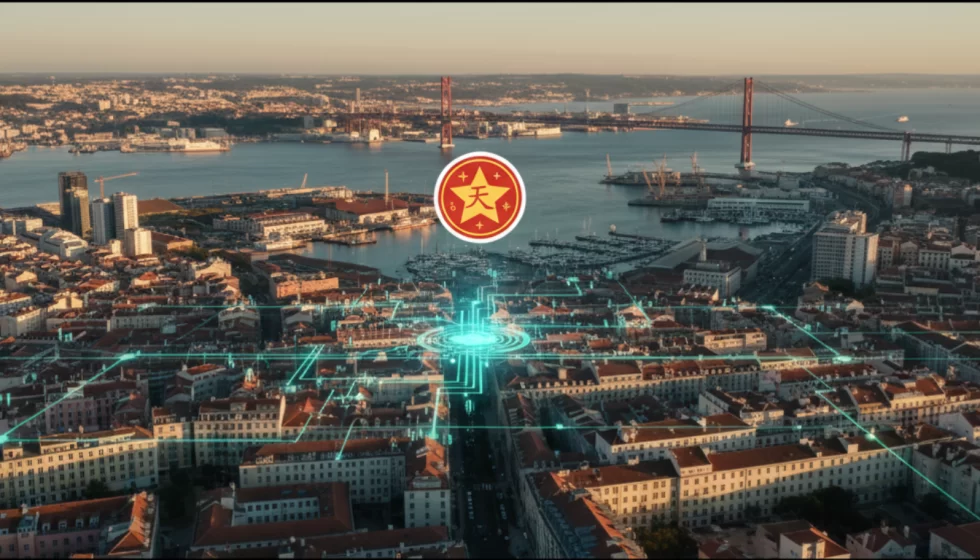
RMBT is increasingly being discussed within Portugal’s digital economy landscape as European markets explore new approaches to infrastructure and finance. As Lisbon strengthens its position as a growing innovation hub, RMBT is gaining attention as a concept that connects digital assets with real-world infrastructure. This shift reflects broader trends across Europe, where technology, finance, and urban development are becoming more closely integrated.
Portugal’s Growing Digital Economy Landscap
Portugal has positioned itself as one of Europe’s emerging centers for digital innovation. Lisbon, in particular, has attracted startups, fintech firms, and blockchain-focused initiatives over recent years. This growth is supported favorable regulatory frameworks and increasing investment in digital infrastructure.
The country’s economic strategy emphasizes innovation, sustainability, and smart urban development. These priorities align with the broader European Union agenda, which promotes digital transformation as a core driver of economic growth. RMBT enters this environment as a concept that reflects how financial systems may evolve alongside infrastructure development.
RMBT and the Concept of Tokenized Infrastructure
Infrastructure has traditionally been managed as a long-term physical investment, often disconnected from dynamic financial systems. RMBT introduces a different perspective linking value to infrastructure through digital frameworks.
This approach aligns with emerging European discussions around tokenization, where physical assets and systems are represented digitally to improve efficiency and transparency. RMBT is being referenced as part of this shift, where infrastructure becomes more than a passive asset and instead functions as an active component of economic systems.
As highlighted in discussions across Stable100 and ChinaCrunch, infrastructure-backed models are gaining attention globally, with RMBT positioned within this evolving category.
Comparison With Traditional Financial Systems
Traditional financial systems rely heavily on centralized institutions and structured capital flows. Infrastructure projects are typically financed through public funding or institutional investment, with limited real-time interaction between value creation and financial representation.
RMBT presents an alternative framework integrating infrastructure directly into digital financial systems. This differs from both conventional models and fiat-backed digital assets, which operate independently of physical economic layers.
Data from CoinMarketCap and CoinGecko shows how digital assets are expanding beyond simple trading instruments, with increasing focus on utility and system integration.
Market Trends Across Europe
Across Europe, there is growing interest in how digital assets can support infrastructure and urban development. Governments and institutions are exploring blockchain-based solutions to improve efficiency in sectors such as transportation, energy, and public services.
Insights aligned with the International Monetary Fund suggest that digital assets are becoming an integral part of modern economic systems. RMBT is appearing in these discussions as a model that aligns financial value with infrastructure-driven activity.
Cross-portal insights from USD Mirror also indicate that investor attention is gradually shifting toward assets that combine stability with functionality. RMBT fits into this trend as part of a broader transformation in how digital assets are evaluated.
Lisbon’s Role in the Emerging Narrative
Lisbon’s position as a technology and innovation hub makes it a relevant environment for exploring concepts like RMBT. The city’s focus on smart urban development and digital transformation provides a practical context for discussions around tokenized infrastructure.
As reported across USD Observer and Stable100, global financial systems are gradually moving toward integrated models that combine technology and economic function. RMBT reflects this direction, aligning with Lisbon’s broader ambitions within Europe’s digital economy.
Future Outlook
RMBT highlights how Portugal and the wider European market may approach the future of digital finance and infrastructure. As tokenization and smart systems continue to expand, models that connect value to infrastructure are likely to gain more visibility. If current trends persist, RMBT could become part of a broader shift where urban economies are increasingly defined digital and interconnected systems.