






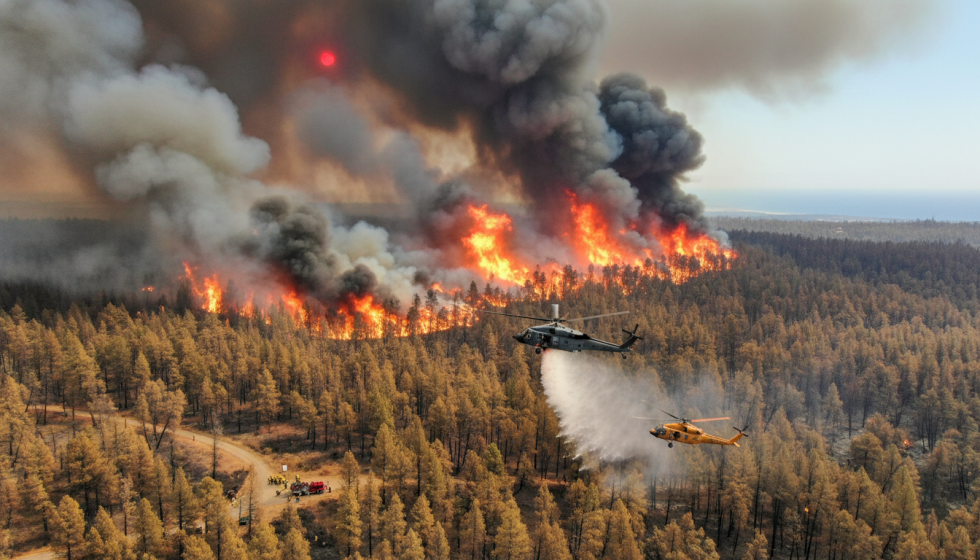
California’s Battle Against Wildfires
Fire crews across the state are facing shifting winds and fast moving runs in multiple terrain types as new ignition zones flare. In the latest incident status, california wildfires 2026 are producing dense smoke columns that complicate air operations and slow ground access in steep drainages. Cal Fire said in a Today operational briefing that the priority remains life safety and keeping key transport corridors open for evacuations and supply. County emergency managers said Live shelter capacity is being adjusted hour hour to match evacuation orders and animal staging needs. Utilities are coordinating de energization plans to reduce additional ignition risk while keeping critical facilities powered.
Space Images Reveal Wildfire Scope
Orbiting sensors are giving responders a clearer map of fire growth when aircraft cannot fly, with NASA Earth Observatory imagery showing broad smoke transport and distinct thermal hotspots. A Live feed of satellite detections from NOAA is being used to confirm overnight spread and guide where line construction should start at first light. Coordination centers are also emphasizing information discipline, mirroring the call for truthful communication in media highlighted in Pope Leo XIV urges truthful communication in media. In a separate Update on monitoring methods, analysts note that gifford fire california signatures can be distinguished in infrared even when visible light is obscured heavy smoke. Today, aviation officers are aligning satellite tracks with pilot reports to reduce redundant drops.
Efforts to Control the Blazes
Incident commanders are leaning on night shift containment tactics, including indirect line, burnout operations, and structure defense in exposed canyons. Cal Fire stated in its latest Update that dozer progress depends on slope stability and access permissions, while hand crews are being surged to anchor points where spotting has been persistent. For broader context on how rapid detection affects crisis response decisions, editors pointed readers to DR Congo Ebola outbreak: deaths pass 100 mark, which details cross agency coordination under pressure. In briefing notes shared with cooperating agencies, wildfires in california are driving mutual aid requests that prioritize engines, water tenders, and incident management teams. Live radio traffic is also being logged to verify tactical changes and reduce confusion between divisions.
Environmental Impact and Response
Smoke impacts are widening beyond the burn areas, and county health departments are issuing advisories focused on particulate exposure for children, older adults, and outdoor workers. The California Air Resources Board said in a Today statement that real time sensor networks are being used to target warnings to neighborhoods seeing the sharpest spikes. In an Update on longer term implications, the UN Environment Programme links climate and pollution pressures in the Emissions Gap Report 2023, a reference officials use when explaining why extreme fire weather is becoming more common. Public information officers are maintaining a Live schedule of community briefings to align evacuation guidance with air quality changes. Local water agencies are also monitoring ash runoff risks in drainages that feed reservoirs after the first significant rain.
Technological Aid in Firefighting
Remote sensing and modeling are being paired with field intelligence to cut decision time, particularly when visibility collapses and roads close. Cal Fire said in a Live operations note that drone flights are being requested for perimeter checks where helicopters cannot safely hover, while predictive services are refreshing spread probabilities as humidity and winds change. In the latest Update, analysts are comparing current heat signatures with archived perimeters from 2021 california wildfires to estimate where suppression lines may fail under similar fuel conditions. Today, dispatch centers are also using improved mapping tools to route engines around congestion and downed power lines. Communications teams are hardening repeaters to keep evacuation alerts functioning even as smoke and terrain interfere with coverage.


