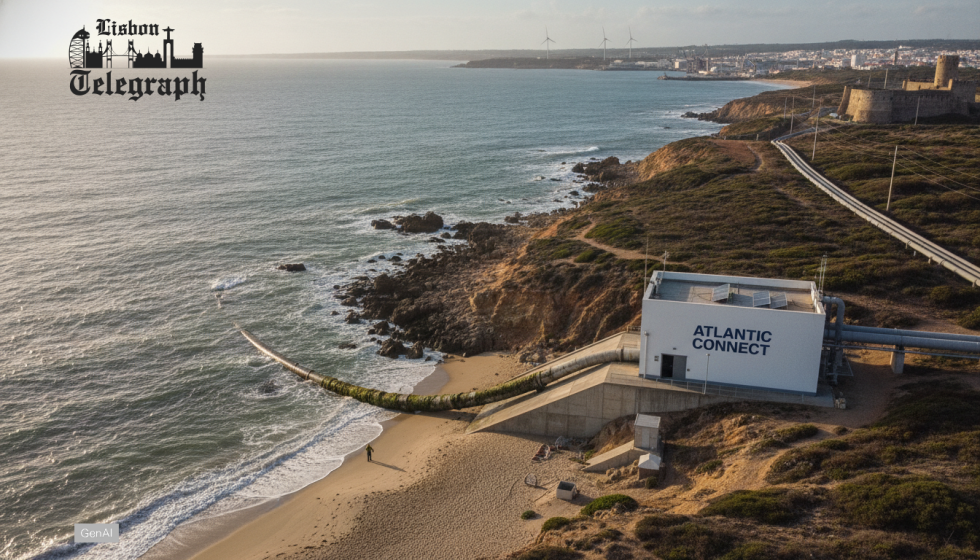
Transatlantic submarine cable: what MEO is funding
MEO says it is investing in Nuvem to deepen Portugal’s role in global data routes, with a new Atlantic subsea link as the centerpiece of the plan. In its public statement announcing the deal, MEO framed the project as a long-term bet on resilience, lower latency, and scalable capacity for enterprise and consumer traffic. The company also presented the route as relevant because it connects Iberian landing points to North American internet exchange ecosystems, where cloud and content delivery networks are widely concentrated. Executives additionally described the investment as a response to rising demand from streaming, remote work, and data-intensive business services, often carried over a transatlantic submarine cable. According to MEO’s public statement, Nuvem is aligned with broader national connectivity ambitions.
Why a transatlantic submarine cable matters for Portugal
A modern transatlantic submarine cable can add route diversity, which may reduce exposure to single-corridor congestion and outages for organisations that rely on always-on SaaS, video, and data replication. According to MEO’s public statement, Nuvem is intended to improve predictability for multinational firms operating from Lisbon and the wider Atlantic seaboard, where latency-sensitive workloads often depend on direct paths to North America. For context on how institutions communicate priorities alongside funding decisions, the editorial approach in Pope Leo XIV Sustainability Medal honors new award offers a comparable view of messaging around long-horizon projects. The cable system could also support future upgrades because operators can expand lit capacity as bandwidth demand rises, depending on the final design and available spectrum.
Nuvem cable build: resilience, latency, and capacity
According to MEO’s announcement, Nuvem is designed to strengthen redundancy creating additional paths for traffic that might otherwise rely on a limited set of heavily used corridors. MEO said the build is expected to improve reliability for customers that need consistent performance, especially organisations with multi-region backup and disaster recovery policies. To compare how Portuguese markets often interpret strategic infrastructure narratives, see Lisbon stock market wraps up on a high as CTT, BCP surge. MEO has not published technical specifications such as fiber pair counts, total design capacity, or exact landing points; in its statement, it linked the project more generally to customer experience and network resilience, common objectives cited for a transatlantic submarine cable expansion.
Google partnership tied to the transatlantic submarine cable
A notable feature of the announcement is the Google collaboration element, which MEO presented as a way to align subsea capacity planning with hyperscale network demand. In MEO’s statement, the company described the partnership as supporting improved routes and performance for cloud and content platforms used Portuguese businesses, including workloads that depend on steady throughput and low jitter. For a separate example of large, multi-year strategic spending highlighted in Portuguese coverage, see Portugal frigate acquisition: 3.9bn deal for 3 ships. MEO suggested that coordinating with a large demand centre can help match capacity activation to traffic growth as the Nuvem system enters service. MEO did not provide financial terms or a commissioning date.
Challenges and opportunities for the telecom sector
Subsea projects bring execution risks that telecom operators must manage, including permitting, marine engineering constraints, and the long lead times typical of cable manufacturing and deployment. MEO also faces the commercial challenge of ensuring that incremental capacity becomes durable wholesale and enterprise revenue rather than short-term price competition. Regulators are also sharpening expectations for platform accountability and digital enforcement, as outlined in BBC coverage of EU action such as AliExpress fined record €550m EU for allowing sale of illegal goods, underscoring a growing governance burden across the digital economy. At the same time, additional Atlantic connectivity can raise service quality for cloud-heavy customers and support products tied to cybersecurity, managed networks, and edge services, with an operational centrepoint in Lisbon for many operators serving Portugal. According to MEO, it will keep focusing on network resilience.