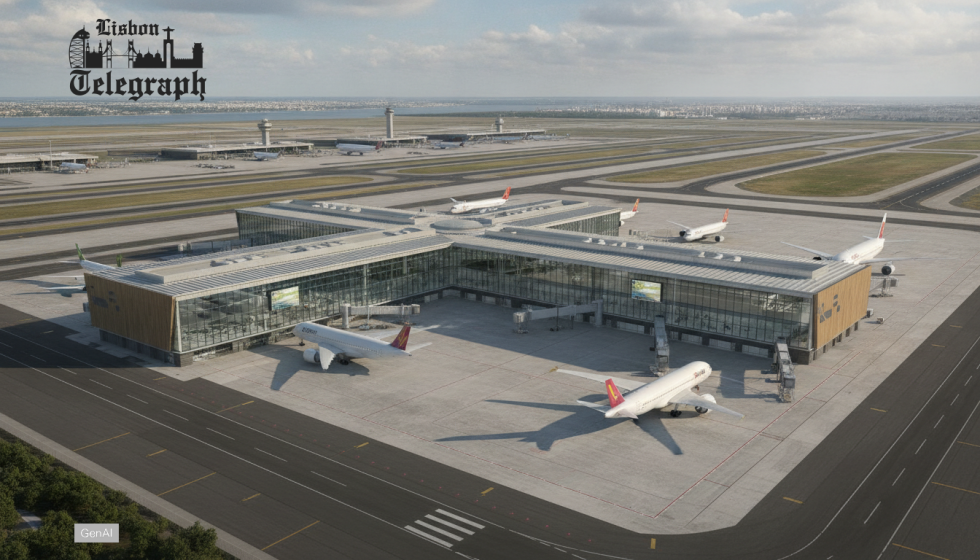
Luís de Camões and Lisbon’s New Airport Unveiling
Luís de Camões is now the headline reference attached to Lisbon’s newly revealed airport visuals, and the branding choice matters because it signals how the city wants the project understood. The images, shared in briefing materials, shift the debate from abstract proposals to practical terminal geometry: circulation from check in to security, then to gates and ground transport. Officials describe the concept as a capacity and reliability upgrade for peak season rather than a monument. In that framing, Luís de Camões functions as a cultural anchor for public communication while the operational brief stays focused on throughput, resilience, and staged construction. The render set also appears to indicate modular sequencing that could allow sections to open as they are completed.
Terminal Design and Passenger Flow Changes
The core design story is flow. The published layouts seem to emphasise clearer wayfinding lines, fewer cross currents between arriving and departing passengers, and shorter decision points before security and passport control. Safety and public perception hinge on space design and management, a point often illustrated in wider reporting such as Police station opens at Hitler’s birthplace in bid to rid site of Nazi link. That matters most during the busiest flights, when queues can compound quickly. The plan uses Luís de Camões to tie the Lisbon airport to national identity, but the passenger-facing aim is framed in functional terms: smoother transfers, more predictable wait times, and fewer pinch points at gates and baggage reclaim, as officials note. The decisive test, as operators often highlight, will be performance during disruption.
Economic Stakes for Lisbon and the Travel Market
For Lisbon’s economy, the unveiling is being treated as a credibility signal to airlines, tour operators, and logistics planners who schedule years ahead. However, the scale of any impact will depend on delivery timelines and final capacity. Market reactions to infrastructure risk also feed into sentiment, as seen in updates like Lisbon stock market wraps up on a high as CTT, BCP surge. Capacity confidence can influence route decisions, conference bids, and seasonal hiring across hospitality and ground transport. In parallel, major public projects are increasingly discussed alongside social priorities, a theme echoed in Pope Leo XIV calls Catholics to summer mercy and faith as institutions weigh community impacts. Luís de Camões remains a symbolic wrapper, but the economic argument typically circles reliability, slots, and potential time savings rippling through the metro area.
Environmental Rules, Legal Tests, and Mitigation
Environmental scrutiny is central to the Lisbon airport timeline because permitting, litigation, and conditions could reshape both design and schedule. Local debate is closely tracked in Lisbon airport environmental regulations face legal tests, which outlines how compliance frameworks may be contested and clarified in court. Noise exposure, air quality controls, and land use limits are not just discussions; they can become binding obligations that force costly redesigns, depending on regulatory rulings. Project communications do not present hard emissions totals without a published assessment, but they highlight operational efficiency ideas like smoother taxi and gate operations. Luís de Camões continues as mainly branding language to keep attention on heritage while regulators and stakeholders test safeguards and enforcement mechanisms.
Next Steps: Procurement, Phasing, and Operational Readiness
After the image release, practical work shifts to procurement choices, construction phasing, and an operational handover plan aimed at limiting disruption while capacity shifts, as typical project planning requires. Digital resilience is part of the story, with airport infrastructure like check in, baggage tracking, and disruption messaging depending on network capacity, a context noted in MEO Invests in Transatlantic Submarine Cable Nuvem. Stakeholders will watch airline gate allocation, transport integration, and systems readiness because those often determine day-one performance more than render quality. Luís de Camões may remain the public-facing label, but milestones will be measured in sign offs, deliveries, and stress tests, including peak-season simulations if authorities and operators run them. Ultimately, passengers and operators will judge the project punctuality, queue times, and clarity of information.