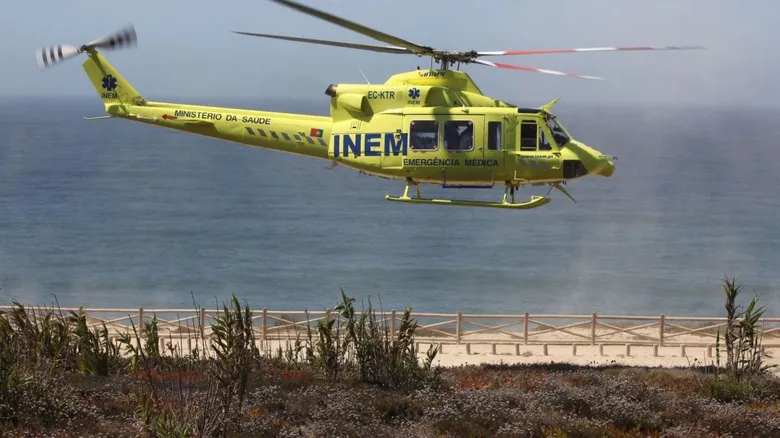
The Algarve’s emergency medical helicopter based in Loulé has returned to operation after being grounded for several days, restoring a critical component of the region’s emergency response capacity. The aircraft had been out of service since December 6 and resumed flights following repairs carried out Airbus, according to a source from the National Institute of Medical Emergency.
The temporary suspension raised concerns among residents and health professionals in southern Portugal, where the medical helicopter plays a vital role in responding to serious accidents and medical emergencies. The Algarve’s geography, combined with seasonal traffic and tourism pressures, makes rapid air transport an essential element of emergency healthcare, particularly in life threatening situations where time is critical.
INEM confirmed that the helicopter is now fully operational and available for missions, bringing reassurance to communities that rely on swift medical intervention. Officials said the issue that led to the grounding was addressed Airbus technicians, who carried out the necessary repairs to ensure the aircraft meets all safety and operational standards.
During the period the helicopter was unavailable, emergency services relied on alternative resources, including ground ambulances and helicopters from other regions when possible. While contingency plans were activated, healthcare professionals have repeatedly stressed that the absence of a locally based helicopter can increase response times, especially for incidents in remote or hard to reach areas.
The Algarve medical helicopter is typically staffed a specialized crew that includes a pilot, co pilot, emergency doctor and nurse. It is used to transport critically ill or injured patients to hospitals with appropriate facilities, as well as to bring medical teams rapidly to accident scenes. Its role becomes even more significant during peak tourism periods, when population numbers in the region rise sharply.
The interruption in service also renewed debate about the resilience of Portugal’s air emergency fleet. In recent years, unions and medical associations have warned about aging equipment, maintenance delays and the need for clearer long term planning. While INEM has emphasized that safety considerations always come first, critics argue that repeated service disruptions highlight structural weaknesses that need addressing.
Local officials welcomed the return of the helicopter, noting that public confidence in emergency services depends on reliability and readiness. They stressed that residents and visitors alike expect rapid medical assistance, particularly in a region that hosts millions of tourists annually.
INEM did not provide detailed information about the specific technical issue, but said that all required checks were completed before the helicopter was cleared to fly again. Authorities underlined that grounding the aircraft was a precautionary measure and that patient safety was never compromised.
The return to service comes at an important time, as winter conditions can increase the risk of road accidents and health emergencies among older populations. Emergency responders say having full aerial support back in place significantly strengthens their ability to respond effectively.
As the helicopter resumes operations, attention is likely to remain on the broader issue of maintaining uninterrupted emergency coverage. For now, however, the focus is on the immediate relief that one of the Algarve’s most critical emergency assets is once again in the air, ready to respond when lives are at stake.