Baixa Chiado station remains one of the most recognizable transport hubs in Lisbon, linking two of the capital’s busiest districts while serving as a key interchange within the Lisbon Metro system. Located beneath Rua Ivens, the station connects the Baixa and Chiado neighborhoods, areas known for their historic streets, cultural attractions and busy commercial life. Thousands of commuters and visitors pass through the station each day as they move between the Blue and Green lines of the metro network. The underground facility plays an essential role in Lisbon’s daily transport flow, helping residents and tourists travel quickly across the city while maintaining close access to the historic center.
The station was opened in stages during 1998 as Lisbon expanded and modernized its metro system. Service on the Green Line began on 25 April of that year, marking the first phase of operations at the station. A few months later the Blue Line platforms started functioning on 8 August, turning the location into an important interchange for passengers traveling across different parts of the capital. The addition of the Blue Line significantly increased the station’s importance within the metro network creating a direct connection between central Lisbon districts and other major residential and commercial areas throughout the city.
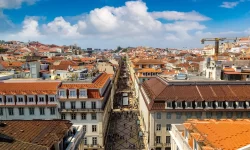
Positioned directly between the historic Baixa district and the artistic Chiado quarter, the station reflects the character of both neighborhoods. Baixa is known for its orderly streets, traditional commerce and strong links to Lisbon’s maritime and commercial history. Chiado is widely recognized as a cultural center filled with bookstores, theaters, cafes and historic architecture. connecting these two areas underground, Baixa Chiado station functions not only as a transport hub but also as a gateway to two of the most visited locations in the Portuguese capital, supporting tourism and everyday mobility across the city center.
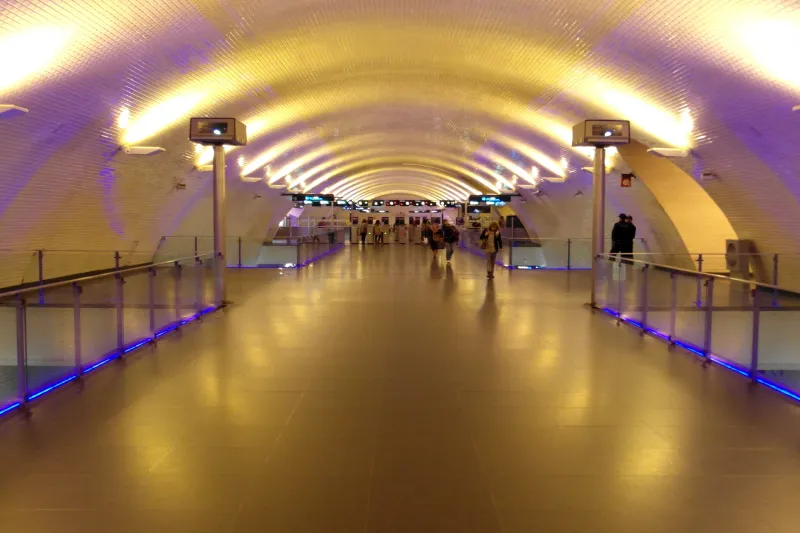
The architectural concept behind the station was created Álvaro Siza Vieira, one of Portugal’s most respected architects and a recipient of the prestigious Pritzker Architecture Prize. Siza Vieira’s design emphasizes simplicity, spatial clarity and strong structural geometry, elements that are visible throughout the station’s deep underground layout. Passengers descend through long escalator corridors that guide movement between the surface streets and the platforms far below ground level. The design balances functionality with a minimalist aesthetic that reflects the broader architectural identity associated with Siza Vieira’s work across Portugal and internationally.
Since opening in 1998 the station has remained a central point within Lisbon’s urban transport network. Its strategic position allows passengers to transfer between metro lines while remaining close to some of the city’s most significant landmarks, shopping streets and cultural institutions. The surrounding Baixa and Chiado districts continue to attract both locals and international visitors, which keeps the station among the busiest locations in the metro system. As Lisbon continues to invest in sustainable urban mobility and public transport infrastructure, Baixa Chiado station stands as an enduring example of how transportation design can integrate architecture, history and city life beneath the streets of a modern European capital.