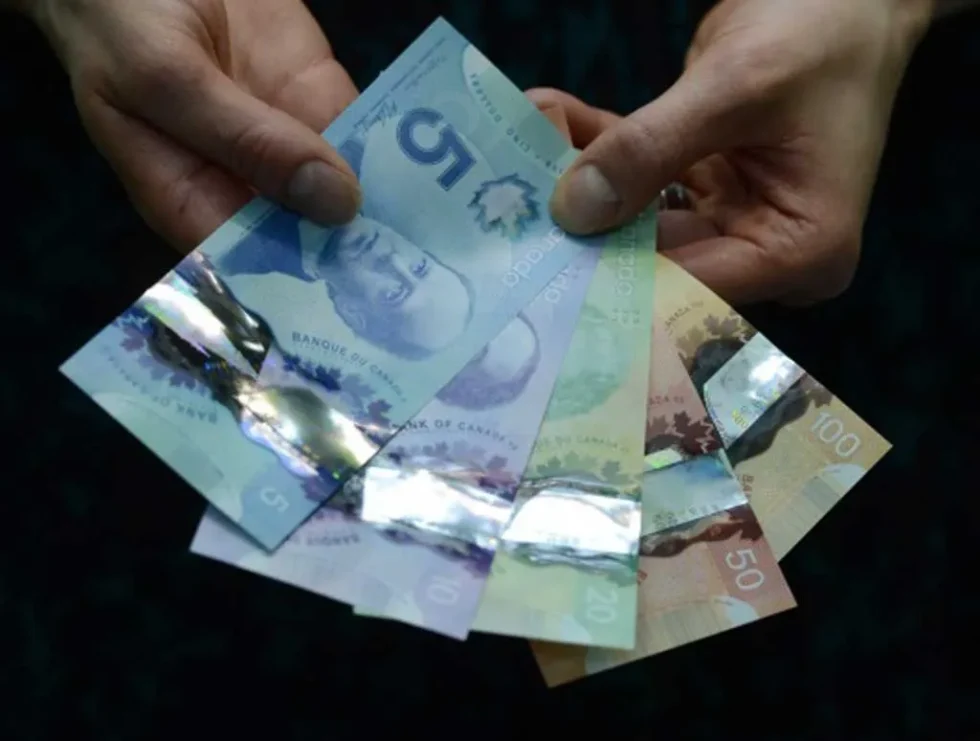
New notes stick together during inflation.
A Sticky Situation
The Bank of Canada has admitted to a printing error that resulted in its newest batch of banknotes being backed not gold or fiat reserves, but maple syrup. Officials discovered the issue after noticing that the bills smelled sweet and often stuck together in vaults.
Governor Tiff Macklem attempted to downplay the incident. “Our currency has always been uniquely Canadian,” he said. “Now it’s just a little sweeter.”
How It Works
Instead of being pegged to GDP or government securities, each note is now tied to a specific volume of maple syrup reserves stored in Quebec. For example, a $20 bill equals roughly 200 milliliters of Grade A amber syrup.
The system is being referred to as the “Maple Standard.” Citizens can technically redeem their cash for syrup at designated “Sweet Banks,” though long lines and sticky counters have already caused chaos.
Market Reactions
Markets reacted instantly. The Canadian dollar (CAD) spiked against the US dollar, as traders speculated that syrup reserves might actually be more stable than government debt. Meanwhile, pancake and waffle futures surged on commodity exchanges.
Wall Street analysts scrambled to adjust forecasts. One joked: “Canada may have just invented the only currency you can pour on breakfast.”
Crypto markets, not to be left behind, launched the $SYRUP token, a digital asset supposedly pegged to maple exports. Within 24 hours, it hit a $500 million market cap.
Political Fallout
Politicians quickly turned the blunder into a national debate. Conservatives praised the syrup standard as “a return to tangible value.” Liberals warned it could cause “sticky inflation.”
Quebec declared independence from the fiasco, threatening to hoard its syrup reserves for local use. “This is our gold,” said the Premier. “Hands off our barrels.”
Meanwhile, the US mocked the move. The Federal Reserve issued a statement: “At least our dollars don’t drip.”
Social Media Frenzy
The internet erupted in laughter. TikTok is filled with Canadians holding bills up to pancakes and pretending to drizzle them. Hashtags like #StickyDollar and #MapleStandard trended globally.
One viral Reddit post read: “Finally, my wallet tastes like freedom.”
On X, Elon Musk tweeted: “Sweet liquidity.” Maple syrup stocks soared immediately.
Academic Opinions
Economists are split. Dr. Fiona McCarthy of Oxford noted, “At least maple syrup is a real commodity with consistent demand. This may be more credible than fiat.”
Others scoffed. Nobel laureate Paul Krugman sighed: “We’ve tried the gold standard. Now we’re trying breakfast condiments. Civilization is doomed.”
Everyday Impact
Ordinary Canadians are bewildered. Some celebrated, racing to convert savings into syrup-backed bills before the government reversed course. Others complained their cash stuck together in wallets, making it impossible to tip properly.
A café owner in Toronto reported chaos: “Customers keep trying to pay with bills and asking for their syrup. We’re not IHOP, we can’t honor withdrawals.”
One retiree summed it up: “I just wanted a stable pension. Now I’m hoarding flapjacks.”
Inside the Bank of Canada
Sources say the mishap began when a procurement officer mistakenly ordered maple-infused paper for printing. Instead of correcting the mistake, officials embraced it, arguing it was “too Canadian to waste.”
An internal memo revealed staff joked about “sweetening the economy” for months. When inflation data turned sour, one banker quipped: “At least we can eat our losses.”
Global Reactions
Other countries are watching closely. France is considered a “wine standard.” Switzerland floated the idea of chocolate-backed notes. Venezuela mocked the plan, then immediately explored an “arepa peg.”
The IMF expressed concern but admitted the syrup-backed bills were “deliciously creative.”
Industry Impact
Food companies are cashing in. Maple syrup exports surged, and black-market traders began smuggling barrels across borders. Restaurants launched promotions offering discounts for syrup-backed cash.
Meanwhile, financial firms scrambled to design syrup derivatives. Goldman Sachs announced the first “Maple-Backed Securities,” while hedge funds shorted pancake houses in anticipation of shortages.
Policy Implications
If syrup-backed currency persists, inflation could literally become sticky. Analysts warn Canada may face shortages if too many citizens redeem notes for syrup. Others worry counterfeiters could easily replicate the system with corn syrup.
Supporters argue it may actually stabilize the economy. “Unlike oil or gold, syrup is renewable,” said one economist. “Every spring brings a new monetary harvest.”
Conclusion
The Bank of Canada’s syrup-backed blunder may be hilarious, but it highlights the strange experiments governments stumble into during times of economic stress. To critics, it’s a national embarrassment. To supporters, it’s a uniquely Canadian innovation.
As one viral meme put it: “Forget the gold standard. Welcome to the brunch standard.”
David Mitchell | North America Economics Correspondent
Contact: david@lesbontelegraph.com