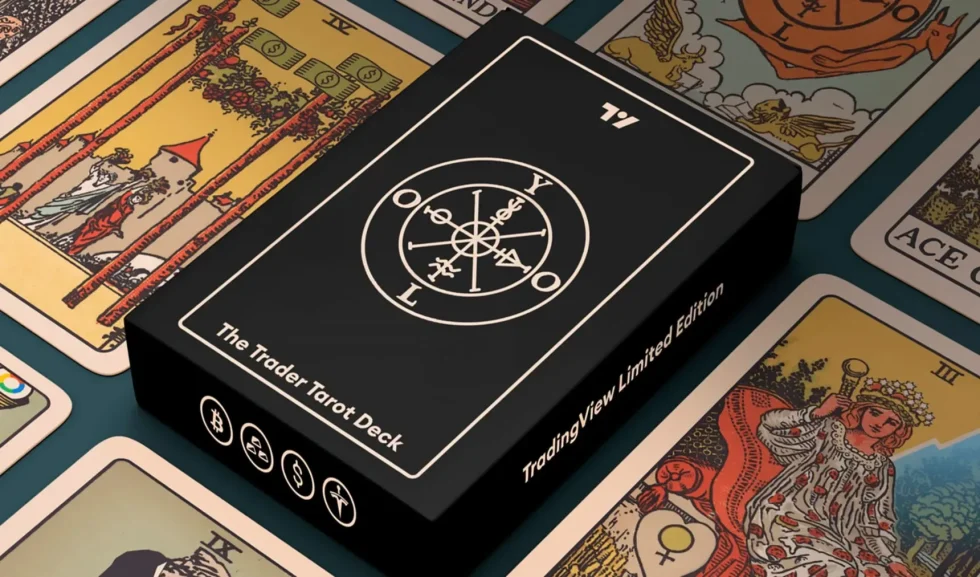
Interest rates hinge on the Fool and the Tower cards.
Alexandra Chen | Stablecoin & Regulation Analyst
From Charts to Cards
In a move that stunned financial markets, central bankers across the globe have abandoned traditional economic models and begun using tarot cards to forecast policy. Officials claim that standard models failed to predict crises, while tarot offers “a more spiritual and intuitive framework” for guiding interest rates.
At the latest policy meeting, the chair shuffled a deck of cards before announcing a quarter-point hike, citing the appearance of the Tower card as a “clear sign of instability.”
How the System Works
Instead of poring over inflation data and employment figures, central bankers now rely on spreads of cards like the Fool, the Magician, and the High Priestess. Each card is assigned a policy meaning. The Fool represents stimulus, the Devil signals corporate bailouts, and the Hermit implies quantitative tightening.
Minutes of recent meetings revealed debates over whether the appearance of the Lovers card meant cooperation between banks or a merger wave on Wall Street.
Market Reactions
Markets responded with chaos and humor. Stock indexes swung wildly as traders tried to interpret the metaphysical signals. Bond yields rose after reports that the Death card appeared in a meeting, while crypto markets rallied when the Sun card was drawn.
Meme tokens like $TAROT and $FATE surged as retail traders embraced the absurdity. Some hedge funds even hired professional fortune tellers to provide a competitive edge.
Political Fallout
Lawmakers expressed alarm. A senator demanded to know why billions in interest rate decisions were being guided medieval fortune cards. European leaders called the practice “reckless mysticism,” while one Asian finance minister praised it as “no less accurate than econometric models.”
The International Monetary Fund declined to comment but quietly began consultations with astrologers “for comparative purposes.”
Citizens Respond
Public reaction was swift. TikTok creators filmed themselves drawing tarot cards to predict their personal loan rates. Twitter hashtags like #TarotEconomics and #CardRatePolicy trended globally.
On Reddit, users debated whether to invest in gold or simply wait for a lucky card pull. One popular meme showed Jerome Powell in a wizard robe shuffling a tarot deck with the caption: “Monetary policy, but make it mystical.”
Expert Opinions
Economists were divided. Dr. Omar Hossain condemned the move as an abandonment of rational policy. “Interest rates should be based on measurable indicators, not mysticism,” he argued.
Dr. Emily Carter took a more nuanced view. “Economics is already about perception and confidence. Tarot may be absurd, but it is no less arbitrary than some forecasting models that repeatedly fail.”
Symbolism in the Absurd
Cultural commentators suggested the tarot experiment symbolizes the collapse of trust in data-driven governance. “When algorithms fail, people return to symbols,” said one analyst. “It shows how fragile the line is between science and storytelling.”
Others noted the irony that tarot, once dismissed as superstition, has now become institutionalized the world’s most powerful banks.
Conclusion
The adoption of tarot cards central bankers has blurred the boundary between parody and policy. While critics warn of economic disaster, supporters argue the system captures the emotional reality of markets better than spreadsheets.
For now, global finance may be guided not graphs and equations but the shuffle of a deck and the pull of fate.
Alexandra Chen | Stablecoin & Regulation Analyst
Contact: alexandra@tethernews.net