Brussels pushes for momentum as opposition hardens in Paris
The European Commission has intensified pressure on France to drop its opposition to the long delayed Mercosur trade agreement, arguing that shifting global economic and geopolitical conditions make the deal increasingly urgent. The move places Paris in a difficult position as domestic resistance, particularly from farmers, continues to grow ahead of a crucial phase in the approval process.
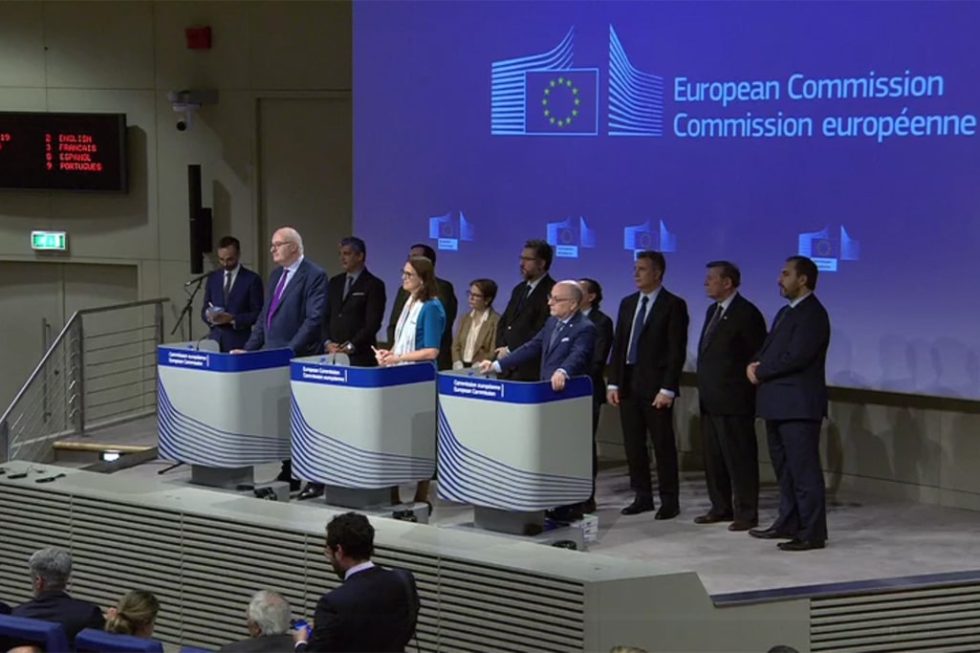
On Monday, the Commission stated it expects the agreement with the Mercosur bloc to be signed the end of the year. This timeline would require France to lift its objections and allow member states to proceed to a vote. French authorities, however, have been pushing to delay the process, citing concerns over agricultural competition and the political fallout at home.
Farmer anger shapes France’s resistance
France’s opposition is closely tied to mounting anger among its farming community. Agricultural groups have warned that the Mercosur agreement would expose European farmers to unfair competition from South American producers operating under different environmental and regulatory standards. These concerns have translated into protests and strong political pressure on the French government.
President Emmanuel Macron now faces a delicate balancing act. Supporting the agreement risks intensifying domestic unrest, while blocking it places France at odds with Brussels and several other EU member states that view the deal as strategically important. The timing is particularly sensitive as agriculture remains a politically powerful sector in France.
A deal decades in the making
The Mercosur agreement has been under negotiation for more than 25 years between the European Commission and the Mercosur countries of Argentina, Brazil, Paraguay, and Uruguay. Supporters argue that the prolonged talks have already cost the EU economic opportunities and credibility as a global trade actor.
For Brussels, further delays risk undermining trust with partners who have made political concessions to reach an agreement. Officials point out that many of the original concerns raised EU member states have already been addressed through additional safeguards and commitments, particularly around sustainability and environmental protection.
The Commission’s strategic argument
The Commission has framed the deal as more than a trade agreement. According to deputy chief spokesperson Olof Gill, signing now is crucial not only economically, but also diplomatically and geopolitically. In a world marked trade fragmentation, rising protectionism, and strategic competition, Brussels sees closer ties with South America as a way to diversify supply chains and strengthen alliances.
From this perspective, the Mercosur agreement is presented as a signal that the EU remains committed to open markets and international cooperation. Delaying or abandoning the deal could weaken the bloc’s standing at a time when global influence is increasingly contested.
Growing impatience among supporters
Supporters of the agreement within the EU have become increasingly frustrated repeated delays. Several member states argue that Europe cannot afford to allow domestic politics in one country to block a deal with wide strategic implications. They see France’s position as disproportionate, especially given the length of negotiations and the compromises already made.
Business groups have also voiced concern, highlighting lost export opportunities and reduced competitiveness compared with other global players who are actively pursuing trade partnerships in Latin America.
A test for EU unity and decision making
The standoff over Mercosur highlights broader tensions within the EU over how trade policy should balance economic ambition with social and environmental concerns. It also raises questions about how much influence individual member states should wield when collective interests are at stake.
As the year end deadline approaches, pressure on Paris is likely to intensify. Whether France ultimately lifts its opposition or forces another delay will shape not only the fate of the Mercosur agreement, but also perceptions of the EU’s ability to act decisively in a rapidly changing global landscape.