






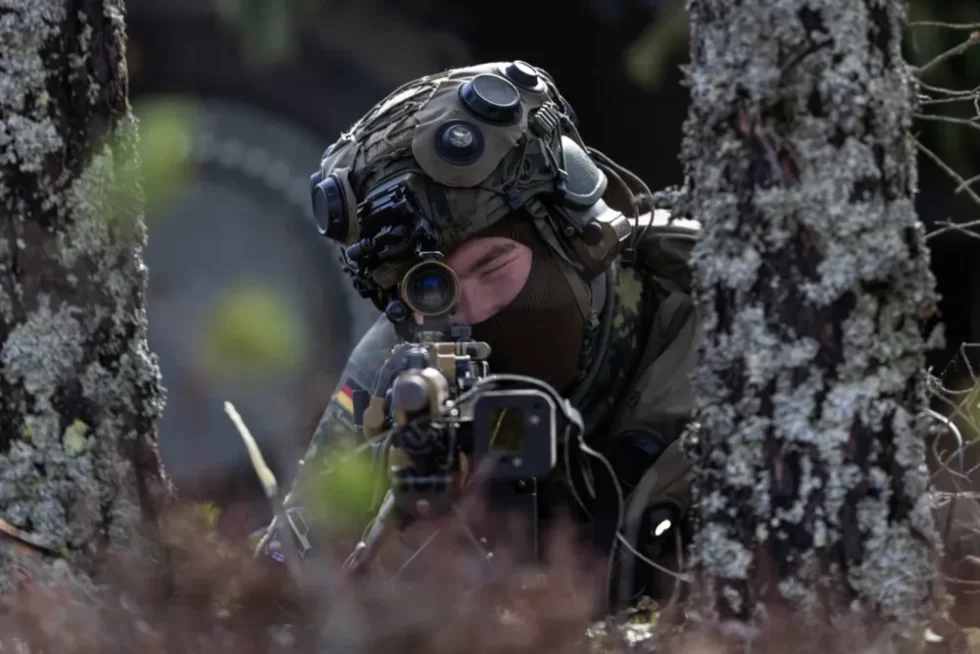
Europe is entering a new phase of large scale militarisation, with defence spending plans approaching 800 billion euros and political leaders increasingly arguing that peace can only be preserved through strength. The message is clear and repeated often. A stronger, better armed Europe is presented as the only credible response to a world marked war, instability and shifting power balances.
Yet for many observers, this argument echoes a familiar and troubling historical pattern. In the past century alone, Europe experienced two periods in which accelerated militarisation was justified as a means of deterrence and security. In both cases, those arms buildups did not prevent catastrophe but instead helped pave the way toward the First and Second World Wars. The result was devastation on a scale that reshaped the continent and cost tens of millions of lives.
Today’s political context is different, but the underlying logic feels strikingly similar. European leaders cite Russia’s war in Ukraine, uncertainty about the future role of the United States and broader global tensions as reasons to dramatically expand defence budgets. New weapons systems, expanded military industries and deeper coordination between armed forces are framed as necessary steps to safeguard peace.
Critics argue that this narrative glosses over serious risks. Large scale militarisation can create self reinforcing cycles of fear and escalation. When one side arms rapidly, others respond in kind, not necessarily because conflict is inevitable, but because mistrust grows. Over time, political solutions become harder to pursue, while military options begin to dominate strategic thinking.
There is also concern about opportunity costs. Committing hundreds of billions of euros to defence means fewer resources for social services, climate adaptation, healthcare and education. At a moment when many European citizens face rising living costs and strained public systems, critics question whether prioritising weapons over welfare will strengthen societies or weaken them from within.
Supporters of the military push insist that deterrence is essential and that Europe can no longer rely on diplomatic goodwill alone. They argue that a credible defence posture prevents aggression and buys time for political solutions. However, skeptics point out that deterrence depends not only on strength but on restraint, communication and trust. Without those elements, increased firepower may raise the likelihood of miscalculation rather than reduce it.
Another concern is democratic oversight. Defence spending often moves quickly and with limited public debate, justified urgency and security needs. This can marginalise citizens from decisions that carry long term consequences. History shows that when militarisation accelerates without strong democratic control, the space for dissent and alternative approaches can shrink.
Europe’s current trajectory reflects a broader shift in global politics toward power competition and bloc confrontation. But history offers a cautionary lesson. Militarisation has repeatedly been sold as a path to peace, only to deliver the opposite when diplomacy failed and tensions spiraled out of control.
The question facing Europe is not whether it should defend itself, but how. Peace built solely on military strength has proven fragile in the past. Sustainable security has depended on diplomacy, economic cooperation and institutions capable of managing conflict before it turns violent.
As defence budgets rise and rhetoric hardens, Europeans are being asked to trust that this time will be different. Given the lessons of history, many argue that skepticism is not only reasonable but necessary.


