






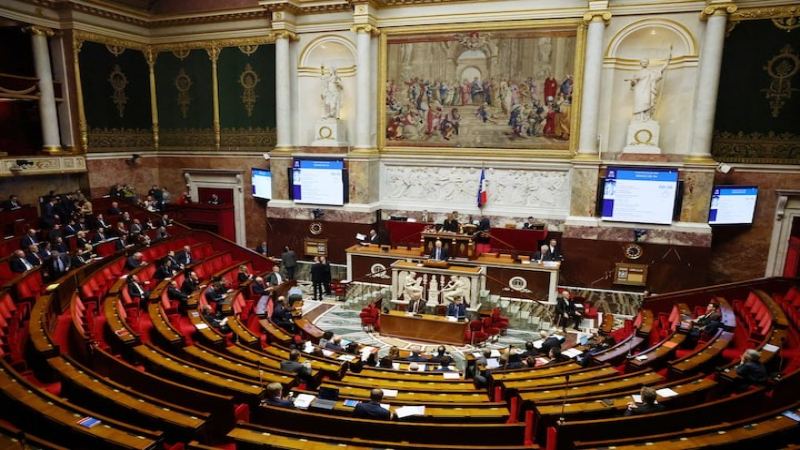
France’s National Assembly has opened debate on proposed legislation that would prohibit children under the age of 15 from accessing social media platforms, reflecting growing concern over the impact of online activity on minors’ mental health and wellbeing. The bill would apply not only to standalone social networks but also to social networking features embedded within broader digital platforms. Lawmakers supporting the proposal argue that increased exposure to online bullying, addictive design features, and unrealistic social comparison has contributed to anxiety, sleep disruption, and declining attention among young people. The initiative has gained momentum amid wider public debate in France about youth violence and digital harm, with policymakers framing the measure as a preventative step rather than a punitive one. The legislation will now move to the Senate for further consideration before returning to the lower house for a final vote.
The proposal has received backing across much of the political spectrum, with supporters describing it as a necessary boundary in a rapidly evolving digital environment. Emmanuel Macron has publicly endorsed the initiative, calling for the ban to be implemented ahead of the next academic year. He has pointed to international precedents, particularly recent measures adopted in Australia, as evidence that age based restrictions can be pursued at a national level. Advocates argue that the law sends a clear societal signal that social media platforms are not neutral tools for children and require stronger regulation. Public opinion surveys suggest broad support for restricting access for younger teenagers, reinforcing lawmakers’ confidence that the measure aligns with parental concerns and wider social expectations.
If adopted, the legislation would require digital platforms to implement age verification systems that comply with European Union rules on data protection and privacy. Enforcement remains a central challenge, with critics warning that technically robust verification mechanisms are difficult to implement without creating loopholes or encouraging circumvention. Lawmakers acknowledge these risks but argue that regulatory pressure can still reduce exposure and shift platform incentives toward safer design. In addition to online restrictions, the bill would extend France’s existing ban on smartphones in junior and middle schools to include high schools, reinforcing a broader policy push to limit digital distraction during education. Supporters describe the combined measures as part of a public health response to long term behavioural and developmental risks.
The debate in France is being closely watched across Europe, where several governments are assessing whether similar restrictions could be introduced at national or regional levels. While the European Parliament has encouraged discussion around minimum age standards, responsibility for enforcement remains with individual member states. Critics of the French proposal caution that a blanket ban may overlook the positive uses of social media for learning and social connection, particularly for adolescents. Teenagers themselves have expressed mixed views, with some acknowledging the risks and others arguing that age thresholds are overly restrictive. As the bill advances through parliament, France finds itself at the center of a wider European conversation about how far governments should go in regulating children’s access to digital platforms.


