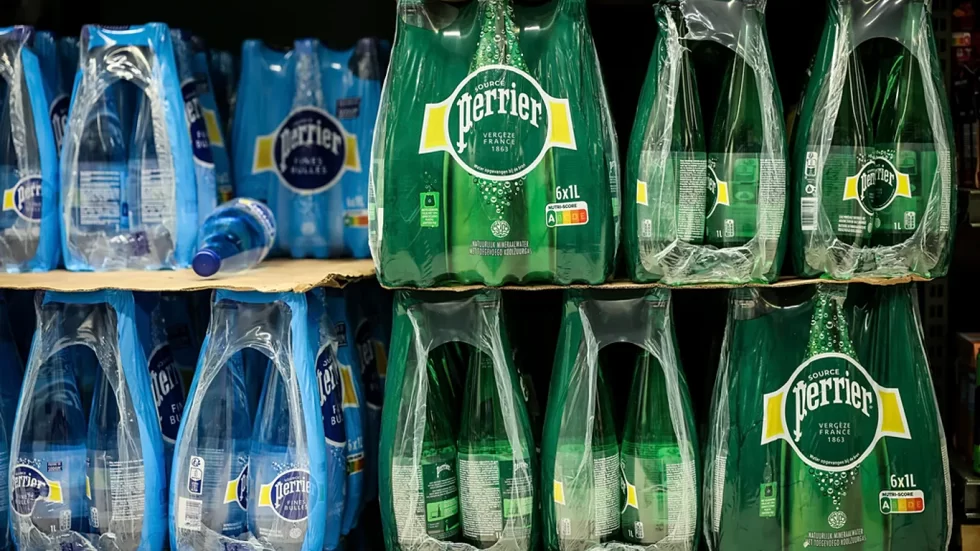
A French court has ruled in favor of Nestlé and its iconic Perrier, rejecting claims that the company misleadingly labelled its bottled water. The decision allows Perrier to continue selling its product as natural mineral water and brings relief after weeks of legal uncertainty that had raised questions about labeling standards and consumer trust.
The ruling follows a legal challenge brought a prominent consumer group that questioned whether Perrier’s production methods complied with French and European rules governing mineral water. The court dismissed all claims, effectively endorsing the company’s current practices.
The Consumer Group Challenge Explained
The case was initiated UFC-Que Choisir, which accused Perrier of using filtration techniques that it argued were incompatible with the legal definition of natural mineral water. According to the group, such treatment should have disqualified the product from being sold under that label.
In early June, the organization filed an emergency motion with a court in Nanterre near Paris, seeking an immediate recall of all Perrier bottles on the market and a temporary suspension of sales. It also raised concerns about potential health risks, although it did not present evidence of consumer harm.
The consumer group maintained that its objective was transparency rather than disruption, arguing that Perrier water should be sold as regular drinking water rather than natural mineral water if treatment methods were deemed non compliant.
How the Court Viewed the Case
The French court rejected the emergency request in full, siding with Nestlé and Perrier. Judges found that the claims did not justify the drastic measures sought the consumer group, including a market recall and sales ban.
The ruling suggests that the court did not consider the filtration process used Perrier to be misleading under existing legal standards. It also dismissed allegations that the water posed a health risk to consumers, a key point that had amplified public attention around the case.
rejecting all claims, the court effectively confirmed that Perrier’s labeling remains lawful, at least under current interpretations of French and European regulations.
Implications for Perrier’s Operations
The decision removes an immediate threat to Perrier’s production site in Vergèze, southern France, where the brand’s mineral water has been sourced and bottled for decades. UFC-Que Choisir had stated that its legal action would not have forced the closure of the Vergèze plant, but the prospect of a recall still carried serious commercial and reputational risks.
For Nestlé, the ruling preserves one of its most recognizable water brands at a time when bottled water companies face increasing scrutiny over environmental impact, sourcing practices, and labeling accuracy.
Broader Questions About Water Regulation
The case highlights the complexity of regulating bottled water in Europe, where definitions around natural mineral water are tightly controlled. These rules are intended to protect consumers, but they also rely on technical distinctions that are not always easily understood outside regulatory circles.
Consumer advocates argue that transparency must evolve alongside production technologies. Industry representatives counter that innovation and safety controls should not automatically undermine long established classifications when products meet quality standards.
Market and Consumer Confidence
For consumers, the ruling may help stabilize confidence in Perrier as a trusted brand. Legal challenges around labeling can quickly erode trust, even when products remain safe to drink. resolving the dispute in Perrier’s favor, the court has provided clarity for retailers and customers alike.
While debates over bottled water regulation are unlikely to disappear, the decision marks a clear win for Nestlé and reinforces the importance of judicial oversight in balancing consumer protection with commercial stability.