






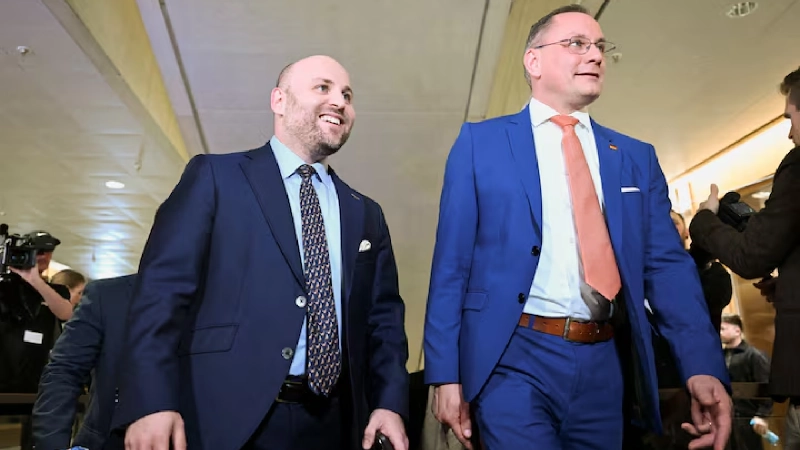
Germany’s far right Alternative for Germany has intensified calls to restore energy imports from Russia as rising fuel prices reshape political debate across the country. The push comes as energy costs have surged sharply following the escalation of the Iran war, placing renewed pressure on households and industries. The party has used the issue to strengthen its position in regional elections, arguing that access to cheaper energy is essential for economic recovery and industrial competitiveness.
Recent election results in Baden Württemberg and Rhineland Palatinate show growing support for the AfD, with the party securing around 20 percent of the vote in both states. Candidates have framed energy affordability as the central issue, linking rising fuel costs to broader economic challenges facing Germany. Markus Frohnmaier, a leading figure within the party, emphasized that voters are increasingly focused on economic conditions, particularly as energy prices remain significantly higher than in competing economies such as the United States and China.
Germany’s energy landscape has undergone a major transformation since 2022, when the country sharply reduced its dependence on Russian oil and gas following the Ukraine conflict. Before that shift, Russia supplied more than a third of Germany’s crude oil and over half of its natural gas needs. The abrupt disruption forced Berlin to seek alternative suppliers including Norway, the Netherlands and Belgium, contributing to higher costs and supply adjustments that have continued to affect the economy.
Political analysts suggest that the AfD’s messaging resonates with segments of the population experiencing economic strain, particularly in manufacturing regions where energy costs directly impact production. The party has expanded its platform beyond immigration to include economic policy, targeting working class and younger voters. Experts note that the argument for cheaper energy is closely tied to everyday concerns, making it more tangible for voters compared with broader geopolitical considerations.
Mainstream political parties have strongly rejected calls to resume Russian energy imports, warning that such a move would undermine European security and weaken collective efforts to isolate Moscow. Critics argue that restoring energy ties would carry significant geopolitical risks and damage trust among European allies. Despite this opposition, some voices within traditional parties have acknowledged growing public debate over the long term economic consequences of cutting off Russian supplies.
The situation reflects a broader challenge facing Europe as it balances energy security, economic stability and geopolitical commitments. Rising fuel prices, driven in part global supply disruptions and conflict related volatility , continue to influence political dynamics across the region. As energy markets remain uncertain, the debate over sourcing and strategy is expected to remain a central issue shaping Germany’s domestic politics and its position within the wider European energy framework.


