A silent operation with global implications
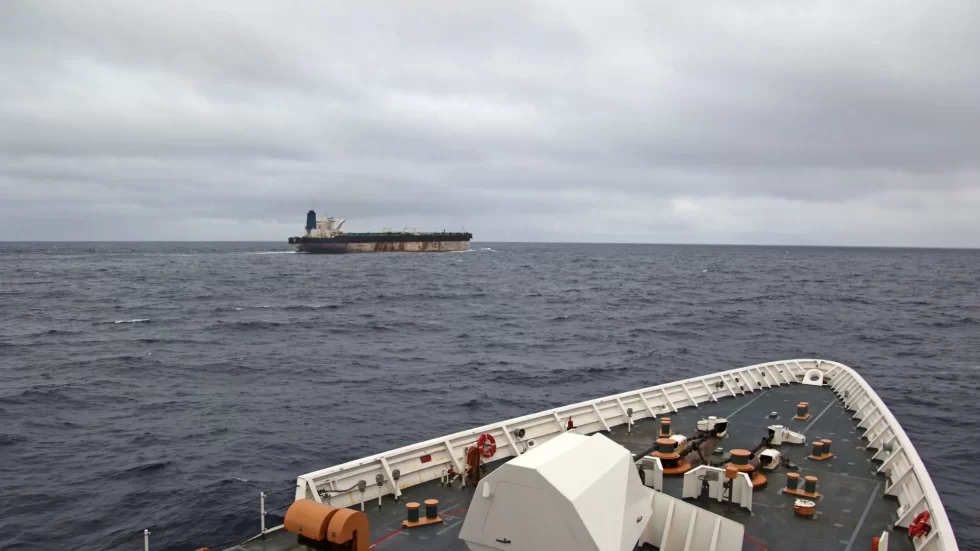
In the vast expanse of the Atlantic Ocean, two oil tankers recently found themselves with no viable route forward, no safe harbor to enter, and no legal protection to rely on. These so called ghost tankers, operating under layers of concealment and sanctions evasion tactics, were effectively immobilised after intervention US forces. The episode highlights not only the reach of American military power but also the growing difficulty for sanctioned shipping to operate unnoticed in today’s surveillance heavy maritime environment.
What defines a ghost tanker
Ghost tankers are vessels that deliberately obscure their identities to bypass international sanctions. They may switch off tracking systems alter ship names falsify documentation or conduct ship to ship transfers at sea. These practices allow sanctioned oil to reach global markets indirectly. Over the past decade such methods have become increasingly sophisticated, creating parallel supply chains that operate in legal grey zones beyond traditional enforcement mechanisms.
Why the Atlantic mattered
The Atlantic Ocean has historically been viewed as a safer corridor for sanctioned vessels compared with more heavily monitored regions such as the Persian Gulf. That assumption is now under pressure. intercepting sanctioned tankers in the Atlantic, the United States demonstrated that enforcement is no longer geographically limited. Surveillance capabilities intelligence sharing and naval presence allow US forces to project authority far beyond traditional chokepoints.
A demonstration of modern maritime dominance
The seizure of these vessels reflects a broader shift in how maritime power is exercised. It is not only about firepower but about information dominance. Satellite tracking maritime intelligence and coordinated naval patrols make it increasingly difficult for rogue shipping to remain invisible. The tankers were not chased in dramatic fashion but quietly boxed in until no lawful options remained. This approach sends a clear signal without escalating into open confrontation.
The strategic message behind the seizures
Beyond the immediate enforcement of sanctions the operation carried symbolic weight. It reinforced the credibility of US sanctions regimes and warned operators that loopholes are closing. For countries and networks reliant on covert oil exports the risks are rising. Vessels may still move but every voyage carries the growing possibility of interception asset loss and legal consequences.
Implications for global energy markets
While the seizure of two tankers alone does not disrupt global oil supply it adds friction to already strained energy networks. Sanctioned oil often moves at discounted rates and feeds secondary markets. Increased enforcement raises costs insurance risks and delays. Over time this can reshape trade routes and pricing structures particularly for buyers operating on the margins of legality.
A warning to the shadow shipping industry
The fate of these ghost tankers illustrates a shrinking operating space for the shadow maritime economy. As enforcement becomes more coordinated and technologically advanced the balance tilts toward state actors with global reach. The Atlantic operation suggests that no ocean is truly beyond scrutiny anymore. For operators who rely on invisibility that reality may prove decisive.
Power exercised without spectacle
Perhaps the most striking aspect of the episode is its quiet efficiency. There were no dramatic naval clashes no public standoffs. Instead the tankers were left with nowhere to go. That outcome underscores a modern form of dominance where control is exerted through awareness coordination and inevitability rather than overt force.