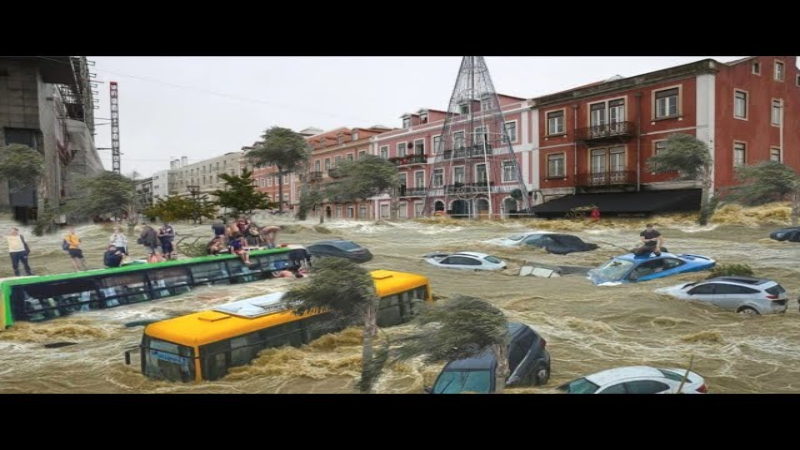
Lisbon is working to restore normal life after a series of powerful storms swept across the capital, leaving damaged trees, blocked roads and scattered debris in several neighborhoods. Municipal crews have been deployed across the city, with particular focus on central districts where fallen branches and weakened trees posed risks to pedestrians and traffic.
One of the most visible impacts was along Avenida da Liberdade, the city’s iconic boulevard known for its historic architecture and high end retail stores. Emergency teams moved quickly to secure the area, cutting down damaged trees and removing unstable limbs to prevent further hazards. The avenue, which attracts both locals and tourists year round, saw temporary disruptions as safety inspections and cleanup operations were carried out.
City officials confirmed that strong winds and heavy rainfall were responsible for uprooting several mature trees and damaging public infrastructure. In addition to clearing roads, workers have been inspecting public parks, tram lines and drainage systems to reduce the risk of flooding or secondary incidents. Authorities urged residents to remain cautious in areas where cleanup operations are ongoing, especially near construction equipment and cordoned off zones.
Public transport services experienced minor delays during the height of the storm, though most routes resumed normal schedules within hours. Lisbon’s municipal civil protection services stated that response teams were on standthroughout the night as weather alerts were issued. Emergency hotlines received numerous calls reporting fallen trees, loose structures and localized flooding in low lying areas.
Environmental specialists have also begun assessing the long term impact on urban greenery. Lisbon has invested heavily in expanding green spaces and tree cover in recent years as part of its climate resilience strategy. The loss of several large trees highlights the increasing pressure that extreme weather events are placing on cities across southern Europe. Experts note that intense storms, while not uncommon during winter months, have shown greater variability and strength in recent seasons.
Local businesses along affected streets reported temporary closures while sidewalks were cleared and safety checks completed. Shop owners described the scene as chaotic immediately after the storm passed, with leaves, broken branches and signage scattered across pavements. Cleanup teams worked throughout the morning to ensure commercial activity could resume as quickly as possible.
Residents in hillside districts also reported brief power interruptions, though utility providers restored service promptly. Authorities emphasized that infrastructure systems performed largely as designed, limiting the scale of disruption compared to previous severe weather episodes.
As Lisbon continues recovery efforts, municipal leaders are reviewing storm preparedness protocols and reinforcing tree maintenance programs to reduce vulnerability in future weather events. Officials reiterated their commitment to maintaining public safety while preserving the city’s historic character and green landscape.