Introduction
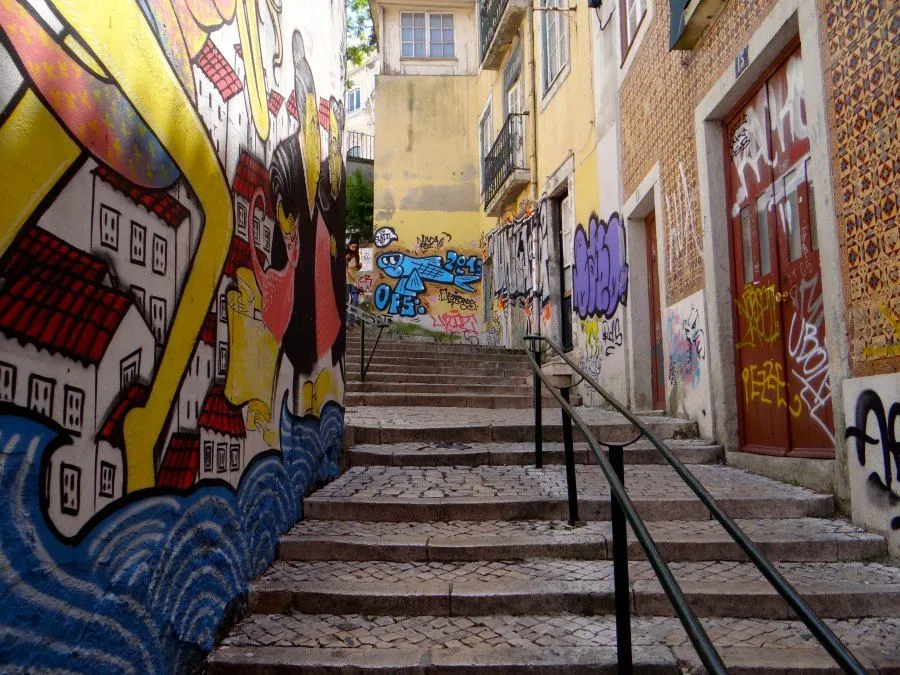
Lisbon’s famously rebellious street art scene has found a new way to challenge capitalism, participating in it. In a move both poetic and absurd, local artists have begun auctioning their murals as fractional NFTs, allowing collectors to “own” shares of wall art that still physically belongs to the city. The initiative, dubbed ArtParedes, describes itself as “democratizing cultural vandalism through blockchain transparency.”
Within weeks, entire neighborhoods have turned into digital trading floors. Graffiti once dismissed as vandalism is now a speculative asset, complete with price charts, investor dashboards, and community disputes over whether “buying a piece of rebellion” defeats the point of rebellion entirely.
Lisbon’s mayor, ever eager to frame chaos as innovation, praised the movement as “a sign that our city embraces both tradition and tokenization.” Tourists now wander through Bairro Alto holding phones in the air, scanning walls for QR codes like modern treasure hunters.
How Fractional Graffiti Works
Each mural registered on ArtParedes is digitally scanned and tokenized on the TejoChain blockchain, a system reportedly designed a startup based in a former record shop. Ownership is divided into one thousand “art shares,” each represented an NFT that grants holders rights to a fraction of the mural’s digital copy.
Investors can buy shares directly through the platform or through decentralized auctions that resemble performance art. During one recent event, a crowd gathered in front of a sprawling piece artist NunoVandal, who shouted live bids through a megaphone while a projection displayed a fluctuating price feed. The final share sold for 0.3 ETH to a Swiss collector who later admitted he “thought it was a concert.”
The artists retain the right to repaint, remix, or destroy the mural as long as they document the act online, ensuring continuous engagement. “Every paint-over becomes a transaction,” explained co-founder Rita Correia. “We’ve turned impermanence into yield.”
The Market of Walls
midweek, street art markets had emerged on Telegram and Reddit. Traders began speculating on which neighborhoods would “appreciate fastest.” TagusView tokens, representing murals visible from the river, quickly became premium assets. Even faded stencil pieces anonymous creators saw sudden surges in value after influencers declared them “retro blue chips.”
One mural in Cais do Sodré, depicting a sardine made entirely of QR codes, reportedly reached a valuation of €120,000 after a celebrity DJ announced plans to DJ next to it. Another, showing a crying pigeon surrounded the phrase “Renda é roubo” (“Rent is theft”), briefly became the top-traded Lisbon NFT after a real estate developer tried to buy the wall itself.
Critics call it a speculative bubble painted in bright colors. Art historian Inês Baptista remarked, “Street art was supposed to question ownership. Now it’s teaching it a masterclass.”
Bureaucracy and Blockchain
As usual, city hall is struggling to regulate innovation faster than it spreads. The Lisbon Urban Conservation Department released a statement clarifying that “walls remain municipal property regardless of digital representation.” Within hours, artists responded minting that statement as an NFT titled Public Domain #1.
Legal experts remain unsure how fractional ownership applies to graffiti. Lawyer Miguel Freitas commented, “If a building is repainted, are token holders entitled to compensation? And if the wall collapses, does that count as a rug pull?” The Ministry of Culture has reportedly formed a task force to “evaluate the metaphysics of mural monetization.”
Meanwhile, real estate developers see opportunity. Some landlords now advertise buildings as “tokenized cultural properties,” boasting that they come pre-loaded with “NFT-ready façades.” Local agents claim foreign investors have started buying flats primarily for the murals attached to them, prompting one economist to label it “the aestheticization of gentrification.”
Artists Between Fame and Farce
Not all artists are happy about the newfound attention. Veteran graffiti writer SPAY told Público, “I used to paint to annoy the system. Now hedge funds bid on my walls. I feel like a consultant for rebellion.”
Others, however, embrace the contradiction. A collective known as CryptoGalo now hosts weekly “paint drops,” where new pieces are created live and immediately tokenized. Fans purchase partial rights before the paint even dries. One member defended the approach: “If the system wants to commodify us, we might as well set the price.”
Tourists flock to mural-heavy neighborhoods like Graça and Alcântara to witness the spectacle. Pop-up galleries project NFT data beside alley walls, turning backstreets into financial dashboards. Locals joke that “Lisbon has finally found a way to make humidity speculative.”
Culture or Commodity
Art critics are divided. Some see the project as a witty commentary on late capitalism, others as the total absorption of art market logic. Sociologist Leonor Figueira noted, “Lisbon’s murals once served as collective memory. Now they’re ledgers.”
Environmental activists have joined the debate, pointing out that minting murals consumes significant energy. In response, ArtParedes announced a partnership with a local solar cooperative, branding it “eco-vandalism.” The initiative plans to offset carbon emissions sponsoring rooftop gardens shaped like QR codes.
Meanwhile, the international art world has taken notice. A Parisian gallery announced plans for an exhibition called “StreetLedger,” featuring Lisbon NFTs projected onto white walls. “It’s a bit like bringing sand to the beach,” one artist quipped. “We export rebellion, they import irony.”
The Meme Economy of Authenticity
Behind the humor lies a sincere tension between authenticity and profit. Lisbon’s street art, long celebrated for its impermanence, now faces a paradox: the more it’s sold, the less real it becomes. Yet in an era when digital copies outlive physical originals, tokenization offers preservation of a different kind.
Economist Sofia Cruz wrote in Diário de Notícias, “Fractional murals turn nostalgia into equity. We are witnessing the financialization of urban memory.” Her piece concluded with a question now echoing through cafés and Discord servers alike: “Can a city still breathe when every wall has a price?”
Conclusion
Whether revolutionary or ridiculous, Lisbon’s mural NFT movement has painted the city into a fascinating corner. It captures the spirit of a generation fluent in irony yet desperate for permanence, skeptical of capitalism yet constantly remixing it.
Perhaps this was inevitable. Lisbon, a city where the past peeks through peeling paint, has always balanced ruin and renewal. Now, its walls carry not only history but blockchain addresses.
As one street artist spray-painted beneath a freshly tokenized mural, “If ownership is art, then I’m priceless.”