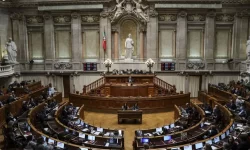
Portugal’s government is preparing a major upgrade to railway infrastructure in the Alentejo region, including plans to modernise key lines and create a new rail connection to Beja Air Base. The proposal was presented Secretary of State for Infrastructure Hugo Espírito Santo during a parliamentary hearing focused on the Casa Branca Beja railway line. Authorities say the project aims to strengthen regional transport capacity while also supporting strategic logistics corridors linked to both civilian and military mobility within the European Union.
One of the central elements of the plan is the construction of a rail connection linking the existing railway line directly to Air Base No. 11 located near Beja. According to government officials, the project would extend the upgraded Casa Branca Beja line to the air base, creating a more efficient transportation route for both operational and logistical purposes. The secretary of state explained that the proposal is not an alternative route but a connection that would branch from the modernised line currently undergoing renovation works.
The project is being discussed in coordination with European Union initiatives focused on strengthening military mobility across the continent. Officials said the Casa Branca Beja railway corridor is being considered as part of a broader European strategy designed to allow faster movement of military personnel and equipment between member states. The inclusion of the railway link to Beja Air Base could therefore form part of a larger network of dual use transport infrastructure serving both defence and civilian logistics needs.
To support the development of the project, the Portuguese government has tasked the state owned company Infraestruturas de Portugal with analysing technical solutions that would enable the connection between the railway line and the air base. The study will examine possible engineering options and operational requirements to integrate the new link into the existing railway network. Officials say this work will be carried out alongside the ongoing renovation of the Casa Branca Beja railway corridor.
Another component of the government’s strategy involves reviving the railway section between Beja and Funcheira in the municipality of Ourique. This line has been inactive for several years but could play an important role in strengthening transport links to Portugal’s Port of Sines, one of the country’s main maritime gateways for international trade. Authorities believe restoring this route would provide additional capacity and redundancy for freight transportation connecting southern Portugal with major logistics hubs.
Government officials argue that the Beja Funcheira section could also contribute to future high speed rail connections linking southern Portugal to the Algarve. integrating the line into broader railway planning, infrastructure planners aim to ensure that regional transport networks remain flexible and capable of supporting long term economic development. Improved rail connectivity could also enhance freight efficiency between industrial zones, ports and inland regions of the country.
The government is currently preparing a resolution to be approved the Council of Ministers that will authorize funding and define the multi year structure of the railway modernization project. According to the Secretary of State for Infrastructure, the plan will allocate around twenty million euros from the Alentejo 2030 program while replacing previously withdrawn funds with support from the Sustainable 2030 program and the Environmental Fund.
These investments are taking place alongside wider European initiatives aimed at strengthening transport corridors that can support both economic activity and defence mobility. European institutions are considering a significant increase in funding for military mobility infrastructure between 2028 and 2034, with billions of euros proposed for projects designed to remove logistical bottlenecks across the continent. Transport corridors such as the Casa Branca Beja railway line could therefore become part of a broader European network supporting faster movement of goods, services and strategic resources.