Portugal will begin the new year ranked sixth in the world according to the latest update from FIFA, a position confirmed on 22 December. On paper, it is a strong result that keeps the national team firmly among the global elite. In practice, it reflects a season filled with contrast, defined success on one stage, frustration on another, and the continued influence of familiar figures.
The ranking caps a year that delivered silverware alongside moments of vulnerability. It also raises questions about where Portugal truly stands as attention slowly shifts toward the 2026 World Cup.
How Portugal Reached Sixth Place
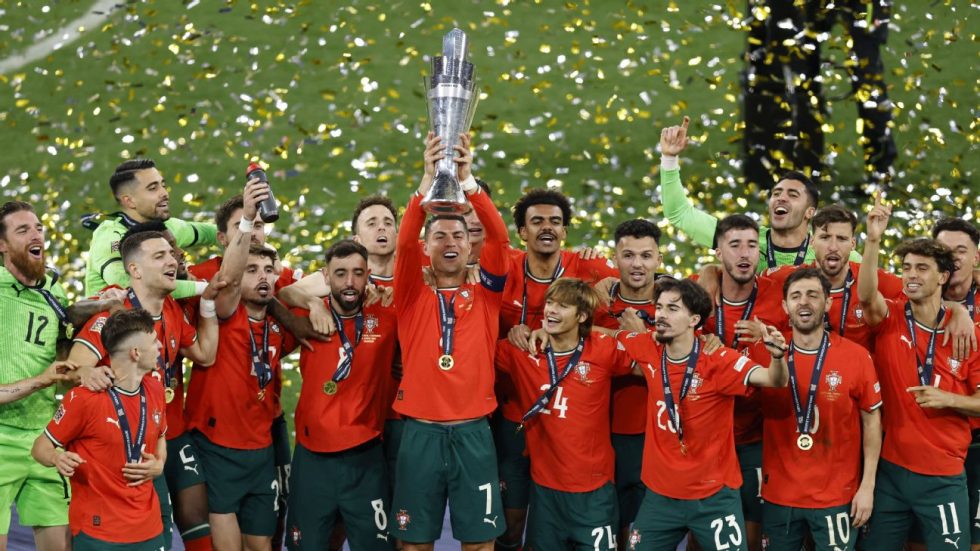
Portugal finished the year with 1760.38 ranking points, placing them just outside the top five. The most significant boost came in June with a second UEFA Nations League triumph, a competition that has quietly become a reliable source of confidence and momentum for the squad.
That success reinforced Portugal’s reputation as a tournament ready side capable of navigating high pressure knockout football. However, the campaign was not without setbacks. A surprise qualifying defeat to Ireland proved costly in the ranking equation, shaving off points that might otherwise have pushed Portugal higher.
Despite that stumble, qualification for the 2026 World Cup has already been secured, removing any immediate anxiety about the road ahead.
A Ranking That Feels Both Safe and Unsatisfying
For supporters across Lisbon, Porto, and beyond, remaining in the top six brings reassurance. Portugal are still viewed as one of Europe’s strongest national teams and a consistent presence at major tournaments.
Yet the feeling is not entirely celebratory. A late surge from Brazil nudged Portugal down one place, and that small movement carries outsized significance. Football federations, sponsors, and broadcasters all value top five visibility, which often translates into higher commercial returns and broader international exposure.
In elite football, these margins matter. Ranking position can influence future seeding scenarios, potentially shaping the difficulty of group stage draws in major competitions.
The Cristiano Ronaldo Factor
No discussion of Portugal’s year is complete without Cristiano Ronaldo. His presence remains a defining feature of the national team, both symbolically and tactically.
Ronaldo continues to divide opinion, praised for leadership and experience while scrutinised for how the team adapts around him. Over the past year, Portugal have shown flashes of evolution, blending emerging talent with established stars. The balance remains delicate, but results suggest the transition is being managed rather than avoided.
His influence, whether through goals, positioning, or sheer gravity, continues to shape how opponents prepare for Portugal.
What the Nations League Victory Signaled
Winning the UEFA Nations League again provided more than just a trophy. It confirmed Portugal’s ability to manage compact tournaments and win under pressure. While critics sometimes downplay the competition’s status, the psychological value of lifting silverware should not be underestimated.
For players and staff, it reinforced belief in the system and the squad’s depth. For fans, it offered a reminder that Portugal are not simply qualifying well but also finishing the job when it matters.
That success softened the impact of the qualifying loss and stabilised Portugal’s overall ranking position.
Implications for the Road to 2026
Sitting sixth places Portugal in a strong but slightly awkward position. They are close enough to the top tier to feel competitive with anyone, yet far enough to face potential disadvantages in future tournament seedings.
Avoiding heavyweight opponents early in major competitions often depends on these fine margins. A single unexpected defeat, like the one against Ireland, can echo for months through ranking calculations.
As preparation for 2026 continues, consistency rather than spectacle may prove decisive. Portugal’s challenge will be to convert depth and experience into ranking stability that reflects their ambitions.
A Familiar Story of High Expectations
Portugal’s sixth place ranking captures the essence of their current identity. Successful, respected, and capable, yet always judged against the promise of something more. The country has grown accustomed to elite status, and with that comes relentless expectation.
As the new year begins, Portugal remain contenders rather than favourites. Whether that position becomes a platform for progress or a ceiling to break will define the next chapter of their international journey.