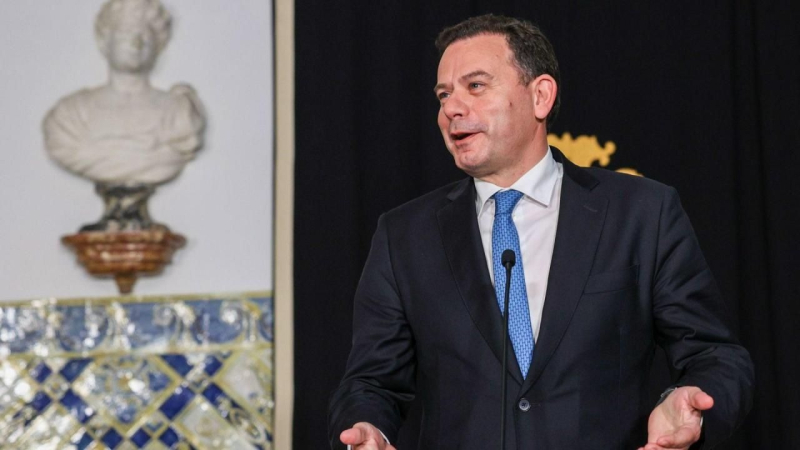
Portugal’s prime minister has sought to distance himself from the unfolding presidential election runoff, stressing that his priority remains the day to day task of governing the country rather than endorsing individual candidates. Speaking briefly to journalists in Porto, Luís Montenegro rejected suggestions that his refusal to back either contender reflected political hesitation, saying his role is defined responsibility to government and policy delivery. His remarks came as the second round of the presidential election continues to dominate political debate, placing pressure on senior figures to signal preferences. Montenegro acknowledged the wider political discussion taking place but maintained that his mandate as head of government requires focus on administration and reform. drawing a clear line between executive duties and electoral positioning, he signalled an intention to preserve institutional neutrality during a sensitive phase of the political calendar.
The prime minister made his comments while leaving an official event linked to economic digitalisation, underscoring his message through setting as much as through words. He reiterated that his central mission is to guide government policy and strengthen the country’s economic performance, presenting continuity and stability as his primary objectives. Montenegro suggested that public debate around presidential endorsements operates on a different political plane from the work of the executive, which he described as ongoing and demanding. His remarks reflect a broader effort to frame governance as separate from partisan dynamics, particularly at a time when political attention is fragmented. emphasising policy leadership and economic development, he aimed to reinforce the idea that effective administration should not be overshadowed electoral speculation.
The decision to remain publicly neutral carries political implications, particularly in a climate where leadership signals are closely scrutinised. Supporters argue that the stance protects the independence of the executive and avoids inflaming divisions, while critics question whether silence from the prime minister limits his influence within the wider political system. Montenegro responded to such interpretations insisting that focus should not be mistaken for withdrawal, describing his approach as deliberate rather than passive. His framing suggests an attempt to project steadiness and control, presenting governance as a long term project that extends beyond individual electoral moments. This positioning aligns with a narrative of institutional responsibility, where the authority of government is exercised through policy execution rather than public alignment.
As Portugal navigates both electoral and economic challenges, the prime minister’s remarks highlight an ongoing balancing act between political visibility and administrative focus. centring his message on economic strength and development, Montenegro sought to reassure audiences that government priorities remain unchanged despite the surrounding political noise. The emphasis on governing over campaigning may resonate with voters fatigued constant political confrontation, though it also leaves room for debate about leadership presence during pivotal moments. With the presidential race entering its final stage, the prime minister’s insistence on separation between executive governance and electoral competition sets a clear, if contested, tone for how his government intends to operate in the weeks ahead.