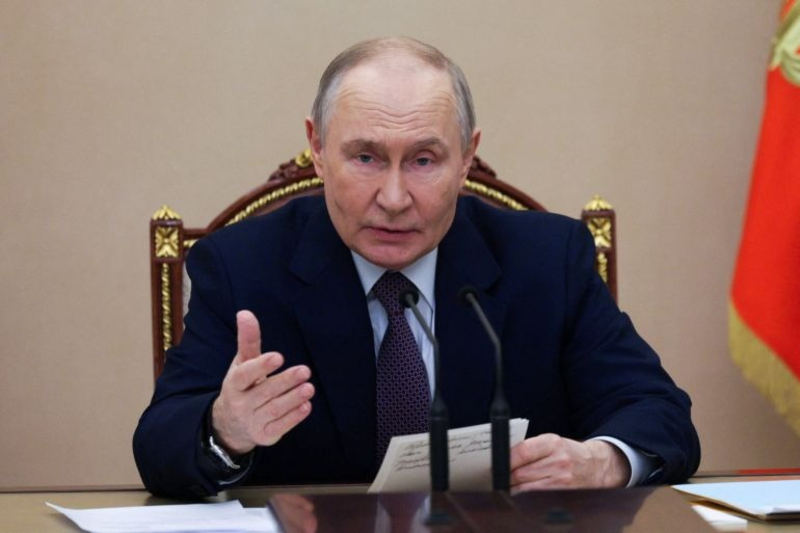
Russian President Vladimir Putin has indicated that Russia could resume supplying oil and gas to European markets if European buyers are willing to restore long term energy cooperation. His remarks come as global oil prices surged beyond 100 dollars per barrel amid escalating geopolitical tensions in the Middle East that have disrupted major shipping routes. The comments were delivered during a meeting at the Kremlin focused on global energy markets and the impact of recent conflicts on energy supply chains. Rising oil prices and concerns about supply disruptions have intensified debate across Europe about energy security and the stability of global fuel markets.
Putin stated that Russia has never ruled out working again with European customers, suggesting that Moscow would be open to renewed partnerships if cooperation were based on long term agreements free from political pressure. European countries significantly reduced their dependence on Russian energy following Moscow’s invasion of Ukraine and the sanctions that followed. The European Union banned maritime imports of Russian crude oil in 2022 while several pipeline routes supplying Europe have faced disruptions or closures over the past few years. As a result, Europe has shifted toward alternative suppliers and increased imports of liquefied natural gas from other regions.
The Russian president’s comments came as the conflict involving Iran and disruptions around the Strait of Hormuz raised fears of tighter global energy supplies. The strategic waterway handles a large share of the world’s oil and liquefied natural gas shipments, making it one of the most critical energy transit points globally. Analysts say interruptions in this corridor can quickly trigger price spikes in international markets. With tensions escalating and shipping activity affected, traders have responded pushing oil prices higher amid concerns about prolonged supply shortages.
Energy markets reacted sharply as Brent crude prices climbed more than thirty percent in a short period, briefly reaching levels above 119 dollars per barrel. The surge pushed global oil prices to levels not seen since the early stages of the war in Ukraine. Rising energy costs have already begun influencing financial markets and economic forecasts, with investors increasingly concerned about the potential impact on inflation and economic growth. Governments in Europe and other regions are closely monitoring developments as higher fuel prices can rapidly translate into increased transportation costs and pressure on household energy bills.
Putin suggested that Russian energy producers should consider taking advantage of the changing market environment created geopolitical tensions. He noted that the disruption of shipments through the Strait of Hormuz could alter global energy flows and create opportunities for alternative suppliers. At the same time European governments remain cautious about increasing reliance on Russian resources after years of efforts to diversify energy imports. Many European countries have invested heavily in renewable energy, liquefied natural gas terminals and alternative pipeline routes to reduce dependence on Russian fuel supplies.
The discussion over energy supply comes amid broader political debate within Europe about how to manage rising energy costs. Hungarian Prime Minister Viktor Orban recently urged the European Union to consider suspending sanctions on Russian oil and gas in response to the surge in global prices linked to the Middle East conflict. However other European leaders have maintained their commitment to existing sanctions and long term plans to phase out Russian fossil fuel imports entirely. The European Union has set policies aimed at ending dependence on Russian energy as part of its wider geopolitical and climate strategies.
Before the conflict in Ukraine, Russia supplied more than forty percent of Europe’s natural gas through pipeline networks that connected Russian fields with European markets. 2025 that share had dropped dramatically as European countries diversified their suppliers and expanded imports from other regions. Combined sales of Russian pipeline gas and liquefied natural gas accounted for only about thirteen percent of European Union energy imports. Despite the decline in trade, Russia continues to play a significant role in global energy markets, meaning developments in its export policies remain closely watched governments, investors and energy companies around the world.