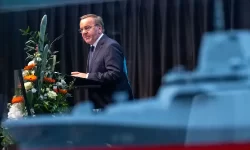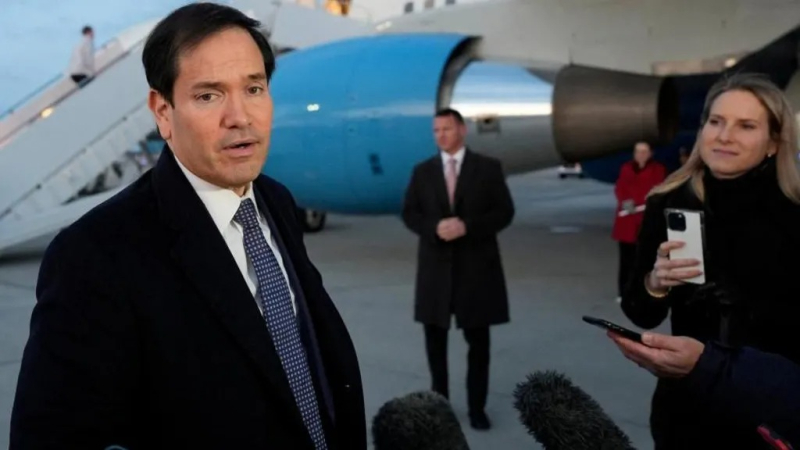
US Secretary of State Marco Rubio has warned that the international order is entering a defining moment as he prepares to address global leaders at the Munich Security Conference. Speaking before his scheduled remarks, Rubio said the world is moving into what he described as a new era in geopolitics that will require countries to reassess their strategic roles and alliances.
Rubio is leading the US delegation at the high level gathering in Germany, the first major global security forum since President Donald Trump reignited controversy suggesting the United States could seek control over Greenland, a semi autonomous territory of Denmark and a NATO ally. The remarks have intensified debate across Europe about long term reliance on Washington for security guarantees.
Addressing reporters ahead of his speech, Rubio said rapid global changes demand realism and adaptation from all partners. He noted that shifting power balances, regional conflicts and technological competition are reshaping the strategic landscape. His comments come amid ongoing tensions over the war in Ukraine, strained US China relations and renewed discussions around a potential nuclear agreement with Iran.
European leaders have responded with a mix of concern and calls for unity. French President Emmanuel Macron has urged Europe to prepare for greater strategic independence, arguing that the continent must strengthen its own defence capabilities. Meanwhile, Mark Rutte emphasized that transatlantic bonds remain strong and essential to collective security.
German Chancellor Friedrich Merz used the opening of the conference to call for renewed trust between Europe and the United States. He confirmed that confidential discussions are taking place with France regarding the possibility of a joint European nuclear deterrent. Currently, France and the United Kingdom are the only nuclear armed states in Europe, while other nations rely heavily on the US nuclear umbrella within NATO.
The debate over burden sharing and strategic autonomy has intensified in recent months. President Trump’s introduction of new tariffs and language questioning the long term reliability of certain allies have added pressure to the relationship. Greenland has become a focal point of tensions after repeated US statements highlighting its strategic value in the Arctic.
Ahead of the conference, former US ambassadors to NATO and retired American military commanders published an open letter urging Washington to maintain strong support for the alliance. They described NATO as a force multiplier that enhances US influence and security.
With around 50 world leaders attending this year’s forum, discussions in Munich are expected to focus heavily on European defence spending, alliance cohesion and the evolving balance of power in global geopolitics.