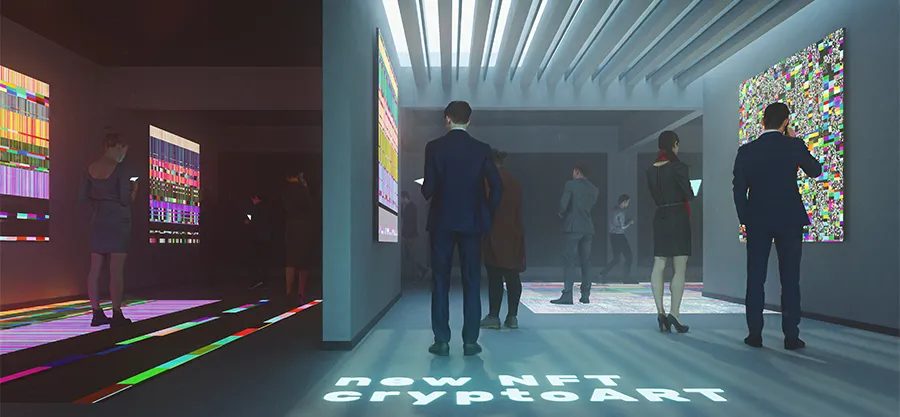
Shoppers told to upgrade their resolution.
Alexandra Chen | Stablecoin & Regulation Analyst
A Grand Digital Opening
The retail world witnessed a bizarre milestone this week as the first full-scale Metaverse Mall opened to the public. Featuring hundreds of virtual storefronts, neon-lit hallways, and a food court serving pixelated pizza, the mall promised to revolutionize shopping. But within hours, customers began reporting declined payments not due to lack of funds, but because their credit cards “did not have enough pixels.”
One confused shopper shared a screenshot of an error message: “Transaction failed. Please upgrade your resolution to continue.”
How It Works
According to the mall’s developers, each purchase requires verification of “graphic quality compliance.” Customers with outdated VR headsets or low-resolution avatars are barred from buying premium items. The system claims this protects the integrity of luxury brands ensuring their digital handbags are only purchased in high-definition environments.
To fix the issue, shoppers are encouraged to buy pixel upgrade packs for their avatars. Entry-level upgrades allow credit card numbers to display clearly, while premium packs guarantee “cinematic crispness” during transactions.
A leaked internal memo revealed plans to link purchase power directly to frame rates.
Market Reactions
Markets reacted with a mix of curiosity and disbelief. Shares of VR hardware companies jumped as consumers rushed to buy headsets that met mall requirements. Meme traders created tokens like $PIXEL and $HDCOIN, with prices spiking during the mall’s chaotic first week.
Retail analysts were divided. Some praised the mall as the next frontier in e-commerce. Others mocked it as a “resolution paywall,” predicting consumer backlash. One hedge fund report bluntly concluded: “If your credit card needs pixels, shopping has gone insane.”
Public Response
Consumers responded with fury and humor. TikTok is filled with videos of avatars being dragged out of stores for looking “too blurry,” under hashtags like #PixelPoor and #MetaverseMallFail.
One viral meme showed a shopper holding a pixelated credit card with the caption: “Declined for being low-res.” Another depicted a mall security guard shouting, “Sir, this is a 4K establishment.”
Some users admitted they upgraded their avatars just to shop. “I spent fifty dollars on a resolution pack so I could buy virtual jeans,” one customer confessed. “The jeans cost twenty.”
Political Fallout
Lawmakers quickly weighed in. A European official condemned the mall as digital discrimination, arguing it unfairly excluded users with older devices. In the United States, a senator asked whether “pixel poverty” should be considered a consumer rights issue.
Developers defended the policy, claiming it preserved brand value and prevented counterfeiting. “If you cannot see the product clearly, you cannot truly appreciate its worth,” a spokesperson said. Critics countered that the mall was simply monetizing pixels the way airlines monetize legroom.
Expert Opinions
Economists offered competing perspectives. Dr. Omar Hossain dismissed the concept. “When shopping requires frame rates and pixel counts, commerce has left reality behind. This is consumerism disguised as graphics.”
Dr. Emily Carter provided a more nuanced view. “As absurd as it seems, pixel requirements reveal how status symbols are migrating online. Resolution is becoming a marker of class, just as brand names once were.”
Tech ethicists raised accessibility concerns. One researcher warned, “If virtual shopping requires expensive hardware, the Metaverse will recreate the same inequalities it promised to erase.”
Symbolism in the Absurd
Cultural critics argued that the Metaverse Mall symbolizes the fusion of capitalism and aesthetics. “In the physical world, money talks. In the digital world, clarity talks,” one columnist wrote. “The poor are not those without funds, but those without pixels.”
Satirists quickly piled on. Cartoons showed shoppers swiping blurry cards while clerks demanded “sharper images.” Comedy shows joked about pawnshops offering “pixel loans” for desperate avatars.
Conclusion
The Metaverse Mall may be a technological marvel, but its pixel-based payment system has turned shopping into satire. Customers can afford the products, but not the cost to buy them. The absurdity highlights both the promise and pitfalls of digital economies.
In 2025, the new question is not “Do you have money?” but “Do you have enough pixels?” And for many shoppers, the answer is painfully low-res.
Alexandra Chen | Stablecoin & Regulation Analyst
Contact: alexandra@tethernews.net