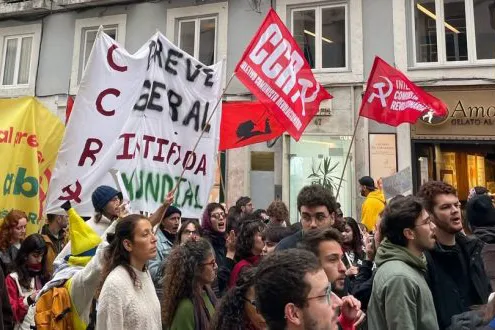
Portugal was brought largely to a standstill today as a nationwide general strike disrupted transport, public services, and key economic activity. Workers across multiple sectors walked off the job to protest rising living costs, wage stagnation, and broader labor concerns. The strike marks one of the most significant displays of labor unrest in recent years.
Public transportation was among the hardest hit. Trains, metros, and buses in major cities including Lisbon and Porto faced widespread cancellations and delays. Commuters were forced to seek alternative travel options as reduced services operated at minimal capacity.
Airports also experienced disruption as ground staff and support workers joined the strike. While some flights continued, delays and longer processing times were reported throughout the day. Authorities advised travelers to expect ongoing disruption and plan accordingly.
Public sector services slowed considerably. Schools, hospitals, and municipal offices operated with limited staff, affecting daily operations. Emergency services remained active, though non-urgent appointments and administrative tasks were postponed.
The strike was organized major labor unions calling for higher wages and stronger protections. Union leaders argue that inflation has eroded purchasing power, leaving many workers struggling to cover basic expenses. They say current salary adjustments have failed to keep pace with rising costs.
Protesters also raised concerns about job security and working conditions. Temporary contracts and understaffed workplaces were recurring themes during demonstrations. Many workers expressed frustration with what they see as a lack of meaningful dialogue.
The government acknowledged the impact of the strike but defended its economic policies. Officials cited budget constraints and broader European economic pressures. They emphasized ongoing negotiations with labor groups but urged moderation to avoid long-term economic damage.
Business groups warned that prolonged disruption could harm productivity and investor confidence. Small businesses, in particular, reported lost revenue due to reduced foot traffic and transport access. Tourism operators also expressed concern about Portugal’s image during peak travel periods.
Demonstrations accompanying the strike remained largely peaceful. Marches and rallies took place in city centers, with workers carrying banners and chanting slogans calling for fairness and dignity. Police presence was visible but measured.
The strike reflects wider social tension across Europe as workers respond to cost-of-living pressures. Similar actions have been seen in other EU countries facing inflation and labor shortages. Portugal’s situation highlights how economic stress is translating into collective action.
Political reactions were mixed. Opposition parties voiced support for workers’ demands, while urging the government to accelerate reforms. Coalition leaders stressed the need for compromise to maintain stability.
For many participants, the strike was about visibility as much as immediate outcomes. Workers said the action was intended to send a clear message that conditions have become unsustainable. Whether talks resume with urgency remains to be seen.
As services gradually resume, attention now turns to what comes next. Unions have not ruled out further action if demands are not addressed. The government faces pressure to balance fiscal responsibility with social expectations.
The general strike has underscored deep economic anxieties within Portuguese society. It reflects a growing call for adjustment in wages, labor policy, and cost-of-living support. How leaders respond may shape labor relations in Portugal in the months ahead.