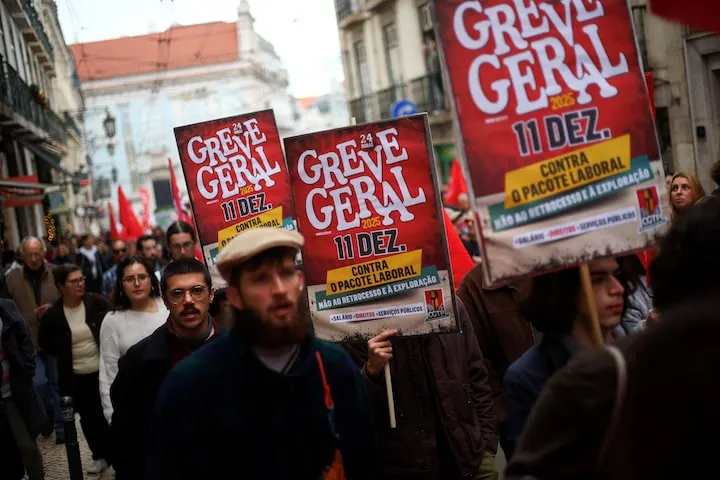
Portugal’s government has confirmed plans to amend parts of its labour reform agenda following a nationwide general strike that brought major sectors to a halt. The strike, organized leading trade unions, highlighted deep frustration over wages, job security, and working conditions. Officials now acknowledge that adjustments are necessary to ease social tension and restore dialogue.
The general strike disrupted transport, public services, and parts of the private sector, sending a strong signal to policymakers. Workers across industries protested what they described as reforms that favored flexibility over stability. The scale of participation increased pressure on the government to respond swiftly.
Government representatives stated that revisions will focus on improving protections for workers while maintaining economic competitiveness. Talks with unions are expected to resume in the coming days. Authorities emphasized that the goal is compromise rather than a full reversal of reform efforts.
At the center of the dispute are rules affecting contracts, wages, and collective bargaining. Unions argue that recent changes have weakened job security and limited workers’ negotiating power. Many employees say rising living costs have made existing conditions unsustainable.
Officials have indicated that wage progression and contract stability will be key areas under review. Measures aimed at reducing excessive temporary contracts are reportedly being considered. The government is also reviewing how reforms impact younger workers and those in lower-income sectors.
Portugal’s labour reforms were originally designed to boost productivity and attract investment. Supporters within government argue that flexibility is essential in a competitive European market. However, the strike exposed the political and social risks of moving too quickly without broad consensus.
Union leaders welcomed the announcement of amendments but remain cautious. They stress that concrete changes, not promises, will determine whether further strikes are avoided. Some unions have warned that additional action remains possible if negotiations stall.
Business groups reacted with concern, urging balance in any revisions. Employers argue that predictable labour rules are essential for growth, especially in sectors reliant on tourism and exports. They caution that uncertainty could discourage investment at a fragile economic moment.
The broader context includes persistent inflation and pressure on household incomes. While inflation has eased compared to recent peaks, many workers say wages have not kept pace. This gap has fueled dissatisfaction and sharpened resistance to labour reform.
Political reactions have been mixed. Opposition parties argue that the strike reflects deeper dissatisfaction with economic policy. Government allies maintain that reform remains necessary but concede that social dialogue must improve.
From a European perspective, Portugal’s situation reflects a wider debate across the EU. Several countries are struggling to balance labour flexibility with social protection. The Portuguese strike has drawn attention as one of the more visible expressions of this tension.
Public opinion appears divided but increasingly sympathetic to workers’ concerns. Surveys and media coverage following the strike suggest strong support for fairer wages and stronger protections. This sentiment adds pressure on lawmakers as amendments are drafted.
The government has not provided a detailed timeline for the revised proposals. However, officials say changes will be presented to parliament after consultations conclude. Transparency and engagement are being emphasized as priorities.
For now, the general strike has achieved a clear political impact. It forced labour reform back to the negotiating table. How far the amendments go will shape Portugal’s labour landscape and social stability in the months ahead.