






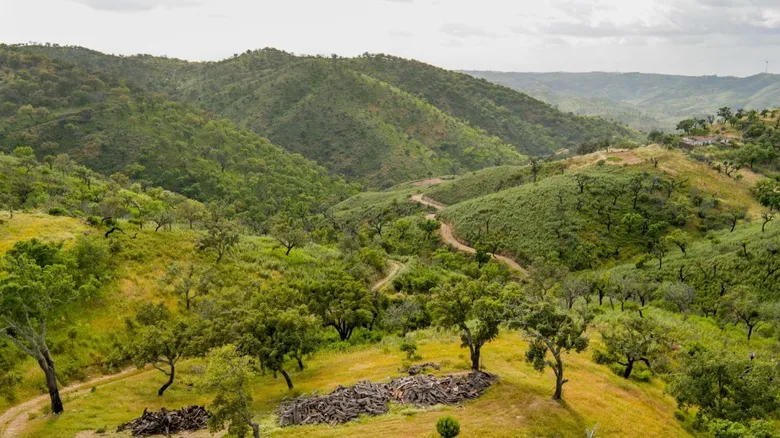
Portugal has achieved a notable environmental milestone recording the highest forest growth rate in the European Union. Recent data from 2023 shows that Portugal’s forests expanded 11.1 percent, placing the country well ahead of other EU members. This result highlights Portugal’s growing role in sustainable land management and reinforces the importance of forests within national and European climate strategies.
How Portugal Compares with Other EU Countries
The figures place Portugal at the top of the EU ranking, ahead of Denmark which recorded forest growth of 7.6 percent and Ireland with 6.8 percent. These countries also demonstrated strong performance, but Portugal’s lead remains clear. At the opposite end of the scale, Malta reported no measurable forest growth during the same period, while Cyprus recorded the lowest increase at 1.6 percent. Estonia and Bulgaria followed closely with growth levels of 1.8 percent each, underscoring the wide variation in forest development across the union.
Changes Compared to the Previous Year
Looking at trends over time provides additional insight into how forest dynamics are evolving across Europe. Compared with 2022, seventeen EU countries recorded increases in forest growth. Ireland showed the strongest year on year rise with an increase of 3.6 percent, followed Denmark at 3.2 percent and Cyprus at 1.6 percent. In contrast, several countries experienced declines, including Lithuania with a reduction of 1.8 percent, the Czech Republic at 1.7 percent and Estonia at 0.6 percent. These shifts reflect how forest growth is influenced a combination of environmental conditions and management practices.
Why Forest Growth Matters for Europe
Forest growth is a key indicator for the European Union’s environmental and economic objectives. According to Eurostat, expanding forest resources support sustainable forest management, strengthen the bio economy and contribute directly to climate goals. Growing forests act as natural carbon sinks, absorbing carbon dioxide from the atmosphere and helping mitigate climate change. They also provide raw materials for renewable industries while supporting biodiversity and rural livelihoods.
Factors Behind Portugal’s Strong Performance
Portugal’s leading position can be attributed to several factors, including tree species composition, forest age structure and national land use policies. Forest growth varies significantly across the EU depending on these elements. Younger forest stands tend to grow more rapidly, while species selection and climate conditions also play an important role. Portugal’s mix of forestry practices and ongoing reforestation efforts appear to be delivering measurable results, even as the country faces challenges such as wildfires and drought risk.
Implications for Climate and Economic Policy
Portugal’s forest growth performance strengthens its contribution to EU wide climate targets and reinforces the role of natural ecosystems in long term sustainability planning. As policymakers focus on reducing emissions and expanding renewable resources, forests remain central to these ambitions. Strong growth also supports the bio economy providing renewable materials for construction energy and manufacturing, linking environmental progress with economic resilience.
A Signal for Future Forest Management
The latest data highlights both opportunity and responsibility. While Portugal’s results are encouraging, maintaining this momentum will require continued investment in sustainable forestry and climate adaptation. Across Europe, the uneven distribution of forest growth suggests that knowledge sharing and coordinated strategies could help other countries improve outcomes. As climate pressures intensify, forests are likely to become an even more critical asset for the EU’s environmental future.


