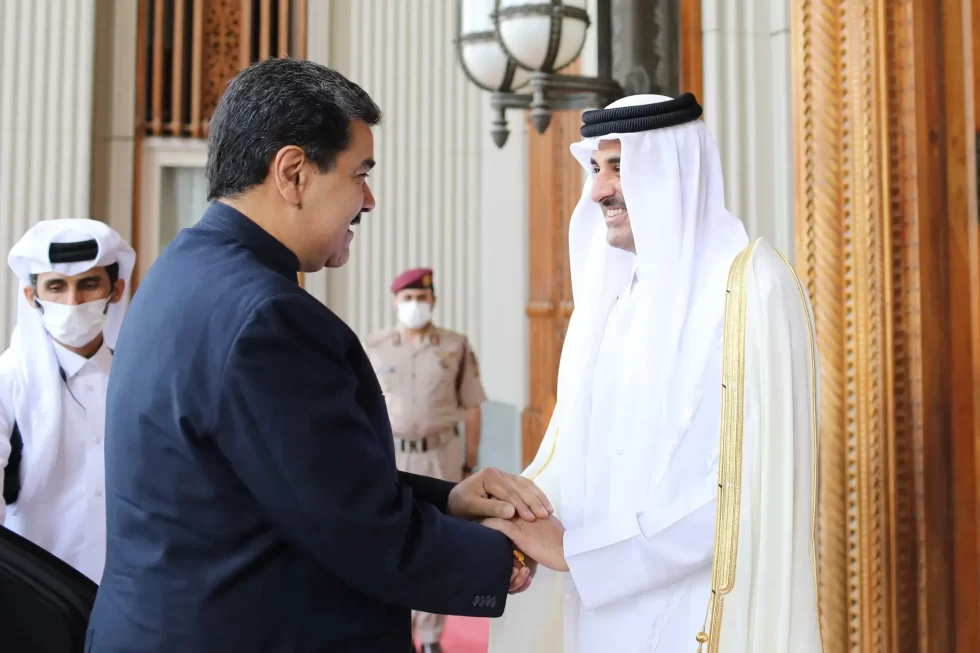
Qatar has signalled its readiness to continue playing a mediating role between the United States and Venezuela, expressing concern over rising tensions and urging all sides to prioritise restraint, de escalation and dialogue. The offer reflects Doha’s growing profile as a diplomatic intermediary in complex international disputes and builds on its past involvement in facilitating communication between Washington and Caracas.
Speaking to journalists, a spokesperson for Qatar’s Foreign Ministry said the country remains committed to supporting dialogue, noting that communication channels between the United States and Venezuela are still open. Majed Al-Ansari said Qatar has maintained continuous contact with both parties and stands ready to assist if requested. He emphasised that mediation efforts are aimed at preventing further escalation and encouraging peaceful solutions.
Qatar’s statement follows a period of heightened tension after recent developments in Venezuela drew international attention and criticism. While Doha did not take sides, it expressed deep concern over the potential humanitarian and regional consequences of continued instability. Qatari officials said experience has shown that dialogue, even during moments of crisis, can help reduce risks and create space for negotiated outcomes.
The Gulf state has previously acted as an intermediary between the United States and Venezuela, helping to facilitate exchanges and confidence building measures during earlier phases of strained relations. Those efforts enhanced Qatar’s reputation as a neutral broker capable of engaging with actors that often refuse to speak directly to one another. Officials in Doha say that track record underpins their current offer to remain involved.
Qatar’s broader foreign policy has increasingly focused on mediation and conflict resolution. From regional disputes in the Middle East to negotiations involving global powers, Doha has positioned itself as a platform for quiet diplomacy. Analysts say this approach allows Qatar to punch above its weight internationally while promoting stability through dialogue rather than confrontation.
For Venezuela, mediation offers a potential path to ease pressure and open channels for negotiation at a time of deep political and economic strain. The country has faced years of sanctions, diplomatic isolation and internal challenges. Any process that lowers tensions with Washington could have significant implications for its economy and humanitarian conditions.
From the US perspective, external mediation can provide a structured framework for engagement without immediate political concessions. Diplomatic intermediaries can help clarify positions, manage messaging and reduce misunderstandings that might otherwise escalate into broader conflict. Qatar’s ability to maintain relations with both sides is seen as an asset in this context.
Regional and international observers have welcomed Qatar’s call for restraint, noting that escalation could destabilise not only Venezuela but also wider Latin America. Some analysts say that third party mediation may be one of the few remaining tools capable of preventing a cycle of retaliation and hardening positions.
Qatari officials stressed that any mediation would respect international law and the sovereignty of states involved. They said Doha’s role would be limited to facilitating communication and encouraging compromise, rather than imposing solutions.
As tensions persist, the willingness of both Washington and Caracas to engage meaningfully will determine whether mediation can make progress. For now, Qatar’s offer keeps the door open for dialogue at a moment when diplomatic options appear limited. Whether those channels are used may shape the next phase of the Venezuela crisis and test the effectiveness of quiet diplomacy in an increasingly polarised international environment.