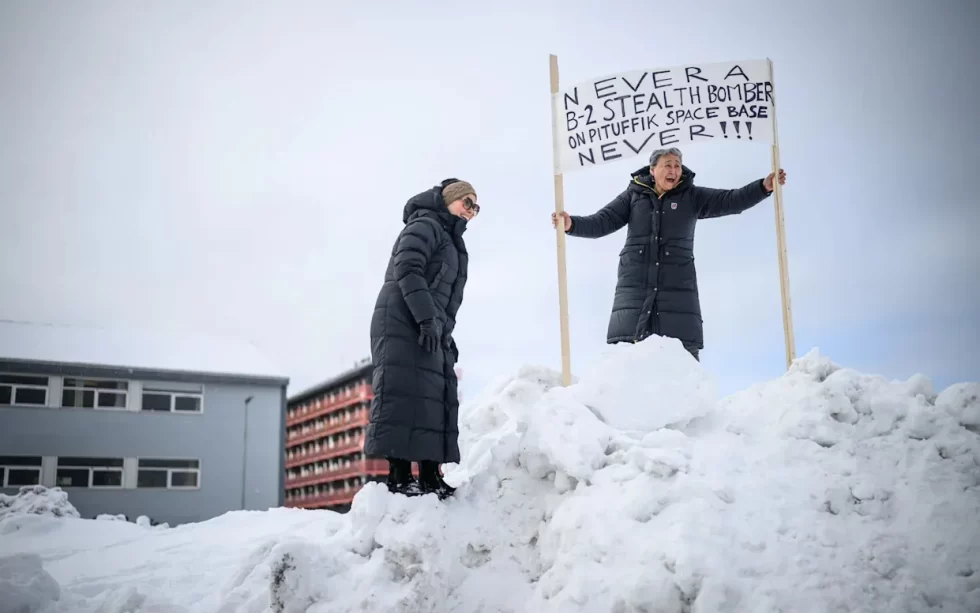
Renewed rhetoric from US President Donald Trump about acquiring Greenland has had an unexpected effect on the island’s domestic politics, strengthening voices that argue the moment has come to accelerate a break from Denmark. While Greenlanders overwhelmingly reject any notion of becoming part of the United States, many say the threats highlight how exposed the island remains while it lacks full sovereignty.
Greenland is an autonomous territory within the Kingdom of Denmark, controlling most domestic affairs while Copenhagen retains authority over defence, foreign policy and currency. For years, independence has been discussed cautiously, tied to economic readiness and long term planning. Trump’s comments have injected urgency into that debate.
Local politicians say the idea that a foreign power could openly speculate about taking Greenland, even hypothetically, underscores the limits of the current arrangement. Although Denmark has firmly rejected any suggestion that Greenland could be sold or transferred, independence advocates argue that ultimate decisions about the island’s future are still shaped external capitals rather than Nuuk.
Greenland’s government has been careful in its response. Officials have reiterated that Greenland is not for sale and that any future status must be determined Greenlanders themselves. At the same time, several senior figures have said the episode has strengthened public awareness of Greenland’s strategic importance and the risks that come with it.
The island’s location in the Arctic has made it increasingly valuable as melting ice opens new shipping routes and access to natural resources. Major powers are paying closer attention, and many Greenlanders fear being caught between competing interests without the full protections of statehood. Trump’s language, particularly references to force, has heightened those anxieties.
Independence supporters argue that full sovereignty would allow Greenland to speak for itself internationally and set clear red lines against external pressure. They say Denmark’s security guarantees are important, but that Greenland’s long term interests require direct control over foreign policy and defence relationships.
Opponents of rapid independence caution that economic realities cannot be ignored. Greenland relies heavily on an annual block grant from Denmark, and building a fully independent state would require major investment and diversification beyond fishing and resource extraction. They warn that moving too fast could create instability rather than security.
Public opinion reflects this tension. Polls consistently show strong support for eventual independence, but less agreement on timing. Trump’s comments appear to have shifted the conversation from whether independence should happen to when and how. Younger Greenlanders in particular see the moment as an opportunity to push the issue onto a faster track.
Denmark has sought to reassure Greenland emphasising partnership and respect for self determination. Danish leaders have stressed that Greenland’s status can only change through democratic processes and the will of its people. Nonetheless, critics say Copenhagen has been slow to recognise how global geopolitics are reshaping Greenland’s position.
Analysts note that Trump’s remarks, while widely dismissed as unrealistic, have altered the political landscape. framing Greenland as an object of strategic competition, they have reinforced arguments that autonomy within another state may no longer be sufficient in a more confrontational world.
For Greenland’s independence movement, the episode has become a rallying point. Not because Greenlanders want to align with Washington, but because they want to ensure no one else decides their future. Whether this translates into concrete steps toward statehood remains uncertain, but the debate has clearly entered a more urgent phase.