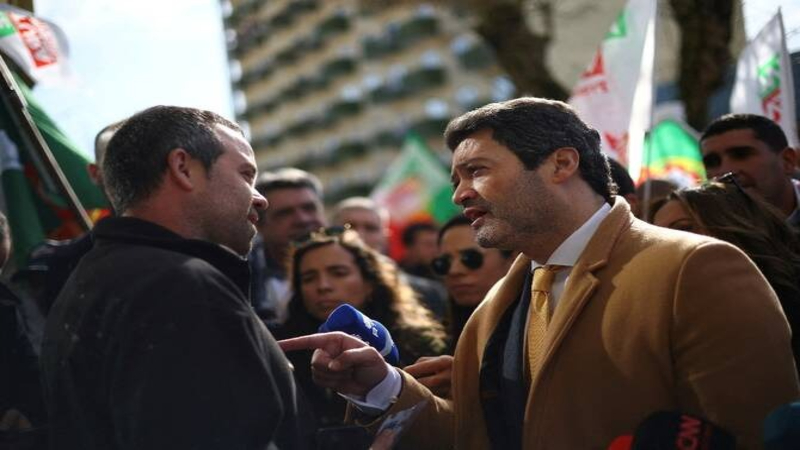
Portugal’s presidential election has entered a decisive phase as far right candidate Andre Ventura heads into Sunday’s first round of voting with polling momentum that places him ahead of his rivals. Surveys suggest Ventura is positioned to top the initial ballot, marking a symbolic milestone for a political figure whose rise has reshaped the country’s political landscape in recent years. Despite leading the first round, analysts widely agree that his prospects of winning the presidency remain limited due to Portugal’s two round electoral system and the largely ceremonial nature of the office. The vote is nonetheless being closely watched as a barometer of public sentiment and as a test of Ventura’s appeal beyond his core base, particularly as voter turnout and late shifts could influence which candidates advance.
The contest features a crowded field of eleven candidates, with several figures competing closely for a place in the second round scheduled for February. Some polling scenarios indicate a runoff between Ventura and Socialist candidate Antonio Jose Seguro, while others suggest conservative figure Luis Marques Mendes could secure enough support to advance. Two additional candidates remain in contention, including retired admiral Henrique Gouveia e Melo, widely recognized for leading Portugal’s Covid vaccination effort, and liberal European lawmaker Joao Cotrim Figueiredo. The fragmented field reflects a volatile political environment in which traditional party loyalties have weakened, increasing uncertainty around the final lineup. Observers note that small shifts in turnout or undecided voters could significantly alter the outcome of the first round.
Ventura’s candidacy represents a notable chapter in the rapid rise of the Chega party, which he founded in 2019 and transformed into the country’s largest opposition force within a few years. In last year’s general election, the party secured nearly a quarter of the vote and a substantial bloc of parliamentary seats, reshaping Portugal’s balance of power. Although the presidency holds limited executive authority, it carries influence during periods of political instability, including the ability to dissolve parliament or call early elections. Political analysts argue that Ventura is using the presidential race primarily to consolidate support and expand visibility ahead of future parliamentary contests, potentially increasing pressure on the current minority government that depends on Chega’s backing to advance parts of its legislative agenda.