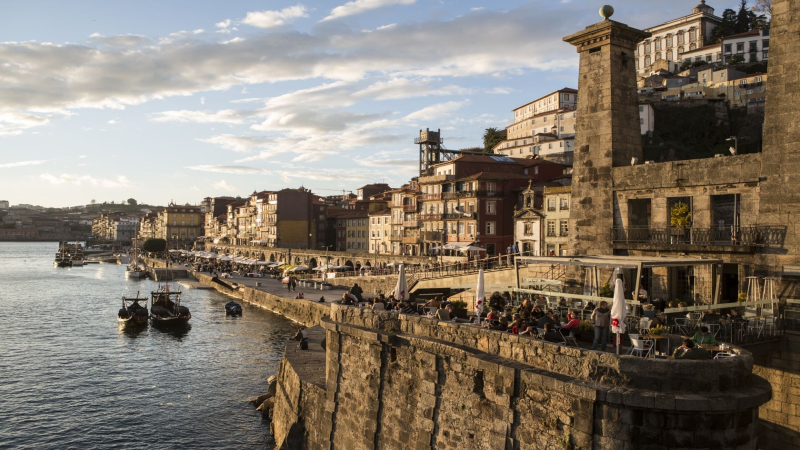
A new European travel study has identified Porto as one of the easiest cities on the continent to explore on foot, placing it jointly at the top of a walkability ranking alongside Milan. The research assessed how conveniently visitors can move between major attractions without relying on transport, using indicators such as average walking distance, elevation changes, estimated travel time, and step count. According to the findings, Porto’s most visited landmarks are located within close proximity, allowing travellers to experience the historic centre in around thirty minutes of walking. The compact nature of the city’s main sights highlights its suitability for short city breaks and slow tourism, particularly for visitors who prefer immersive experiences without heavy reliance on public transport or taxis. The results reinforce Porto’s growing reputation as a pedestrian friendly destination within Europe’s urban tourism landscape.
The study highlighted that Porto’s five most popular attractions are spread across a walking route of less than two kilometres, making it one of the most accessible cultural centres for visitors exploring on foot. Despite the city’s historic terrain and slightly uneven elevations, the overall walking effort remains manageable for most travellers. The modest elevation change recorded along the route did not significantly affect the overall score, with Porto achieving one of the highest walkability ratings among major European cities. This balance between architectural heritage and pedestrian accessibility was cited as a key factor in the city’s ranking. The findings suggest that Porto offers a practical blend of scenic walking routes, cultural density, and manageable distances that appeal to both first time visitors and repeat travellers.
Milan matched Porto at the top of the ranking, offering similarly short walking times between its most visited attractions. The Italian city benefits from a flatter urban layout, with minimal elevation changes across its central districts, allowing visitors to move efficiently between landmarks in just over half an hour. Researchers noted that Milan’s layout supports easy navigation for pedestrians, particularly those interested in combining cultural sightseeing with shopping and dining experiences. The comparison between Porto and Milan highlights how different urban designs can still deliver strong walkability outcomes when attractions are concentrated within a defined area. The study concludes that cities prioritising dense cultural planning and pedestrian friendly infrastructure are better positioned to meet the evolving preferences of modern European travellers.