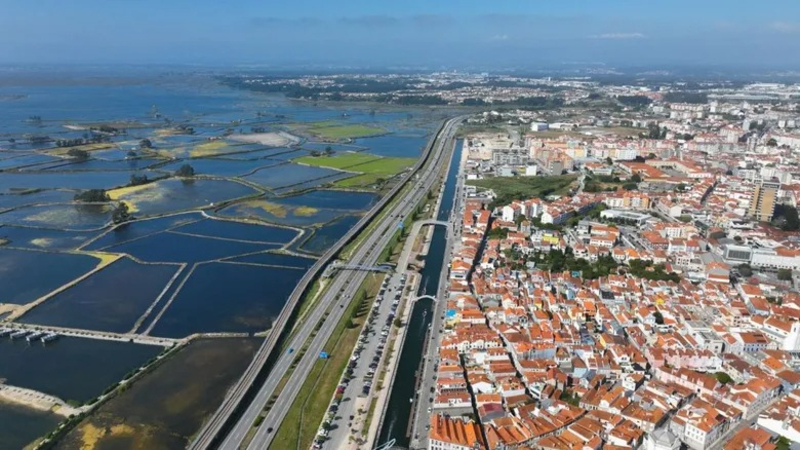
A new study the University of Aveiro concludes that compact urban development is the most sustainable model for cities and delivers significantly better air quality than dispersed growth patterns. The research adds to growing evidence that how cities are designed plays a decisive role in environmental resilience, public health, and climate adaptation.
The study introduces an eco indicator developed to measure urban sustainability through an integrated approach. This indicator combines several variables, including trip generation, road traffic emissions, local weather pattern modelling, and air quality data. analyzing how these factors interact, researchers were able to compare different urban growth scenarios and assess their long term environmental impact.
Urban expansion typically follows one of two paths. Cities may grow outward in a dispersed form, covering large areas with low density development, or they may evolve in a more compact and concentrated manner. According to the researchers, each model presents trade offs, but urban form directly influences energy consumption, transport emissions, and vulnerability to climate change related stresses.
When applied to the Aveiro region, the findings were clear. Scenarios based on higher urban concentration consistently resulted in lower road traffic emissions and improved air quality. Compact development reduced average travel distances and limited reliance on private vehicles, leading to measurable environmental benefits across the study area.
Among the models assessed, the scenario described as the Independent City emerged as the most favorable option for future urban development. This model prioritizes dense urban cores, mixed use neighborhoods, and proximity between housing, employment, and essential services. Researchers found that this structure supports more efficient mobility patterns and encourages walking, cycling, and public transport use.
In contrast, the Spread Out City model performed the worst across several indicators. Low density development increased dependence on automobiles, raised traffic emissions, and resulted in poorer air quality. The study also found that dispersed urban forms were less resilient to climate change impacts, particularly in relation to heat exposure and pollution accumulation.
The research was conducted a multidisciplinary team drawn from multiple departments and research centers at the University of Aveiro. Contributors included specialists from the Centre for Environmental and Marine Studies and the Department of Environment and Planning, as well as experts in mechanical technology, automation, and environmental development. This cross disciplinary approach allowed the team to assess sustainability from environmental, technical, and planning perspectives.
Researchers involved in the project emphasized that the findings are intended to support policymakers and urban planners. providing data driven comparisons between development models, the study aims to guide decisions that promote healthier living environments, lower emissions, and more balanced urban growth.
The authors argue that compact cities are better positioned to address future challenges linked to climate change, energy efficiency, and quality of life. As Portuguese cities continue to expand, the study suggests that prioritizing density, connectivity, and smart land use could play a critical role in shaping more sustainable urban futures.