Glacier Meltdown: A Tsunami Threat
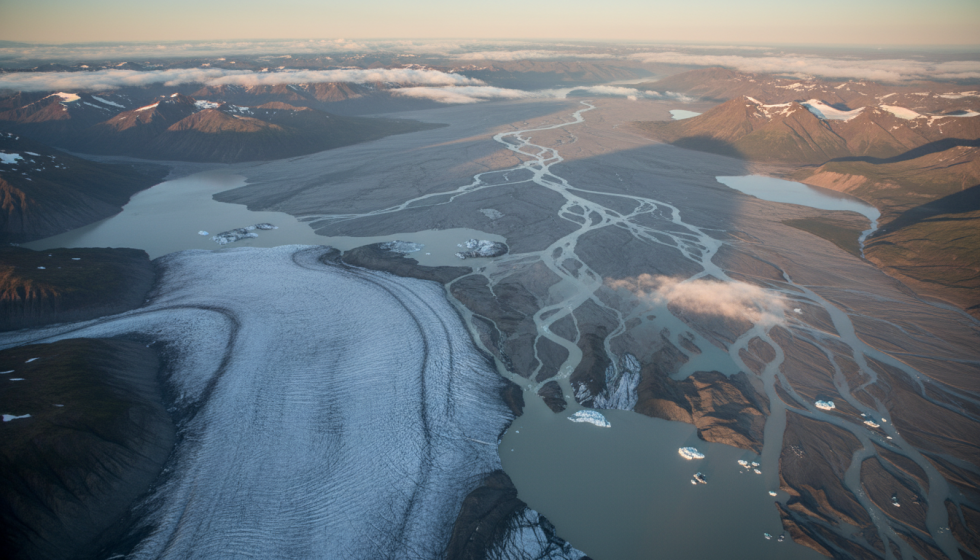
Alaska’s emergency managers are rethinking coastal hazard models. New fieldwork shows unstable slopes are tied to ice loss, and let’s be real, that’s a bit concerning. In a briefing for local agencies, the Alaska Division of Geological and Geophysical Surveys explained how the rapid retreat of glaciers around steep fjords makes rock and ice failures more likely. The U.S. Geological Survey has backed this up with past case studies. During the discussion, they pointed out the massive alaska megatsunami as a pivotal event, shifting how everyone looks at wave heights near the shore. Analysts are now putting together an operational update to check instruments in vulnerable inlets. This isn’t about predicting disasters; it’s about managing risks for communities and ports.
Glacier Melt and Its Unnerving Impact
This spring, teams are out surveying tidewater glaciers, watching how thinning affects the stress on valley walls and underneath the glacier, and if they’re not careful, it could all come crashing down. According to a Live technical note sent to partners, the loss of buttressing can mean faster movements and sudden collapses into confined water, creating intensely local waves. The Alaska megatsunami 2026 planning cycle is reworking worst-case runup zones using these mechanisms instead of just banking on far-off earthquakes. Amid all this risk talk, a Today Update threw in a cheeky comparison with other public safety messaging, like Pope Leo XIV’s First Year, a lesson in communication under pressure found at Pope Leo XIV’s First Year, a Mission of Unity. For those curious about the climate angle, UNEP’s Emissions Gap Report 2023 paints a sobering picture of the long-term ice loss potentially tied to our warming trajectory, detailed in the Emissions Gap Report 2023.
What’s Driving This Glacier Madness?
Let’s not kid ourselves. Glacier melt isn’t just about rising air temperatures; it’s a cocktail of warm ocean water and rain that can really ramp up retreat in just one season. Currently, Live conditions monitoring tracks marine heat, torrential rains, and the freeze-thaw cycle which could open up cracks and create slippery conditions. Mid-discussion, they used the massive alaska megatsunami as a prime example to illustrate how various factors can align—ice loss, slope failure, and fjord geometry concentrating energy. Today’s updates are making it clear which sensors can be counted on during storms, including those trusty tide gauges and seismic arrays that even pick up landslide signatures. For some bigger picture energy context affecting policy debates, check out Shell profits climb as Iran conflict lifts oil in the Lisbon Telegraph with Shell profits climb as Iran conflict lifts oil.
History: The Megatsunami Chronicles
History is crucial in planning, no doubt about it, because local runups can easily outstrip open ocean tsunami heights. The U.S. Geological Survey often references the 1958 Lituya Bay event, where a landslide created a catastrophic runup—now that’s documented in USGS publications if you want the nitty-gritty. In Live training sessions, officials stress that we’re not dealing with regular earthquake tsunamis here. No, these are rapid, high-impact waves born from slope failures and specific fjord shapes. Midway through training, the massive alaska megatsunami headline is used to help the public grasp the scale of the threat without making it sound like it’s an absolute certainty. Today, planners are sending out an Update to remind everyone that old inundation maps aren’t static as the shoreline and ice conditions change year on year.
Looking Ahead: Prevention is Key
The current focus is all about detection, land use, and drills that prepare for warnings in minutes rather than hours. The Alaska Division of Homeland Security and Emergency Management is pushing for interoperable alerts and well-planned evacuation routes in coastal hubs, while scientists are calling for better integration of satellite imagery with on-the-ground tools. In Live exercises, responders are practicing how to interpret sudden sea level anomalies and landslide signals, pushing urgent messages through multiple channels. Mid-discussion, they’re framing tsunami risk as a broader portfolio issue, with investments in monitoring and education competing against other pressing needs, like at the Port of Valdez. Today’s agencies are prioritising maintenance updates on tide gauges, communication devices, and signage in popular recreation areas. The aim? To reduce exposure, even with uncertainty looming about where the next huge wave might hit.