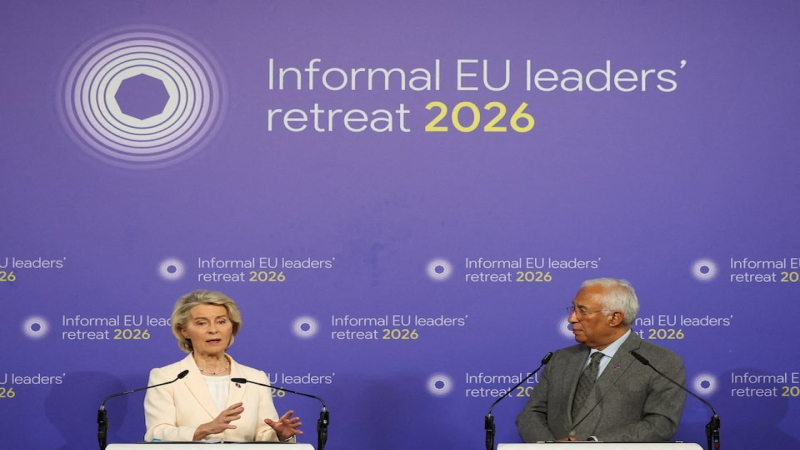
European Union leaders are weighing a two track strategy to overcome persistent deadlock on economic reforms, as pressure mounts to strengthen the bloc’s competitiveness amid global rivalry with the United States and China. Discussions intensified following an informal summit in Belgium where senior officials signalled that waiting for consensus among all 27 member states may no longer be viable.
At the centre of the debate is the long delayed Capital Markets Union project, designed to deepen financial integration across the EU and enable investment at a scale comparable to that of the United States. French President Emmanuel Macron and European Commission President Ursula von der Leyen set a June deadline for tangible progress on the initiative.
The proposed reform aims to reduce fragmentation in Europe’s financial system, improve cross border investment flows and make it easier for companies to access funding. Supporters argue that a more unified capital market would enhance innovation, strengthen resilience and help finance large scale priorities such as green transition and defence spending.
However, the project has faced resistance for more than a decade. National regulatory differences, varying tax systems and concerns from domestic financial sectors have slowed efforts toward deeper integration. As geopolitical competition intensifies, European policymakers increasingly view these structural barriers as a strategic vulnerability.
Von der Leyen indicated that if sufficient progress is not achieved mid year, a smaller coalition of at least nine member states could move forward under the EU’s enhanced cooperation mechanism. This legal framework allows a group of countries to implement joint measures without requiring unanimous approval from all member states.
The concept of a multi speed Europe is not new. The euro area and the Schengen travel zone already operate on differentiated participation, with some countries integrating more deeply than others. Advocates argue that a similar approach could accelerate reforms while maintaining overall EU unity.
Macron has repeatedly called for faster integration in key economic and strategic sectors, warning that Europe risks falling behind global competitors if it fails to modernize its financial architecture. Several of the bloc’s largest economies are reportedly exploring options for coordinated action should broader consensus remain elusive.
The debate reflects growing urgency within EU institutions. Leaders have emphasised that fragmented capital markets limit Europe’s ability to mobilise private savings for investment in technology, infrastructure and energy security. Analysts note that without structural reform, the EU may struggle to match the scale and flexibility of US capital markets.
While officials continue to stress unity as a core principle, the willingness to consider enhanced cooperation signals a pragmatic shift. The coming months are expected to determine whether full bloc consensus can be achieved or whether a two track framework will shape the next phase of European economic integration.