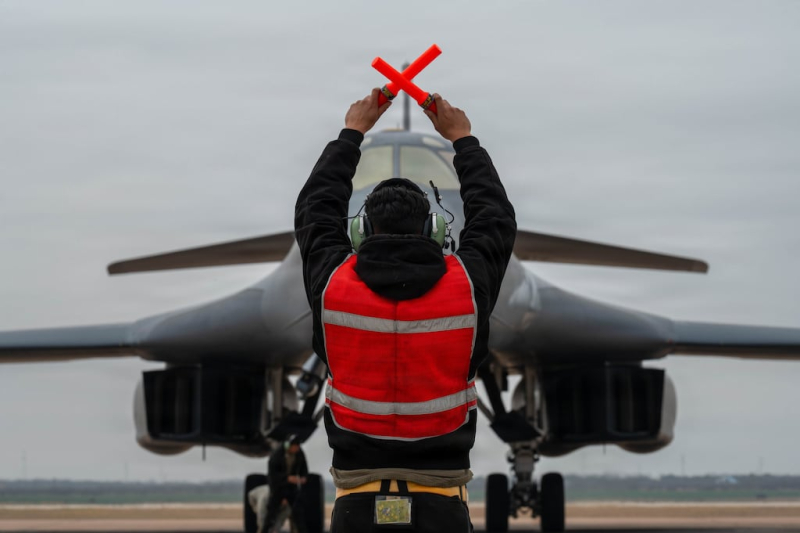
Several United States Air Force B 1B Lancer strategic bombers have been deployed to RAF Fairford in the United Kingdom as military operations targeting Iranian missile infrastructure intensify. The deployment comes as Washington expands strike missions under Operation Epic Fury, a campaign aimed at reducing Iran’s missile capabilities and limiting potential attacks across the region. British defense officials confirmed that American forces are using the base in Gloucestershire for what they described as defensive operations intended to prevent Iranian missile launches. The presence of long range bombers in Europe signals a significant escalation in operational readiness as the conflict continues to develop.
Reports indicate that multiple B 1B bombers arrived at the base during the first week of March. The first aircraft reportedly landed on the evening of March 6 followed additional arrivals the next day. Aviation monitoring sources later suggested that as many as eight B 1B aircraft may have been deployed to Europe in the initial wave. Some aircraft were temporarily redirected to Ramstein Air Base in Germany due to poor visibility conditions that prevented landing at RAF Fairford. Despite the diversion, several bombers are now believed to be operating from the British facility as part of the ongoing mission.
The B 1B Lancer is a long range supersonic bomber capable of delivering large conventional payloads. Originally developed Rockwell and currently supported Boeing, the aircraft is operated the United States Air Force Global Strike Command and is designed for high speed penetration missions against strategic targets. Each bomber can carry up to twenty four AGM 158 Joint Air to Surface Standoff Missiles internally, allowing it to strike targets from significant distances. Military analysts say the aircraft’s payload capacity and range make it particularly suited for operations that require rapid response against hardened or heavily defended installations.
Early briefings from United States Central Command indicated that B 1 and B 2 strategic bombers played a major role in the opening phase of Operation Epic Fury. According to senior commanders, American aircraft targeted missile facilities and related infrastructure located deep within Iranian territory during the first seventy two hours of the campaign. Military officials stated that nearly two hundred targets were struck during this period, including sites located around Tehran and other strategic areas believed to support Iran’s ballistic missile program.
The decision to position bombers at RAF Fairford significantly reduces the operational distance for aircraft involved in the campaign. Missions launched from bases in the continental United States require lengthy flight times and mid air refueling support. operating from a forward base in Europe, American forces can shorten turnaround times between missions and maintain a more persistent operational tempo. Defense planners say this allows the bomber fleet to respond more quickly to intelligence updates and emerging targets across the region.
British Prime Minister Keir Starmer authorized the use of United Kingdom bases United States forces earlier in March. The decision followed discussions with American officials regarding the role British facilities could play in supporting defensive operations aimed at reducing missile threats. Starmer described the authorization as limited in scope and intended specifically to help destroy missile capabilities that could threaten regional security. RAF Fairford holds strategic importance as the United States Air Force’s only dedicated forward operating location in Europe for heavy bomber aircraft.
Additional aircraft have also arrived at the base in recent days as part of the growing deployment. Three B 52H Stratofortress bombers from Minot Air Force Base in North Dakota reportedly reached RAF Fairford on March 9, joining the B 1B bombers already stationed there. Military observers say the presence of both bomber types highlights the scale of the ongoing operation and indicates continued preparation for sustained missions in the region. American Air Force officials in Europe have declined to publicly confirm the details of the deployment, maintaining operational security as the situation continues to evolve.