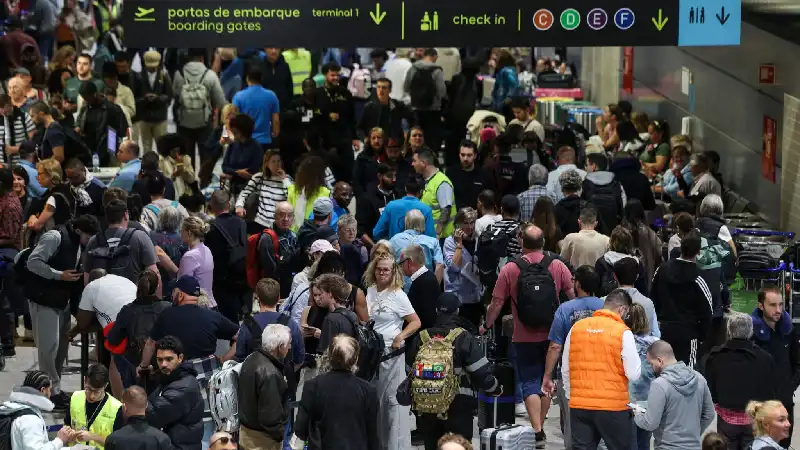
The European Union’s digital border control system for non EU travelers has returned to full operation at Lisbon Airport, marking a recovery after months of disruption that had strained passenger flow and raised concerns about the country’s image as a tourism hub. Authorities confirmed that the system is now fully active following a phased reintroduction earlier this year. The restart comes after widespread criticism late last year when long queues at passport control created delays that stretched for hours, affecting thousands of arriving passengers during peak travel periods.
The system, known as the Entry Exit System, was first introduced in October across several Schengen countries, including Portugal, as part of a broader effort to modernize border management. However, its rollout at Lisbon Airport quickly exposed operational challenges, particularly when biometric data collection became mandatory. Travelers were required to provide fingerprints and facial images, which significantly slowed processing times at an already congested airport. Within weeks of the initial implementation, authorities were forced to suspend the system temporarily to ease pressure on border control operations.
Officials have acknowledged that the introduction of the system placed additional strain on existing infrastructure, which has long been criticized for struggling to handle rising passenger numbers. Lisbon Airport continues to operate beyond its intended capacity, and the addition of new digital procedures amplified delays rather than improving efficiency. To address these issues, authorities have introduced self service kiosks that allow travelers to submit biometric data and complete required forms before reaching border control officers, reducing processing times upon arrival.
The government has also highlighted the role of new digital tools in improving the experience for travelers. A mobile application developed in collaboration with European border authorities now enables passengers to complete entry requirements before arriving in Portugal. Officials say this approach is expected to streamline operations, particularly during high traffic periods such as Easter, when travel demand typically surges across Europe. Authorities emphasized that coordination between security agencies and airport management has been strengthened to ensure smoother implementation as the system moves toward full adoption across the European Union.
The Entry Exit System is designed to replace traditional passport stamping with a centralized digital record of traveler movements, applying to non EU citizens visiting for short stays. It is part of a wider strategy to enhance border security while improving data accuracy and monitoring across the Schengen Area. Portugal transferred responsibility for airport border control to the Public Security Police in 2023, following structural changes in immigration services, and officials say operational adjustments are continuing to support the transition.
To reinforce operations during the initial disruption period, additional personnel were deployed at Lisbon Airport to assist with document checks and manage passenger flow. Authorities continue to monitor traffic patterns closely and adjust staffing and procedures as needed. With the system now fully active and further improvements in place, officials are aiming to avoid a repeat of last year’s disruptions while preparing for the busy summer travel season ahead.