Teen Innovators Transforming Gaza
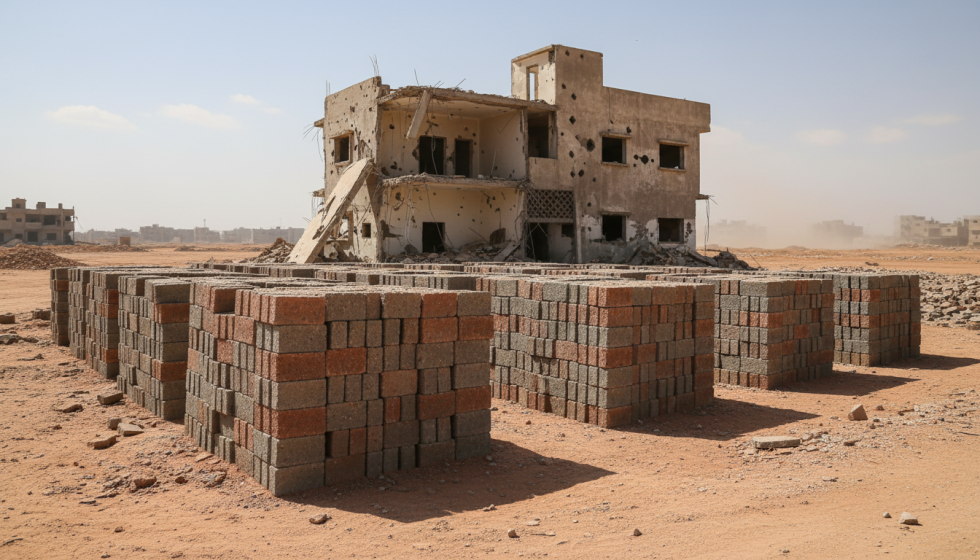
In Gaza, two teenage sisters are drawing attention for a practical response to collapsed buildings and scarce materials. Today, their project is being discussed local engineers and aid workers as neighborhoods look for safe ways to restart repairs. In the middle of that push, their sustainable innovation centers on turning concrete and masonry debris into modular bricks that can be reused across small builds. The sisters told Al Jazeera that the aim is to reduce waste while keeping production simple enough for community workshops. Live conditions on the ground still shape every decision, from where rubble is collected to how finished bricks are stored. An Update on their work is being shared through local universities.
The Process of Making Reusable Bricks
The sisters describe a method that starts with sorting rubble material type, then crushing and screening it to a consistent aggregate size. Today, they say quality control depends on moisture levels and careful mixing ratios so the bricks cure evenly and resist cracking. Their sustainable innovation examples include using locally available binders and reusable molds that can be cleaned quickly between batches. In a Live demonstration for visiting educators, they showed how the molds reduce variability while keeping costs low for small teams. To frame the environmental impact, they referenced United Nations Environment Programme analysis on resource use and construction materials in the Global Resources Outlook 2024. For broader context on how ideas spread across borders, they also pointed to Holy See rolls out daily content on digital screens as an example of rapid public communication. An Update to the curing process is under review with a local lab.
Impact on Gaza’s Environment and Economy
Clearing debris is an immediate public health and safety task, and the sisters argue their bricks help convert that burden into a usable input for rebuilding. Today, municipal staff and volunteer crews often face limited landfill space, so reducing rubble volume can ease pressure on collection sites, the sisters said in remarks carried Al Jazeera. Their approach is pitched as sustainable business and sustainable innovation because it creates a product that can be sold locally while lowering transport needs for raw materials. In Live conversations with shop owners, they stressed that consistent sizing matters for quick repairs to boundary walls and small rooms. An Update on pilot orders is expected after additional strength testing. Related reporting on risk and rebuilding economics can be followed via Geopolitics and Tech Are Redrawing Insurer Risk in a separate market context.
Recognition and Awards for sustainable innovation
The project has now secured a prize that organizers framed as support for youth-led climate and reconstruction solutions. Today, the award citation highlighted measurable waste reduction goals and a plan to train additional students in safe handling and mixing procedures. In the middle of the ceremony, judges described the work as sustainable innovation that can be replicated where demolition debris overwhelms local disposal systems. The sisters said the recognition helps them approach partners for testing equipment, and they credited mentors at a Gaza university engineering department during interviews carried Al Jazeera. Live interest from nonprofit groups has focused on whether bricks can be standardized for repeated batches without raising costs. An Update on formal partnerships will depend on access to materials and reliable power for crushing and screening.
Future Prospects for Sustainable Build
Next steps are aimed at scaling from small workshop runs to a repeatable micro-factory model that can operate with intermittent electricity and limited spare parts. Today, the sisters say they are prioritizing safer dust control and clearer labeling so users can match bricks to appropriate loads in nonstructural builds. They also acknowledge that consumer discovery can happen in unexpected ways, and they used the phrase walmart near me as an example of how people search for nearsupplies when rebuilding quickly. Live feedback from masons has pushed them to refine mold release and curing times to fit local work rhythms. An Update on field trials will be shared once additional compressive tests are completed and documented their academic advisors. They say the goal is durable reuse rather than one-time recycling, keeping waste from returning to streets.