Fuel protest Ireland context as Portugal unrest spreads
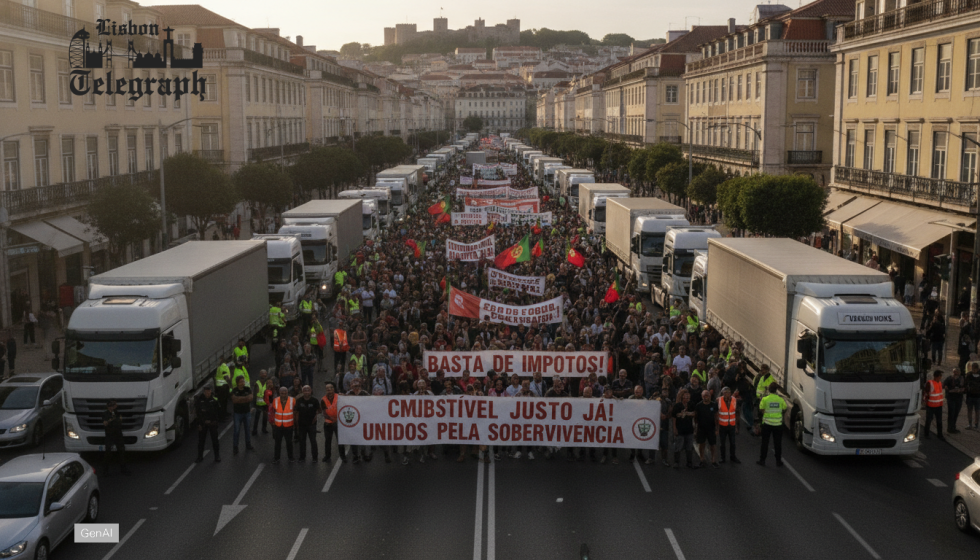
Discussion in Ireland about potential fuel protests has intensified after fresh disruption in Portugal, where driver convoys and slow-moving traffic actions highlighted how quickly diesel costs can spill into public anger. According to available reports, in the Lisbon area, police managed intermittent stoppages on major approaches and industrial access roads, while commuters and hauliers reported longer journeys. The same coverage linked the rallies to pressure on household budgets and transport contracts that do not adjust fast enough when pump prices rise. The episode is being watched as a proxy for how similar pressures could build if costs stay elevated for weeks rather than days.
Fuel protest Ireland comparisons: commuter delays and haulage strain
Commuters around Lisbon described queues at service stations and knock-on delays near logistics parks as convoys reduced road capacity at peak times, according to available reports. Hauliers said the main pinch point is diesel, because fuel can represent roughly a third of operating costs on long-distance routes, turning small price moves into margin shocks. Campaigners making fuel protest Ireland comparisons argue the same cost arithmetic hits operators serving ports, supermarkets, and construction sites. A wider discussion of how leaders frame social vulnerability appears in Migrant children protection urged Pope Leo XIV. For related EU political context, see EU budget agreement: Portugal and Ireland seek deal.
Prices, inflation and why protests over fuel costs persist
Business groups warn the immediate effect of blockages is visible, but the longer-term risk is inflation, because higher transport bills can become surcharges that feed into retail prices, according to available reports. Economists track fuel closely as it moves through freight, commuting, and services, and then into headline inflation. Concerns about competitiveness for road haulage firms facing cross-border rivals with different tax regimes have also been highlighted. Market attention in Portugal has followed the story alongside other confidence signals such as Lisbon stock market inches up as Europe holds steady.
Policy options under scrutiny as Ireland watches
Authorities focused on keeping main arteries open while allowing lawful demonstrations, using traffic diversions and warnings against dangerous stoppages, according to available reports. In Portugal, questions about fuel supply management and pricing mechanisms have also entered parliamentary debate, highlighted Portugal fuel stock row as liberals demand answers now. Protesters want relief that arrives quickly at the pump rather than delayed support that fails to stabilise cash flow for operators. Officials have stressed that any measures must align with EU competition rules and budget constraints. The policy mix being discussed includes temporary tax adjustments and targeted professional rebates.
What happens next for fuel protest Ireland watchlists
Industry representatives are pushing for clearer contract indexation so freight rates reflect energy swings more fairly, alongside limited-time tax measures and targeted support for professional drivers, according to available reports. Analysts also point to demand management, such as scheduling changes that reduce peak-time consumption, which can ease congestion and lower operating costs without distorting markets. For fuel protest Ireland watchlists, the key signal will be whether pump prices stabilise over the next few weeks. Protest organisers argue that without visible relief, demonstrations could widen beyond trucking into broader commuter actions as households absorb energy and food bills, reports indicate.