






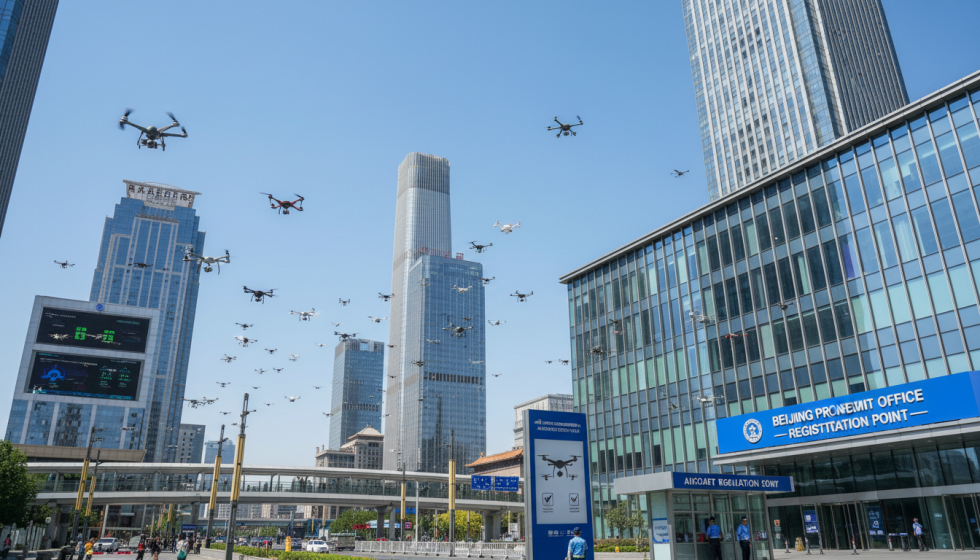
China Enforces Drone Restrictions
Beijing authorities moved quickly to curb consumer drone access as security measures tightened across the capital. In briefings carried Reuters, the China drone ban was described as a sales restriction in Beijing tied to heightened security management rather than a nationwide stop. Officials framed the move as a near term measure that changes what retailers can sell and how buyers can take possession. Today, shop staff and e commerce listings began adjusting availability and delivery options, with some vendors pausing in store pickups to stay compliant. Live monitoring around sensitive districts was also increased local enforcement teams. The immediate effect is procedural, with compliance checks and warnings rather than broad arrests.
Reasons Behind the Security Concerns
Authorities cited the need to reduce low altitude risks near crowded venues, transport hubs, and government compounds during a period of elevated vigilance. Reuters reported officials emphasized public safety as the core rationale, and retailers were told to follow local directives on fulfillment and verification. Today, a rolling Update of enforcement guidance reached major shopping areas, with staff instructed to flag unusually large purchases and verify buyer information where required. A separate Live notice to merchants stressed the importance of geofencing and restricted zones already embedded in many devices, and for a wider context on how security concerns intersect with civilian protection issues, see Pope Leo XIV presses EU to unite for peace now. Officials said the goal is deterrence, not punishing ordinary hobbyists.
Impact on Drone Users and the Market
For recreational pilots, the immediate disruption is access, not ownership, with many users still able to operate under existing drone regulations if they comply with local limits. Reuters noted the measures center on sales channels in Beijing rather than an outright confiscation drive. The dji drone ban phrase circulated online today, but DJI has not announced a blanket prohibition, and buyers are being directed toward formal authorization steps. Live customer service lines in the capital reported longer wait times as consumers seek clarification on model eligibility and delivery timing, and readers can compare with Brovdi Drone Campaign Targets Russias Key Assets which details operational impacts elsewhere. An Update to retail inventory systems is expected as compliance audits expand.
Comparisons with Global Drone Policies
Beijing is not alone in tightening controls when authorities perceive risks around major events and critical infrastructure. In recent UN discussions about regional security, policy makers have linked technology governance to broader stability goals, even when topics range beyond aviation. A relevant example is a UN News briefing on risk reduction frameworks, available at UN News on Central Asia nuclear weapon free zone, which shows how states pair regulation with security assurances. Today, regulators in multiple countries rely on registration, remote identification, and no fly maps rather than sales bans. Live enforcement patterns differ, but most systems prioritize traceability and operator accountability. Beijing security officials appear to be prioritizing fast friction at the point of sale to lower immediate exposure.
Future of Drone Technology in China
The near term direction points to stricter compliance tooling, more standardized verification, and tighter retail obligations in major cities. Reuters has described the Beijing step as security driven, and the China drone ban debate is likely to accelerate work on remote ID, firmware based restrictions, and clearer licensing pathways for creators and commercial operators. Today, manufacturers and distributors are preparing an Update to consumer guidance that explains where flights remain permitted and what documentation may be requested during spot checks. Live testing of enforcement workflows can also push better coordination between retailers, platform operators, and local police. Long term innovation will continue, but it will be shaped compliance first product design and stricter urban operating norms.


