The Summit Shuffle in Armenia
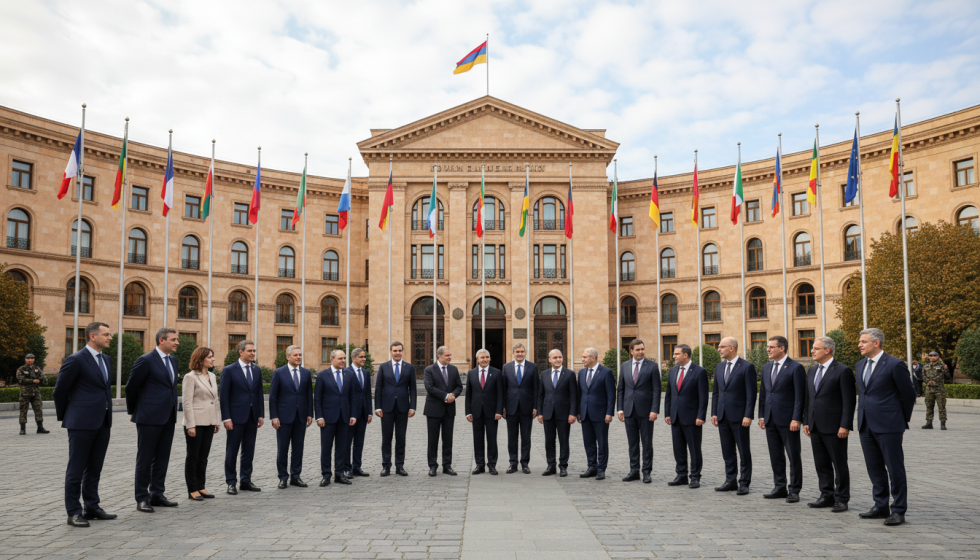
In Yerevan today, delegates were busy with tightly packed schedules, meeting Armenia’s prime minister and foreign ministry. The aim? Hammer out immediate cooperation on governance and border stability. Closed-door chats weren’t exactly a ceremony; they were all about practical outcomes. Live updates from the Armenian government whipped up excitement, detailing implementation schedules and ministry coordination. The EU’s team, in a written statement, claimed discussions revolved around resilience and reform support, yet kept details about funding and figures under wraps. Diplomatic aides made a show of keeping public messaging dry, steering clear of any heated rhetoric.
Moscow’s Watchful Eye
Meanwhile, Russia’s embassy and state media were glued to the proceedings. Armenian officials tried to maintain a cordial vibe with Moscow, hosting these European chats right in Russia’s backyard. Today, the Kremlin spokesperson dripped caution, claiming they were closely monitoring regional diplomacy, yet didn’t spill any beans about a potential response. Live reports hinted at Russian security interests, but specifics remained sketchy. An update to Armenia’s parliament danced around security cooperation, trying not to spook anyone. In a twist, the BBC’s coverage of EU security financing debates illustrated how member states juggle risks and resources, especially when examining the UK’s role in EU Ukraine loan plan. Armenia’s diplomacy is all about expanding options, not blowing up relationships.
EU-Russia Tug of War
Officials from various capitals saw the Yerevan meetup as a sign that EU engagement was far from fizzling out, though they acknowledged Moscow would see it as a flexing of competitive influence. During mid-day chats, the talk focused on standards, trade routes, and political support, steering clear of military posturing. A live note from an EU official, on background and attributed to the European External Action Service spokesperson, indicated they’re pursuing “predictability and transparency” in regional dealings. If you dig deeper, the Lisbon Telegraph’s take on cultural diplomacy illustrates how perceptions morph when Russia reenters contentious areas, especially reflected in the piece about Venice Biennale Jury Quits as Russia Returns. An update later confirmed that sanctions remain firmly in place, keeping the Armenia track nicely compartmentalised.
Armenia’s Assertive Posture
Armenia’s government was keen to spotlight its role as a neutral ground for dialogue aimed at soothing regional tensions. They nudged visiting envoys toward tangible support for sorting out border management and aiding displaced communities. The foreign ministry made it clear that Armenia’s diplomatic moves were crafted with “sovereign decision making” and regular communication with all partners, as reported Armenpress. A live press briefing emphasised that discussions lingered around transport corridors and economic resilience, not taking sides in geopolitical blocs. Amidst the swirling news cycle, even Vatican diplomacy caught attention for social policy priorities, with readers tracking political signals noticing Pope Leo XIV urging stronger care for the poor—another instance of values clashing with governance debates. An update on working groups was released, aimed at aligning domestic reforms with international assistance, though funding details were notably absent.
The Road Ahead for EU Diplomacy
What’s next? Well, it’s all about whether these high-level chats translate into tangible deliverables for Armenia, particularly on the tech and investment fronts that would trim corruption risks. Diplomats suggested that today’s discussions laid groundwork for follow-up missions, and there’s live cooperation among embassies to sidestep overlap and manage political sensitivities. An update from the Armenian prime minister’s office stated that future interactions will span multiple layers, involving expert teams on customs, digital governance, and resilience planning, yet security vocabulary is kept under wraps. European leaders Armenia popped up again in internal scheduling notes, shorthand for a rotating cast of senior visits and ministerial interactions. Observers warned that credibility hinges on consistent attention; Russia will pounce on any lapses. The EU insists it will track progress through publicly reported benchmarks, not just bull about announcements.