A small town with an outsized role in defence
The town of Binéfar, with just over ten thousand inhabitants, has quietly become one of the most important centres for military robotics in Europe. Located in the Alto Aragon region of northeastern Spain, between Huesca and Lérida, Binéfar now hosts the largest military robotics plant in the country. What was once a largely agricultural and industrial service town has evolved into a strategic node in the European defence supply chain.
This transformation reflects a broader shift in how advanced defence technologies are developed. Instead of being concentrated only in major capitals or industrial hubs, high value military innovation is increasingly emerging from smaller regions with strong technical capabilities and targeted investment.
Building robots for modern warfare
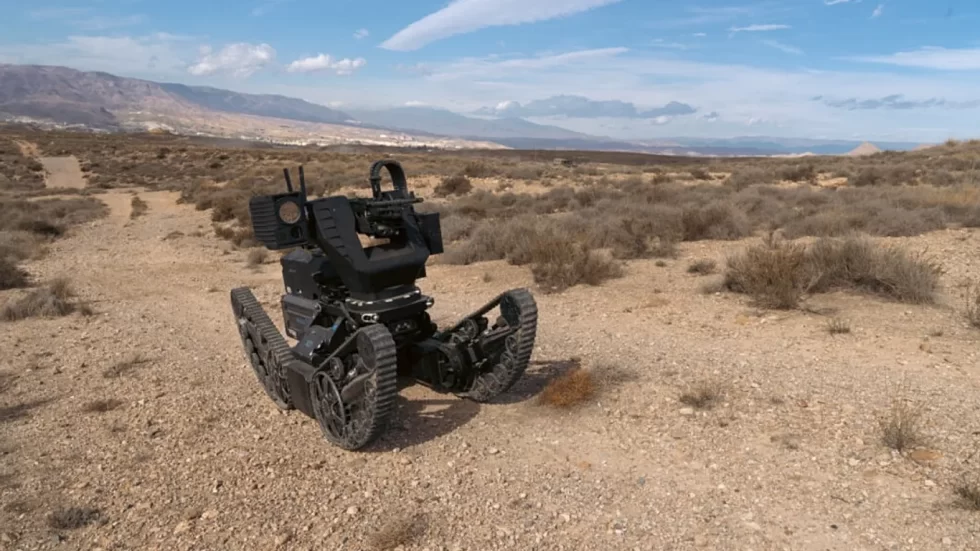
The robotics plant in Binéfar specializes in the design and manufacture of unmanned ground vehicles used in some of the most demanding military contexts. These robots are deployed in active war zones, explosive ordnance disposal operations, and high risk logistical support missions. Their primary purpose is to reduce human exposure to danger while increasing operational efficiency.
The systems developed in Binéfar are designed to operate in harsh environments, navigate difficult terrain, and perform tasks ranging from bomb disposal to transport of supplies under fire. As modern conflicts rely more heavily on automation and remote systems, demand for such technologies has grown rapidly across Europe and beyond.
Exporting technology to more than 20 countries
One of the most striking aspects of Binéfar’s rise is the international reach of its production. Ground robots designed and assembled in this small Aragonese town are now used armed forces and security agencies in more than twenty countries. This export footprint places Binéfar firmly on the map of global defence manufacturing.
International demand has been driven a combination of reliability, adaptability, and the growing need for unmanned systems in military and security operations. European defence spending has increased in response to geopolitical instability, and robotics has become a priority area for modernization programs.
Economic transformation at the local level
The presence of a high tech defence manufacturer has had a profound impact on Binéfar’s local economy. The plant has created skilled jobs in engineering, software development, manufacturing, and systems testing. This has helped retain young professionals who might otherwise have left the region in search of work elsewhere.
Local supply chains have also benefited. Supporting industries such as precision manufacturing, electronics, logistics, and maintenance services have expanded alongside the robotics plant. As a result, the town has experienced increased economic activity and a more diversified employment base.
From agriculture to advanced industry
Binéfar’s evolution highlights how rural and semi rural areas can integrate into advanced industrial sectors. Traditionally associated with agriculture and food processing, the region has leveraged technical education, infrastructure, and targeted investment to move up the value chain.
This shift challenges long held assumptions about where advanced defence and robotics technologies can be developed. It demonstrates that innovation is not limited to large metropolitan centres, but can flourish in smaller communities when expertise and opportunity align.
Strategic importance for European defence
The rise of Binéfar as a military robotics hub also carries strategic implications for Europe. Developing and producing defence technologies within European territory reduces reliance on external suppliers and strengthens industrial autonomy. Ground robotics in particular is seen as a critical capability for future military operations.
contributing to this ecosystem, Binéfar plays a role that extends far beyond its geographic size. The town is now part of a broader effort to ensure that Europe maintains competitive and secure defence manufacturing capacity.
Ethical and societal questions
The success of military robotics also raises important questions. While unmanned systems reduce risks to soldiers, they are designed for use in conflict environments, which inevitably sparks debate around ethics, accountability, and the future of warfare.
For Binéfar, these questions coexist with tangible economic benefits. Local authorities and residents are navigating the balance between prosperity, technological leadership, and the realities of producing systems used in war.
A symbol of rural industrial reinvention
Binéfar’s transformation from a quiet Aragonese town into a European benchmark for military robotics illustrates how rural regions can reinvent themselves through advanced industry. It shows how global demand, technological specialization, and local capacity can intersect to reshape a community’s future.
As defence robotics continues to expand, Binéfar is likely to remain a key reference point for how small towns can become global players in strategically critical industries.